
TermLink Fiber Files
Your Source for Real-World Fiber Expertise
Here you’ll find practical knowledge straight from the jobsite — splicing techniques, OTDR testing, design considerations, restoration workflow, and the details that make or break a network. If you build, maintain, or manage fiber, this is where you stay sharp.
OUR BLOGS

Multiport Service Terminals: How Modern Aerial FTTH Reaches the Home
The multiport service terminal is where the aerial network finally meets the home. Here is how modern hardened terminals changed the last connection of every FTTH build.

Summer Vegetation and Aerial Fiber: Managing Tree Contact Before It Causes Outages
Summer growth is when trees start wearing through and pulling down aerial fiber. Here is how tree contact causes outages and how to manage vegetation before it does.

Aerial Slack Storage: Where to Place Loops and How Much to Leave
Stored slack lets you splice a closure at ground level and recover from a break without re-pulling a span. Here is where to place aerial loops and how much to leave.

Grounding and Bonding Aerial Fiber: Lightning Protection That Holds Up in Storm Season
A lashed aerial line is metal from end to end, and storm season is when that matters. Here is how bonding and grounding the messenger strand protects your fiber from lightning.

Heat Illness Prevention for Fiber Crews: A National Safety Month Field Guide
June is National Safety Month, and heat is the top summer hazard for aerial fiber crews. Here is how to acclimatize workers, catch heat illness early, and respond fast.

Anchoring and Guying Aerial Fiber: Getting Tension and Down-Guy Placement Right
At every dead-end and corner, a down-guy holds your aerial fiber line in place. Here is how to size the anchor, set the guy angle, and tension without pulling the pole out of plumb.

Call Before You Dig: How 811 and Utility Locating Protect Your Summer Builds
Aerial fiber crews break ground too. Here is how 811 and Pennsylvania One Call protect your summer build from costly strikes, fines, and lost legal protection.

Strand and Lashing: Getting the Support Messenger Right on Aerial Builds
Every fiber project crosses land someone else controls. Here's how rights-of-way, easements, and franchise agreements actually work, and where projects go wrong.
Right-of-Way vs. Easements vs. Franchise Agreements: What Fiber Projects Actually Need
Every fiber project crosses land someone else controls. Here's how rights-of-way, easements, and franchise agreements actually work, and where projects go wrong.

What a Proper Fiber As-Built Package Should Contain (and Why Yours Probably Doesn't)
Most fiber as-built packages are incomplete, and the gaps cost network owners real money years later. Here's what a proper as-built should actually contain.

Understanding Loss Budgets: How to Calculate Them and Why They Protect Your Network
A loss budget is the engineering tool that keeps every fiber link working for decades. Here's how to calculate one, and why it protects your network.

ADSS vs. OPGW vs. Figure-8: Choosing the Right Aerial Fiber Cable for Your Build
Every aerial fiber project starts with a cable selection decision. Here's how ADSS, OPGW, and figure-8 cable compare and when each one is the right call.

NESC Clearance Requirements for Aerial Fiber: A Field Guide for 2026
Aerial fiber construction lives and dies by clearance. Here's what the 2023 NESC requires in 2026, from pole zones to mid-span sag to make-ready timelines.

Beyond Storm Response: Preventive Aerial Fiber Inspections That Catch Problems Before They Fail
Networks that run cleanest aren't the ones with the newest cable. They're the ones inspecting aerial plant before storms expose what was already failing.

The Role of GIS Mapping in Modern Fiber Deployments
Modern fiber deployments generate massive geographic data: thousands of pole locations, splice points, cable routes, customer connections, and infrastructure assets requiring accurate documentation. Without systematic organization, this critical information becomes unusable when needed most. Geographic Information System (GIS) mapping has evolved from optional documentation to essential infrastructure for professional fiber deployments. For ISPs, municipalities, and telecom providers, GIS transforms raw location data into actionable intelligence that improves route planning, accelerates construction coordination, enables efficient network operations, and ensures regulatory compliance. Unlike static paper maps or disconnected digital files, GIS systems link precise GPS coordinates with databases containing technical specifications, installation dates, test results, and maintenance records. Every pole, splice enclosure, vault, and cable segment becomes a queryable database record tied to exact location—accessible for planning expansions, troubleshooting outages, and generating BEAD compliance reports automatically.

How to Vet a Fiber Splicing Contractor: 10 Questions You Must Ask
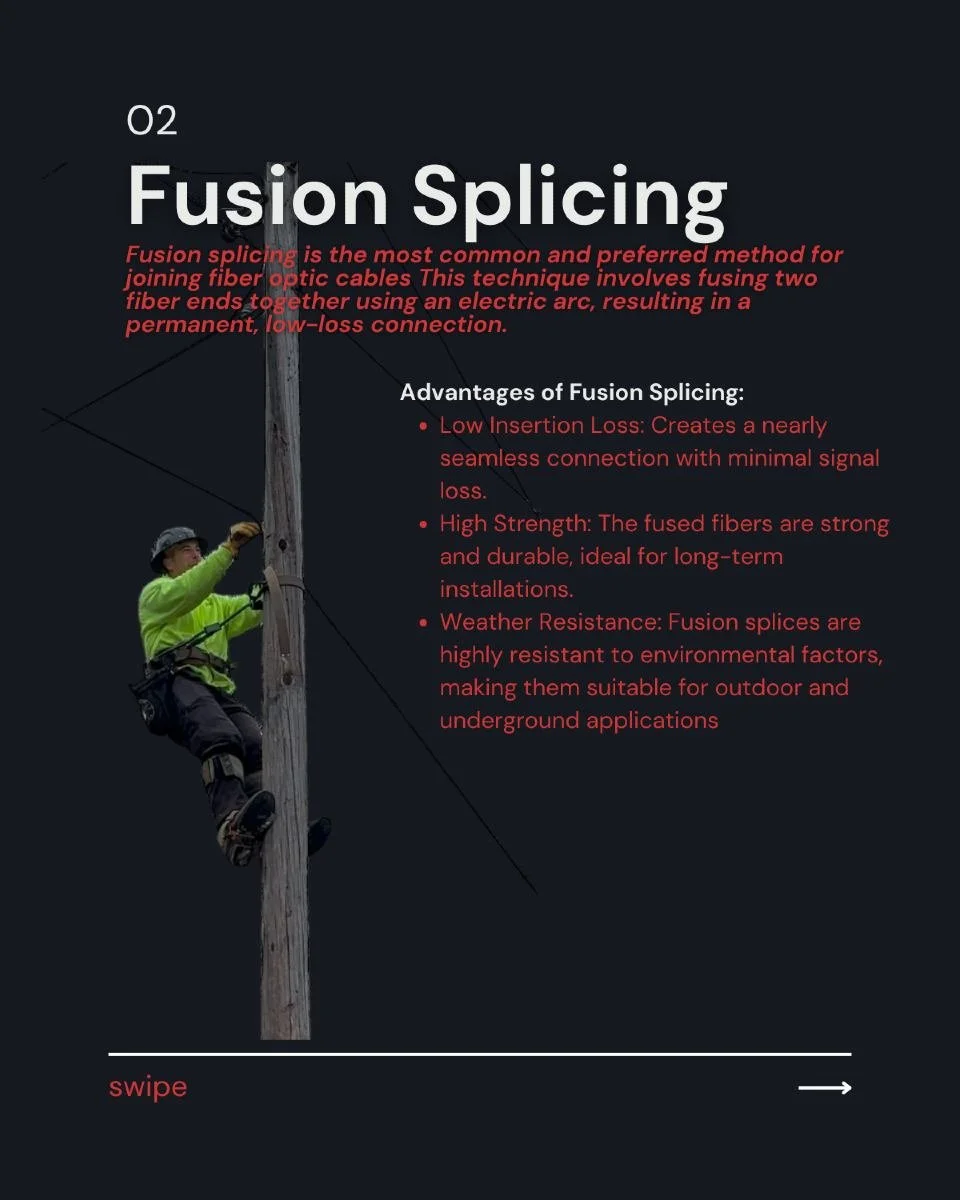
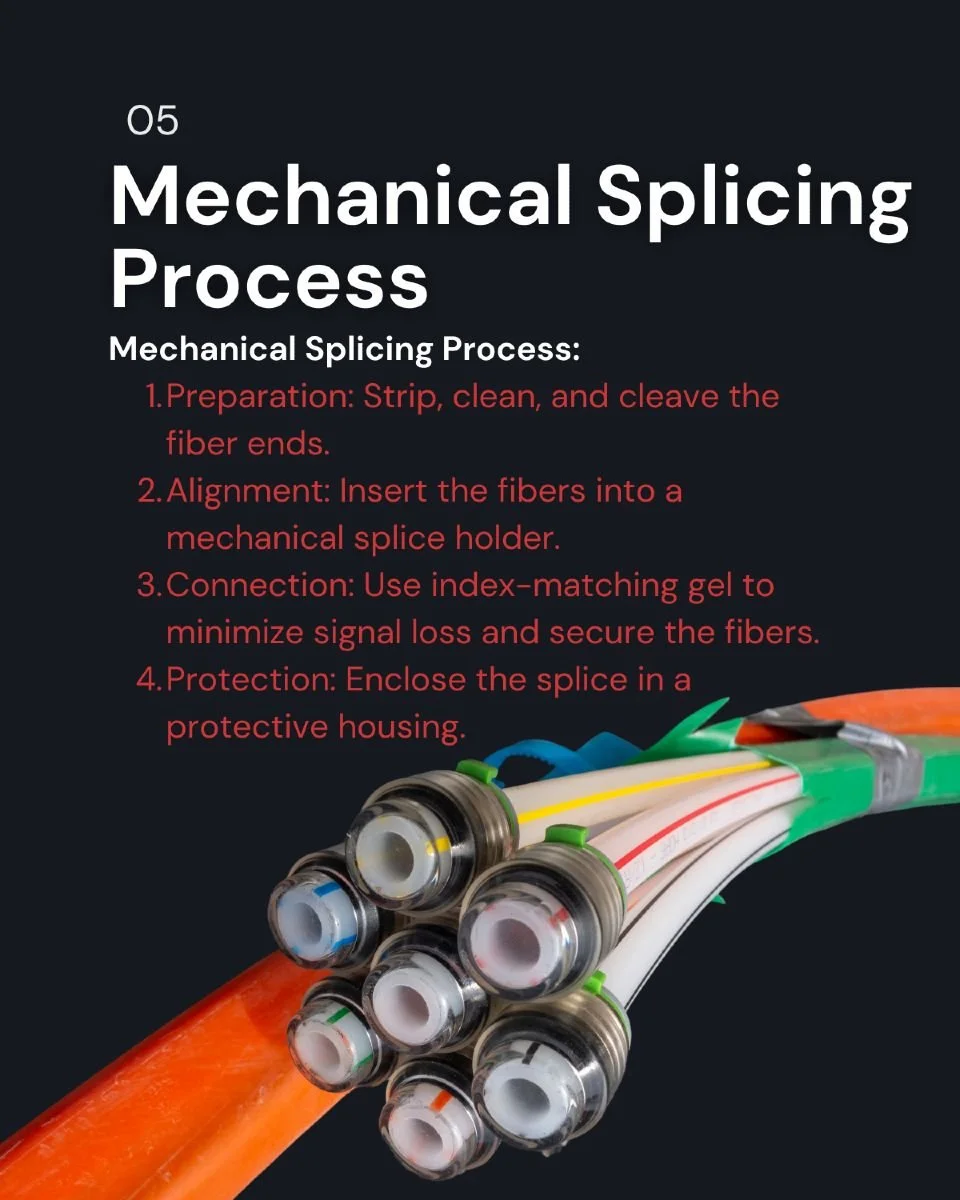
Fiber splicing is precision work where quality determines decades of network performance. A proper fusion splice achieves less than 0.1 dB signal loss and lasts without degradation. Poor splices create ongoing network issues, require costly rework, and leave troubleshooting headaches for years. For ISPs, municipalities, and telecom managers hiring fiber contractors, splice quality directly impacts long-term reliability—but how do you identify contractors who deliver consistent professional work versus those cutting corners? The answer lies in asking specific questions about equipment calibration, average splice loss with documented test results, technician certifications and training programs, fiber preparation protocols, documentation systems, OTDR testing procedures, quality guarantees, splice enclosure protection methods, backup equipment inventory, and verifiable references. These questions reveal whether contractors have the equipment, expertise, processes, and accountability to deliver splicing work that performs reliably throughout your network's operational life.

Rural Fiber Buildouts: Why Pennsylvania-Based Crews Matter for Your Project
Rural fiber buildouts in Pennsylvania face unique challenges that urban projects never encounter: Allegheny Mountain terrain, harsh Northeast winters, complex county-by-county permitting, spring mud season delays, and distributed customer locations across difficult geography. For ISPs, municipalities, and rural broadband managers deploying fiber across the Commonwealth and broader Northeast, working with Pennsylvania-based construction crews delivers strategic advantages that out-of-state contractors cannot match. Local crews understand regional terrain requirements, plan around seasonal weather patterns from decades of experience, maintain working relationships with county and township permitting authorities, respond rapidly when problems arise, and provide long-term network support after construction completes. While national contractors bring scale, rural fiber projects succeed on local knowledge, community relationships, and sustained regional commitment. Pennsylvania-based crews turn geographic and logistical challenges into manageable project elements rather than costly surprises.

When Does It Make Sense to Upgrade from Copper to Fiber?
Copper telecommunications networks face mounting challenges: escalating maintenance costs with truck rolls averaging $160-$600 per visit, inability to meet modern bandwidth demands, vulnerability to weather damage, and regulatory compliance pressures. For ISPs, municipalities, and telecom providers, the question isn't whether to migrate to fiber, but when. While fiber offers clear long-term advantages in lower maintenance costs, superior bandwidth capacity, and weather resilience, the transition requires upfront capital investment and strategic planning. Key signals favor immediate migration: bandwidth limitations driving customer complaints, maintenance expenses consuming operating budgets, recurring storm damage, competitive pressure from fiber providers, and available grant funding offsetting deployment costs. Understanding these triggers helps network operators make informed decisions about copper-to-fiber migration timing and avoid costly reactive upgrades under competitive pressure.

Aerial vs Underground Fiber: A Decision Guide for Municipal Planners
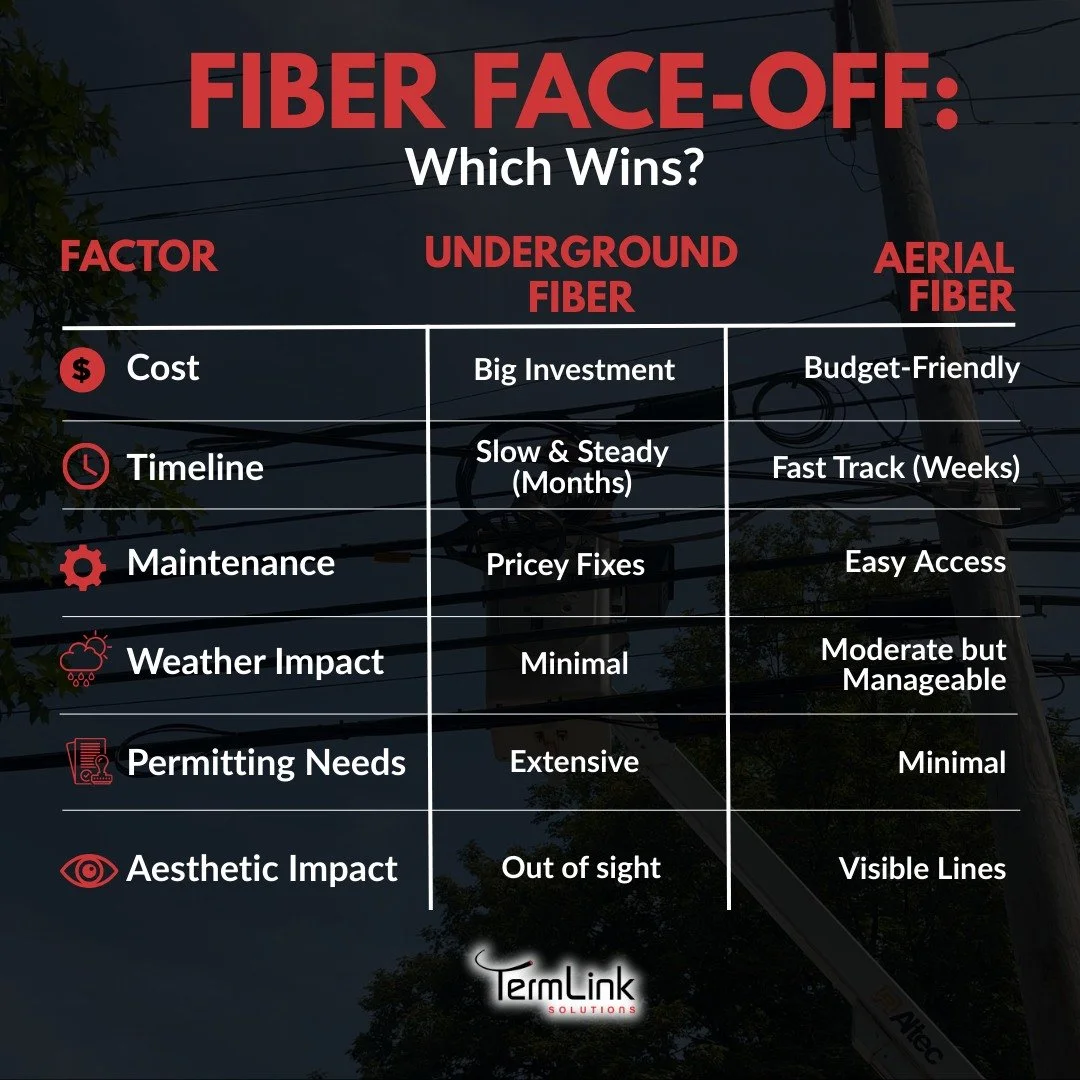
Municipal broadband planners face a critical early decision: aerial fiber on existing utility poles or underground fiber in conduit. This choice fundamentally impacts project costs, construction timelines, maintenance requirements, and network performance. Aerial installation typically costs $10,000-$30,000 per mile and deploys in weeks, while underground installation ranges from $50,000-$150,000 per mile and requires months to complete. For communities working with limited budgets, aggressive BEAD grant deadlines, or universal coverage goals, understanding these tradeoffs is essential. While underground fiber suits specific scenarios—new subdivisions, historic districts, congested urban cores—most rural and suburban municipal broadband projects benefit from aerial deployment's cost efficiency and speed. This guide examines the practical realities of both methods to help municipal planners make informed infrastructure decisions.

How Weather Affects Fiber Construction Timelines in the Northeast
April marks the start of prime construction season in Pennsylvania and across the Northeast. Ice has cleared from utility poles, temperatures have stabilized, and aerial fiber construction crews are deploying at full productivity. For telecom providers, municipal broadband managers, and rural ISPs planning fiber deployments in the region, understanding how weather affects construction timelines is critical to realistic project scheduling and meeting grant compliance deadlines. The Northeast offers an effective 7-8 month construction window annually, with April through November representing optimal deployment periods. Winter ice loading, frozen ground, and extreme cold reduce productivity from December through March. For BEAD-funded projects with four-year completion requirements, this seasonal pattern means four construction seasons, not four calendar years. Smart planning around Northeast weather patterns maximizes productivity and keeps projects on schedule.
TECH DOCS