

Aerial vs Underground Fiber: A Decision Guide for Municipal Planners
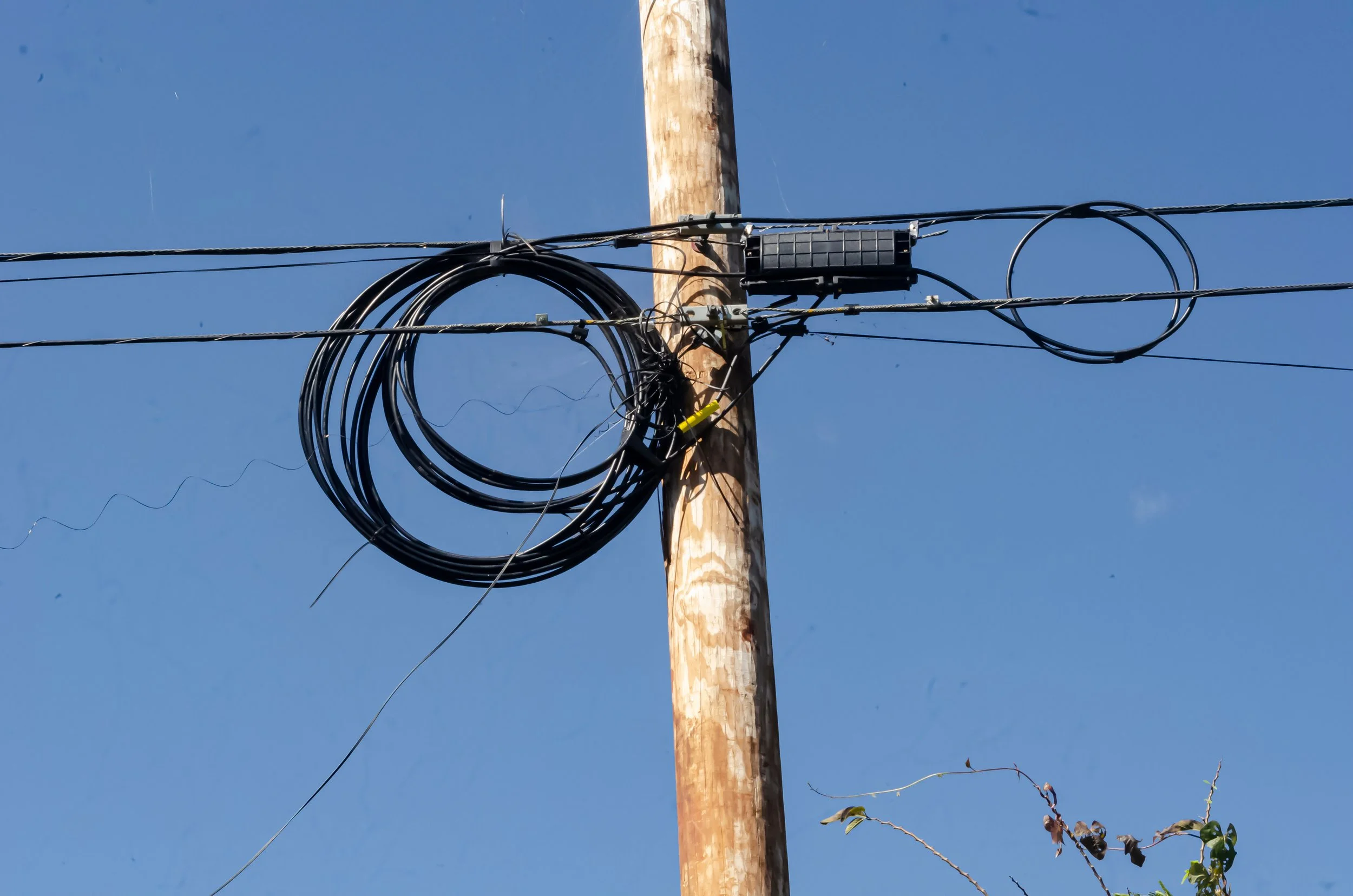
When planning municipal broadband infrastructure, one of the first decisions you'll face is deployment method: aerial fiber on existing utility poles or underground fiber in conduit. This choice affects project costs, construction timelines, maintenance requirements, and long-term network performance.
For municipal planners working with limited budgets and aggressive deployment schedules, understanding the tradeoffs between aerial and underground installation is critical. Here's what you need to know to make an informed decision for your community.
The Cost Reality: Aerial vs Underground
The most significant difference between aerial and underground fiber deployment is upfront cost. Aerial installation typically costs between $10,000 and $30,000 per mile, while underground installation ranges from $50,000 to $150,000 per mile or more, depending on terrain and existing infrastructure.
Aerial deployment leverages existing utility pole infrastructure. Crews attach fiber cable to poles already in place, eliminating the need for trenching, conduit installation, or extensive ground disturbance. The work moves quickly with minimal permitting complexity beyond pole attachment agreements.
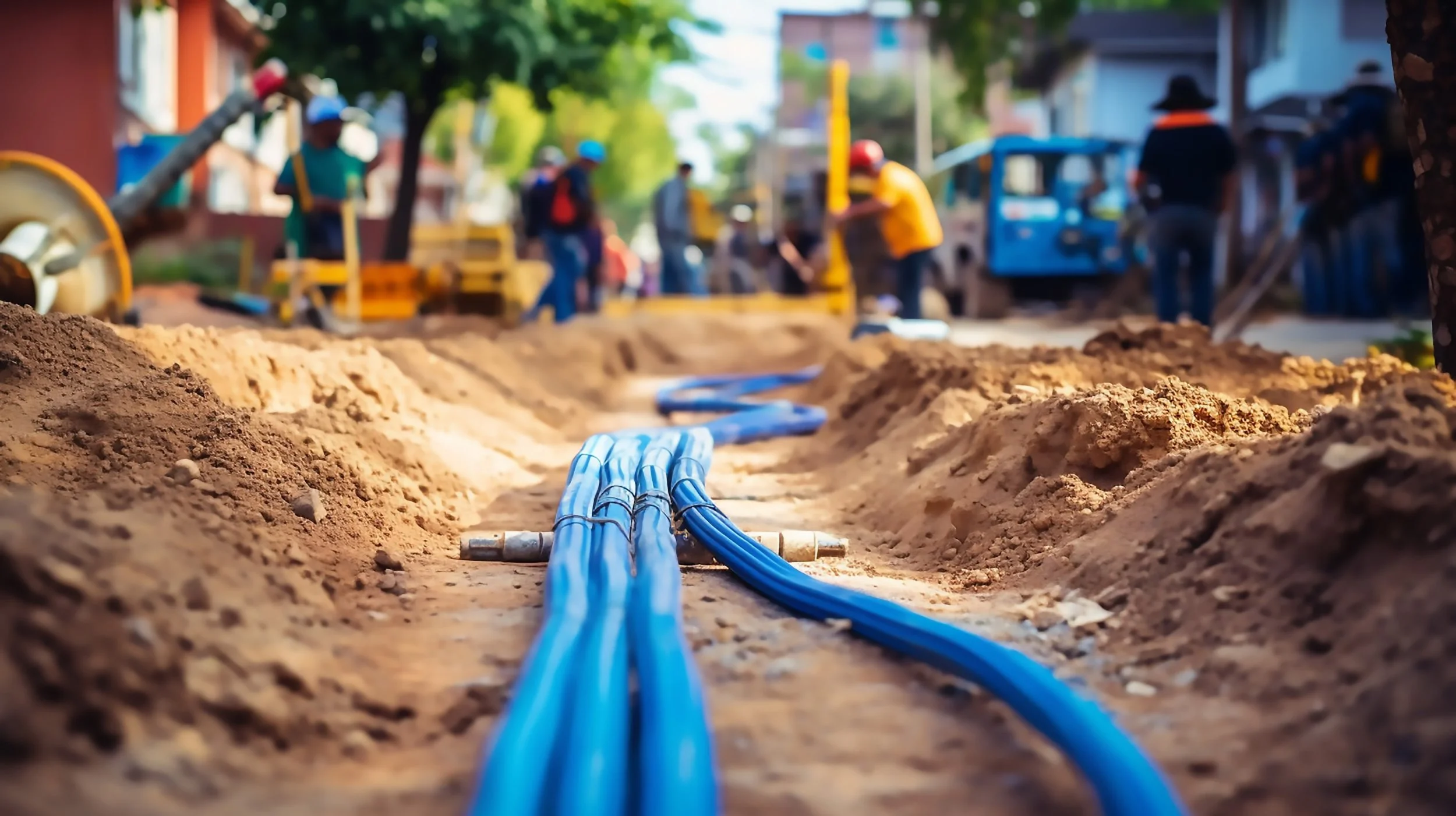
Underground deployment requires trenching or boring, conduit placement, vault installation, backfill, surface restoration, and coordination with multiple underground utilities. Each step adds labor, equipment costs, and time. In urban areas with congested underground infrastructure, costs escalate further.
For municipal broadband projects operating under tight budgets or pursuing BEAD funding with cost-competitiveness requirements, aerial deployment often provides the only financially viable path to universal coverage.
Timeline Advantages: Speed to Service
Aerial fiber installation moves significantly faster than underground deployment. Experienced crews can install 1-2 miles of aerial fiber per day under favorable conditions. Underground installation averages 500-1,000 feet per day, depending on terrain and surface conditions.
Project timeline comparison for a 10-mile rural deployment:
Aerial: 2-3 weeks for construction, plus pole attachment coordination (typically 60-120 days total from permitting to service activation).
Underground: 8-12 weeks for construction, plus utility coordination and permits (typically 6-12 months total from planning to service activation).
For communities applying for grant funding with strict build completion deadlines, aerial deployment provides a faster path to meeting compliance requirements and delivering service to residents.
Maintenance and Longevity Considerations
The conventional wisdom suggests underground fiber requires less maintenance because it's protected from weather. In practice, the maintenance picture is more nuanced.
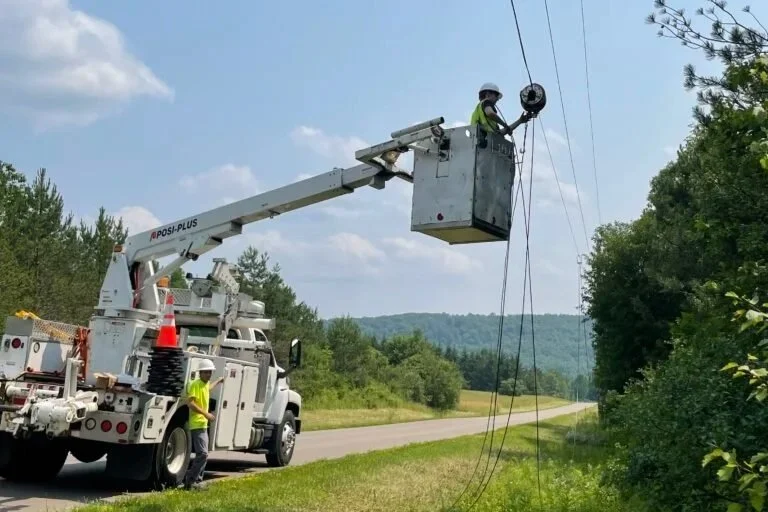
Aerial fiber faces exposure to weather, falling trees, and vehicle strikes. However, when damage occurs, repairs are straightforward. Crews locate the fault, access the damaged section from a bucket truck, and complete repairs within hours. There's no excavation, no traffic disruption, and no coordination with other utilities.
Modern aerial fiber cable is engineered for durability. All-dielectric self-supporting (ADSS) cable and figure-8 cable designs withstand ice loading, wind stress, and UV exposure for decades. Properly installed aerial fiber routinely delivers 20-30 years of reliable service with minimal intervention.
Underground fiber is protected from weather but vulnerable to different failure modes. Groundwater infiltration damages splices in poorly sealed vaults. Construction activity from unrelated projects cuts cables. Frost heave shifts vault positions over time.
When underground fiber fails, repairs require excavation, traffic control, surface restoration, and extended downtime. A repair that takes 4 hours for aerial fiber can take 2-3 days underground, with significantly higher costs.
Where Underground Fiber Makes Sense
Despite aerial fiber's advantages in cost and speed, some scenarios favor underground deployment: new subdivisions where developers are installing all utilities underground from the start, historic districts where aesthetic requirements prohibit additional aerial infrastructure, high-density urban cores where pole routes are congested, and specific road segments with frequent vehicle strikes or chronic tree-related outages.
For most rural and suburban municipal broadband projects, however, these conditions represent a small percentage of total route miles. A hybrid approach combining aerial deployment for the majority of the network with targeted underground segments where necessary often provides the optimal balance.
Permitting and Right-of-Way Realities
Both aerial and underground fiber require permitting, but the complexity differs.
Aerial permitting primarily involves securing pole attachment agreements with existing pole owners (typically electric utilities or phone companies). Under FCC regulations, pole owners must provide access on reasonable terms and timelines. Make-ready work adds time but follows standardized procedures.
Underground permitting requires permits from every jurisdiction along the route (municipal, county, state DOT for road crossings). Each has different application requirements and review timelines. Coordination with existing underground utilities is mandatory, and conflicts require design modifications.
In practice, underground permitting timelines are less predictable and more vulnerable to delays from stakeholder conflicts or unexpected utility conflicts discovered during construction.
Making the Decision: Framework for Municipal Planners
When evaluating aerial vs underground fiber for your municipal broadband project, consider these factors:
Budget constraints: Aerial deployment provides significantly more coverage for the same investment
Timeline requirements: Aerial construction delivers service faster
Geographic coverage goals: Aerial fiber's lower per-mile cost makes comprehensive coverage achievable
Existing infrastructure: If utility poles already exist along most routes, aerial leverages existing assets
Aesthetic requirements: Plan targeted underground segments within a primarily aerial network
Maintenance capabilities: Aerial infrastructure requires bucket truck access but simpler repairs
The Hybrid Approach: Best of Both Worlds
Many successful municipal fiber networks use a hybrid strategy. The backbone network and the majority of residential distribution runs aerially, reducing costs and accelerating deployment. Targeted underground segments serve specific areas where aesthetics, regulations, or technical requirements favor burial.
This approach maximizes coverage within budget constraints while respecting community preferences in sensitive areas.
Aerial Fiber: The Practical Path Forward
For most municipal broadband projects, particularly in rural and suburban areas, aerial fiber deployment offers the most practical path to achieving universal coverage within budget and timeline constraints. Lower costs, faster construction, straightforward maintenance, and established permitting frameworks make aerial installation the default choice for communities prioritizing rapid service delivery and cost efficiency.
Expert Aerial Fiber Installation for Your Community
TermLink Solutions specializes in aerial fiber construction for municipal broadband networks, rural ISP expansions, and telecom infrastructure projects. Our experienced Pennsylvania-based crews handle every phase of aerial deployment from pole attachment coordination and make-ready management through precision cable installation, splicing, testing, and documentation.
Contact us today to discuss your municipal fiber project and learn how aerial deployment can maximize your infrastructure investment.
