

Anchoring and Guying Aerial Fiber: Getting Tension and Down-Guy Placement Right
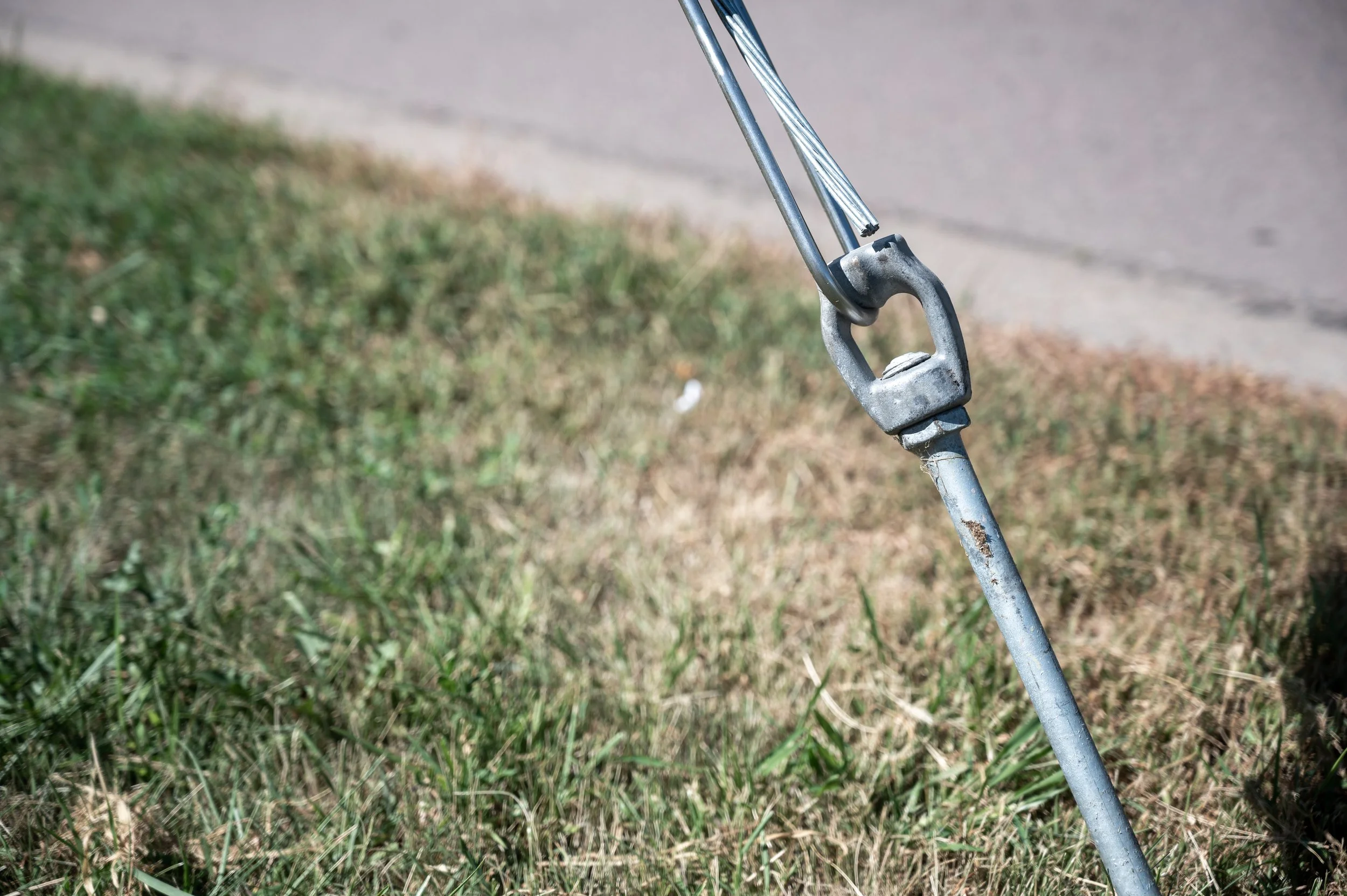
Every aerial fiber line pulls on the poles that carry it, and at certain poles that pull has nowhere to go. Once the messenger strand is tensioned to its engineered sag, the load has to be balanced at every point where the line ends or changes direction, or the pole slowly leans toward the pull and takes the whole span out of specification with it. The down-guy is what holds that line where the crew set it. Get the anchor, the angle, and the tension right and the structure stands plumb for decades. Get them wrong and the sag drifts, the clearances fail, and a pole that looked fine on installation day starts leaning a season later.
This guide covers why guying exists, how the geometry of a down-guy decides the load it carries, and how to size and tension the assembly so the line holds. It follows directly from the work of tensioning the messenger covered in our strand and lashing guide, because the guy is the counter-force to the very strand tension that post is about.
Why Guys Exist: Resisting an Unbalanced Pull
A pole in the middle of a straight run sees roughly equal tension on both sides, so the loads cancel and the pole stands on its own. The trouble starts where that balance breaks. At a dead-end, where the line terminates, the entire strand tension pulls in one direction with nothing opposing it. At a corner or angle pole, the change in direction creates a sideways resultant load that wants to fold the pole toward the inside of the turn. Those are the poles that need guying, and they need it for the same reason a tent pole needs a stake.
The down-guy answers that load by running a steel guy wire from the attachment point near the top of the pole down to an anchor set in the ground, transferring the pull into the earth instead of letting it bend the pole. The load the guy has to carry is not arbitrary. It is the tension already living in the strand, which is exactly why the guying decision cannot be separated from the tensioning decision.
Lead, Height, and the Angle That Sets the Load
The geometry of the down-guy decides how hard the guy and anchor have to work. Two measurements govern it. The lead is the horizontal distance from the base of the pole out to the anchor, and the height is how far up the pole the guy attaches. The relationship between those two numbers, the lead-to-height ratio, sets the angle of the guy and therefore the tension it carries.
A guy anchored close to the pole stands nearly vertical, and a steep guy multiplies the tension it must hold to balance the same horizontal load. Push the anchor farther out and the guy lies at a flatter angle that carries the load far more efficiently. Crews aim for a lead roughly equal to the attachment height wherever the right-of-way allows it, because that one-to-one geometry keeps guy and anchor loads in a sane range. When a sidewalk or a property line forces a short lead, the tension climbs fast, and the hardware has to be sized up to match.
Sizing the Guy and the Anchor to the Load
The guy wire and the anchor have to be matched to the worst-case load the span will ever see, which includes the wind and ice that a Northeast winter delivers. The anchor rod and its assembly should meet or exceed the strength of the guy wire above it, since an undersized anchor turns the whole assembly into a slow failure waiting for the first heavy storm.
The anchor itself gets chosen for the ground it goes into. Screw-style helical anchors are the common choice for typical distribution soils, while denser or looser ground calls for a different design rated for that condition. According to Wisconsin Public Service's guying and anchoring standard, an expanding anchor's holding rating only holds true in the soil type it was designed for, which is why dropping a standard anchor into rock or saturated soil and assuming it will hold is a recipe for a pull-out. Knowing the soil before the crew arrives is part of doing the job once.
Setting Tension Without Pulling the Pole Out of Plumb
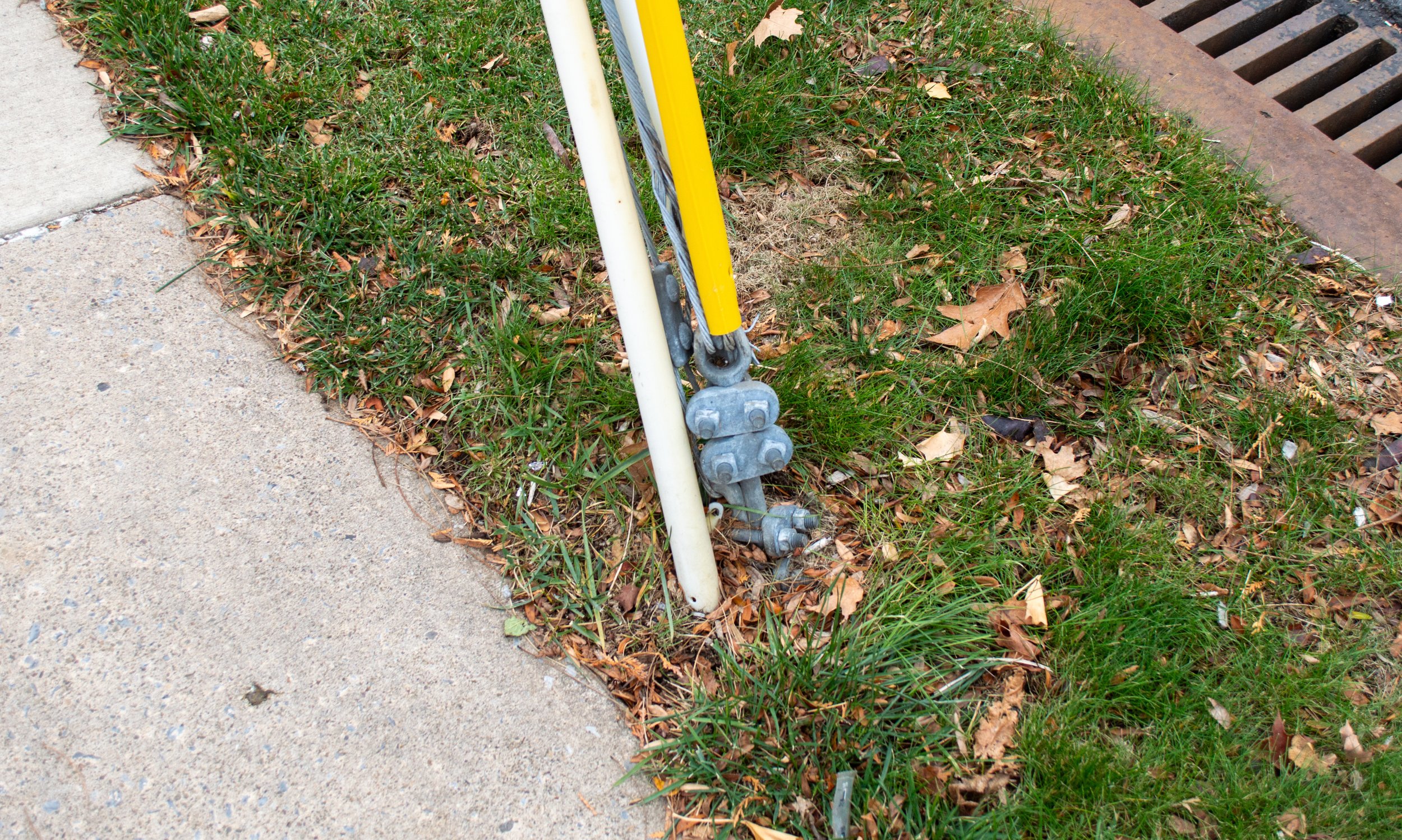
Tensioning a guy is not about cranking it as tight as it will go. The goal is a pole that stands vertical after the line is at full load. A guy left too loose lets the pole lean toward the pull, and a guy pulled too tight bows the pole the other way, which is just as far out of plumb and looks worse. The crew tensions the guy, sights the pole for vertical, and adjusts until it stands true. Because the strand reaches its final sag as temperatures settle, the plumb check is worth a second look once the line has had time to find its resting tension.
Shared Poles, Strain Insulators, and Public Safety
Most aerial fiber rides poles that also carry power, and that changes the safety picture for a guy. A steel guy wire near energized conductors can become energized itself, so a strain insulator installed in the guy near the pole keeps voltage off the lower portion that people can reach. Ameren's distribution guying standard details where fiberglass strain insulators belong on guys associated with higher-voltage circuits, and the same logic protects a fiber crew working below. Near the ground, a brightly colored guy guard makes the wire visible so pedestrians and vehicles do not walk or drive into it. Any work near energized lines also falls under OSHA approach-distance rules and belongs only to qualified crews.
Where Anchoring and Guying Go Wrong
The most common failure is an anchor sized for the load but not for the soil, which holds through installation and lets go in the first real storm. A close second is a guy lead cut short to dodge an obstacle without sizing the hardware up for the steeper angle, which quietly overloads both the guy and the anchor. Skipping the strain insulator on a power-shared pole is a safety failure rather than a structural one, and it is the kind of shortcut that turns a routine guy into a hazard. The quietest mistake of all is tensioning by eye and walking away from a pole that is already leaning, because that lean only grows.
The Guy Decides Whether the Line Stays Where You Set It
A clean dead-end or corner is the product of an anchor matched to the soil, a guy angle that keeps the load efficient, and tension set to leave the pole standing plumb under full load. None of it shows from the road, and all of it determines whether the line holds its sag and clearance through twenty winters or starts drifting after one.
TermLink Solutions builds aerial fiber that stands where it is set, with crews who size anchors to the ground they go in, set guy geometry that holds, and tension every assembly to leave the pole plumb. If you are planning an aerial route with dead-ends, corners, or heavy spans that need to hold for the long haul, reach out to our team and let's anchor it right the first time.
