

Heat Illness Prevention for Fiber Crews: A National Safety Month Field Guide
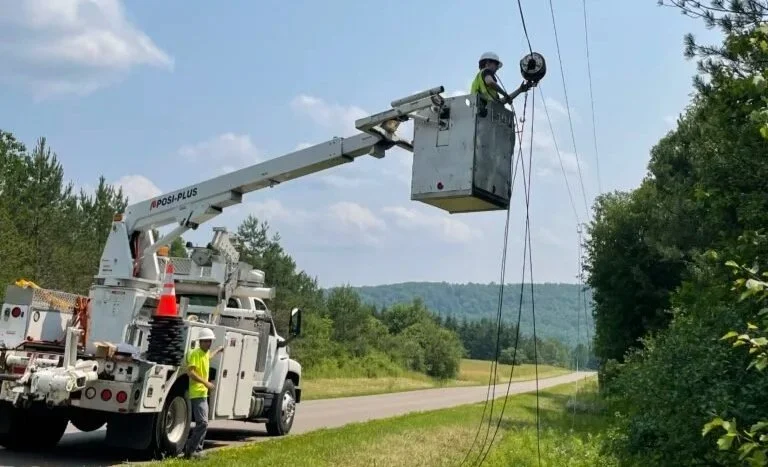
A fiber crew works where the heat is worst. The job puts technicians in a bucket truck in full sun with no shade to step into, in long sleeves and climbing gear that trap body heat, often on a rural road far from the nearest hospital. Add the radiant warmth coming off the truck and the conductors overhead, and a summer afternoon on an aerial build can push a body past its limit faster than anyone expects. A dizzy spell at a desk is an inconvenience. The same dizzy spell forty feet up is a fall waiting to happen.
June is National Safety Month, led by the National Safety Council since 1996 and reaching its 30th anniversary this year, and heat-related illness is one of the hazards the observance returns to every summer for good reason. This field guide covers how to prepare a crew for heat, how to catch heat illness before it turns serious, and how to respond when it does. It also connects to the seasonal realities laid out in our guide to how weather affects fiber construction in the Northeast, where summer is the season the work actually gets done.
Acclimatization Is the Control That Saves Lives
The single most dangerous moment in a hot work season is the beginning of it. According to OSHA's heat exposure guidance, somewhere between half and three-quarters of outdoor heat fatalities happen in a worker's first few days on the job, because the body needs time to build its tolerance to heat. That process is called acclimatization, and a crew that skips it is the crew most likely to lose someone.
The fix is a deliberate ramp-up rather than a hard start. A common approach holds new workers to a fraction of full exposure on the first day and increases that share gradually across the first week, so the body adapts before it is asked to perform at full output in full heat. The same caution applies to experienced hands coming back from vacation or a stretch of cool weather, since tolerance fades after even a week away. Treating the first hot week as a build-up rather than business as usual is the difference between a sound crew and an ambulance call.
Water, Rest, and Shade Are Not Optional
OSHA's longstanding framework comes down to three words that every supervisor should be able to recite, which are water, rest, and shade. Water means drinking before thirst arrives, on the order of about one cup every fifteen to twenty minutes during heavy heat, because a worker who waits until they feel thirsty is already behind. Rest means real breaks scheduled into the day rather than break time borrowed back to finish a span. Shade means a genuine cool-down spot, even if that is the cab of an air-conditioned truck staged nearby, since an aerial site rarely offers a tree to stand under.
These controls also map to the heat-index thresholds at the center of the heat illness prevention rule OSHA proposed in 2024, which has not been finalized as of 2026 but which many employers already treat as a working benchmark. The proposal would trigger water and shade access around a heat index of eighty degrees and add mandatory rest and closer monitoring near ninety. OSHA continues to cite heat hazards under its General Duty Clause in the meantime, so the absence of a final rule is not an absence of obligation.
Reading the Signs Before They Turn Serious
Heat illness moves along a path, and catching it early is what keeps it from reaching the dangerous end. Heat exhaustion usually shows first. A worker sweats heavily while the skin turns cool and clammy, and a headache or a wave of dizziness sets in soon after. Nausea and a heavy weakness can follow, and that is the body signaling it is losing the ability to cool itself. The right response at that stage is to stop, move the worker to shade, and get water and active cooling going.
Heat stroke is the emergency on the other side of that line. The skin may turn hot and dry or stay slick with sweat, and the warning most worth watching for is a change in how a person thinks or speaks. Confusion or slurred speech means the call to 911 cannot wait, and cooling the worker has to begin immediately while help is on the way. Heat stroke is a medical emergency that can kill or cause lasting harm within minutes, and no span on any schedule is worth gambling against it.
The Buddy System and the Rural Problem
People in the grip of heat illness are often the last to recognize it, which is why a crew cannot rely on workers to flag their own symptoms. A buddy system, where partners check on each other through the hottest part of the day, catches the confusion and the stumble that the affected worker will rationalize away. Supervisors trained to read the early signs add another layer of protection.
Rural aerial work adds a problem that urban crews rarely face. When the nearest hospital is forty minutes out, the time between collapse and care stretches dangerously long, so every crew should know its exact location well enough to direct an ambulance to it before anyone needs one. Working out that answer in the morning is far better than searching for it during an emergency.
A Safe Crew Is a Sign of a Disciplined Build
Heat illness is predictable and preventable, which is exactly why falling to it reflects a failure of planning rather than bad luck. Acclimatizing the crew, building water and rest into the day, and watching each other for the early signs are not soft measures. They are the same operational discipline that produces clean splices and on-time builds.
TermLink Solutions runs crews who are trained to work safely in the heat because protecting our people and protecting the quality of the build are the same commitment. If you are choosing a construction partner and want one whose jobsite discipline shows up in everything from heat safety to splice quality, reach out to our team and let's talk about how we run a build.
