

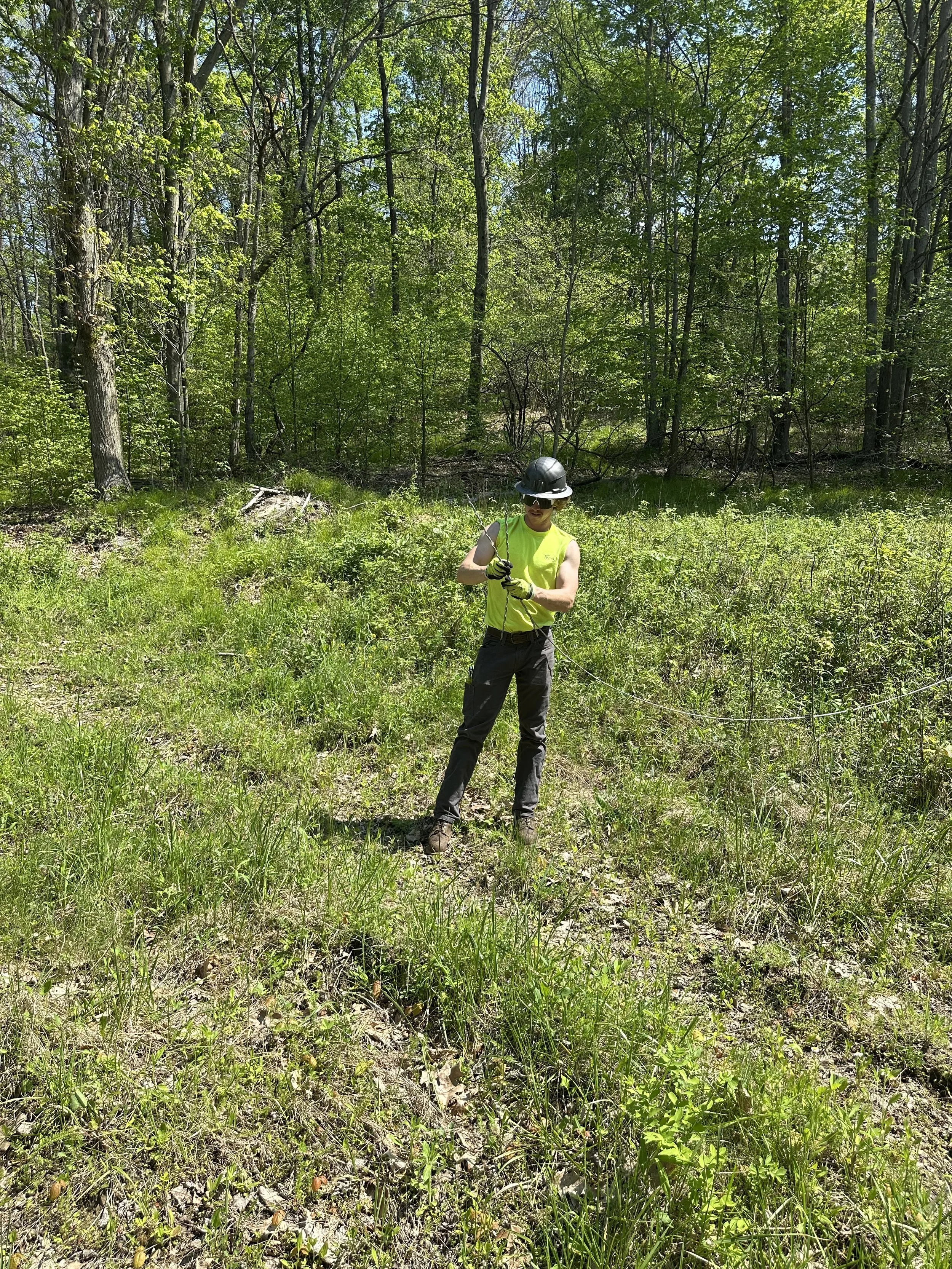
Every lashed aerial fiber span rests on one load-bearing component, and it is not the fiber. The messenger strand carries the full mechanical weight of the line, while the fiber cable rides along beneath it, held by a continuous spiral wrap of lashing wire. When the strand is sized correctly and tensioned to specification, the cable underneath stays protected for the life of the network. When the strand is undersized or tensioned by feel, the problems surface later as excessive sag that pulls the line below required clearances and fatigues the cable before its time.
This guide walks through how the strand and lashing system actually works, from selecting and tensioning the messenger to lashing the cable cleanly across each span. For any provider or contractor running aerial fiber across utility poles, getting the support messenger right is what separates a build that holds up from one that generates trouble tickets and clearance problems down the line.
The Messenger Strand Carries the Load
A steel messenger strand is built from six wires wrapped around a single center wire, and the most common version is carbon steel finished with a zinc coating. That coating does more than fight surface rust. According to the Fiber Broadband Association's aerial deployment guidance, the zinc provides cathodic protection to the steel underneath, and the coating is classified by thickness as Class A, B, or C, with each step up roughly doubling the protection of the one before it. For coastal routes and other aggressive environments, a zinc-aluminum coating resists corrosion better than pure zinc and extends the working life of the plant.
Strand is specified by diameter and breaking strength, and the right choice depends on the span lengths along the route and the weight of the cable it has to carry. A heavier cable or a higher fiber count needs a stronger strand. Spans crossing a high ice-and-wind loading district need more strength still. A strand sized only for today's cable with no margin left over forecloses any chance of overlashing later, so building in reserve capacity at the start is almost always the cheaper decision over time.
Tension and Sag Belong to the Table, Not the Feel of the Line
Strand tension is an engineered number, not a judgment call. Cable manufacturers and the loading tables published for each district give the installation sag and tension for a given strand size at a given temperature, and the crew sets the line to that figure on the day of the pull. Temperature matters because steel expands in heat and contracts in cold, so the same span sags differently in August than it does in January.
Getting this wrong cuts both ways. A strand pulled too loose sags into clearance violations and makes the lasher struggle to travel a clean line. A strand pulled too tight loads the pole hardware with stress it was never rated to carry. Corning's recommended procedure for lashed aerial placement is direct on the point and warns crews not to place strand below the recommended tension, since doing so can adversely affect the transmission characteristics of the fiber itself. You can read the full procedure in Corning's lashed aerial standard recommended procedure. The one exception is the slack span running from the last pole into a building, which is the only segment intentionally tensioned below the critical value.
Lashing the Cable to the Strand
Once the strand is up and tensioned, a second crew comes through to attach the fiber. The lasher rides the strand and wraps lashing wire in a continuous spiral that binds the cable to the messenger. On routes a reel truck can drive, the moving-reel method raises and lashes the cable in one pass. On routes a vehicle cannot reach, crews pull the cable into place beneath the strand on stringing blocks and lash back toward the reel.
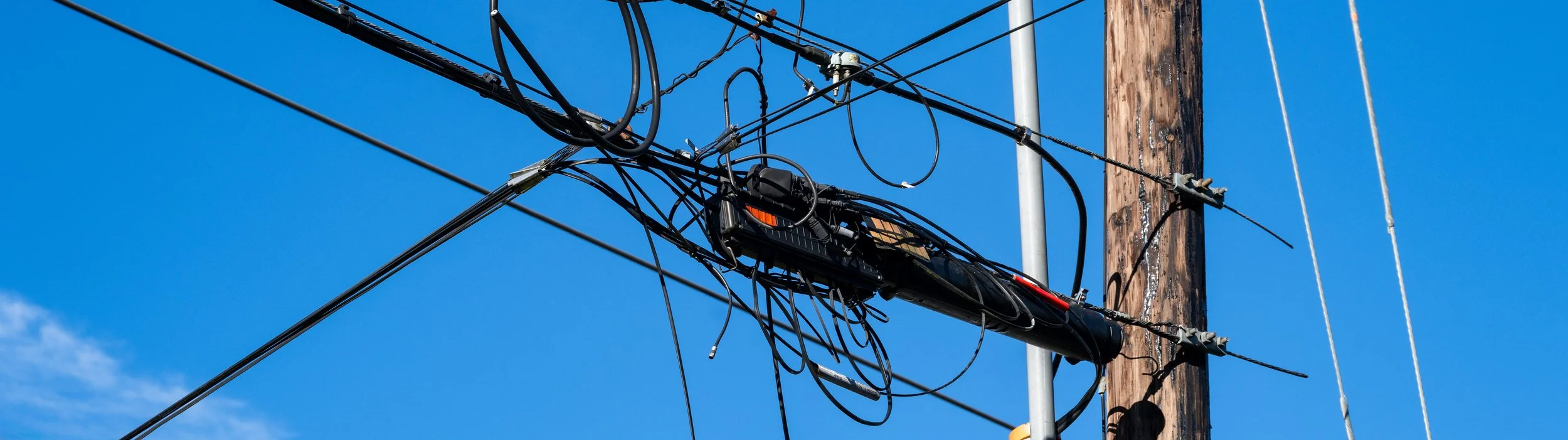
At every pole the work pauses. The stringing blocks come off the strand, the lasher moves past the pole, and the cable is formed into an expansion loop before lashing continues on the far side. Those expansion loops give the cable room to move as temperatures swing, and skipping them is a quiet way to build tension faults into a line that looks fine on the day it goes up. In spans exposed to heavy wind or vibration, a second pass of lashing wire adds resistance that a single wrap cannot provide on its own.
Overlashing: Adding Capacity Without Adding Poles
Overlashing places a new cable alongside an existing one and wraps both to the same strand, which lets an operator add fiber without negotiating new pole attachments or finding new space in a crowded communication zone. It is one of the most cost-effective moves in aerial construction, but only when the existing strand has the reserve strength to carry the extra weight. Before any overlash, the host strand and its attachments need a fresh look at loading and sag, because a messenger already near its limit will sag past clearance once a second cable goes on. This is exactly why the reserve capacity decision made on the first build pays off years later.
Where Strand-and-Lash Builds Go Wrong
The most common mistake is sizing the strand for the cable in hand and nothing more. The build passes inspection, then stalls the day the operator wants to overlash and discovers the messenger has no capacity left.
A close second is tensioning by feel instead of by the table. A line that looks right to the eye can sit well outside its engineered sag, and the consequences show up as clearance failures during the next audit rather than on installation day.
The third recurring failure is neglecting to bond and ground the metallic strand. The messenger is a continuous run of steel along the route, and leaving it unbonded turns a safety component into a liability when a fault or a lightning event finds it.
The Strand Decides How Long the Build Lasts
A clean lashed span is the product of a strand sized with room to grow, tensioned to its engineered sag, and wrapped with cable that has been given room to move at every pole. None of that work is visible from the road once the build is energized, which is precisely why it gets shortcut and precisely why those shortcuts cost network owners money down the line.
TermLink Solutions builds aerial fiber that is engineered to hold its line for decades, with crews who size and tension the messenger to spec and lash every span the way the standards call for. If you are planning an aerial route and want it built to last from the strand up, reach out to our team and let's get it right before the first reel goes on the truck.
