

NESC Clearance Requirements for Aerial Fiber: A Field Guide for 2026
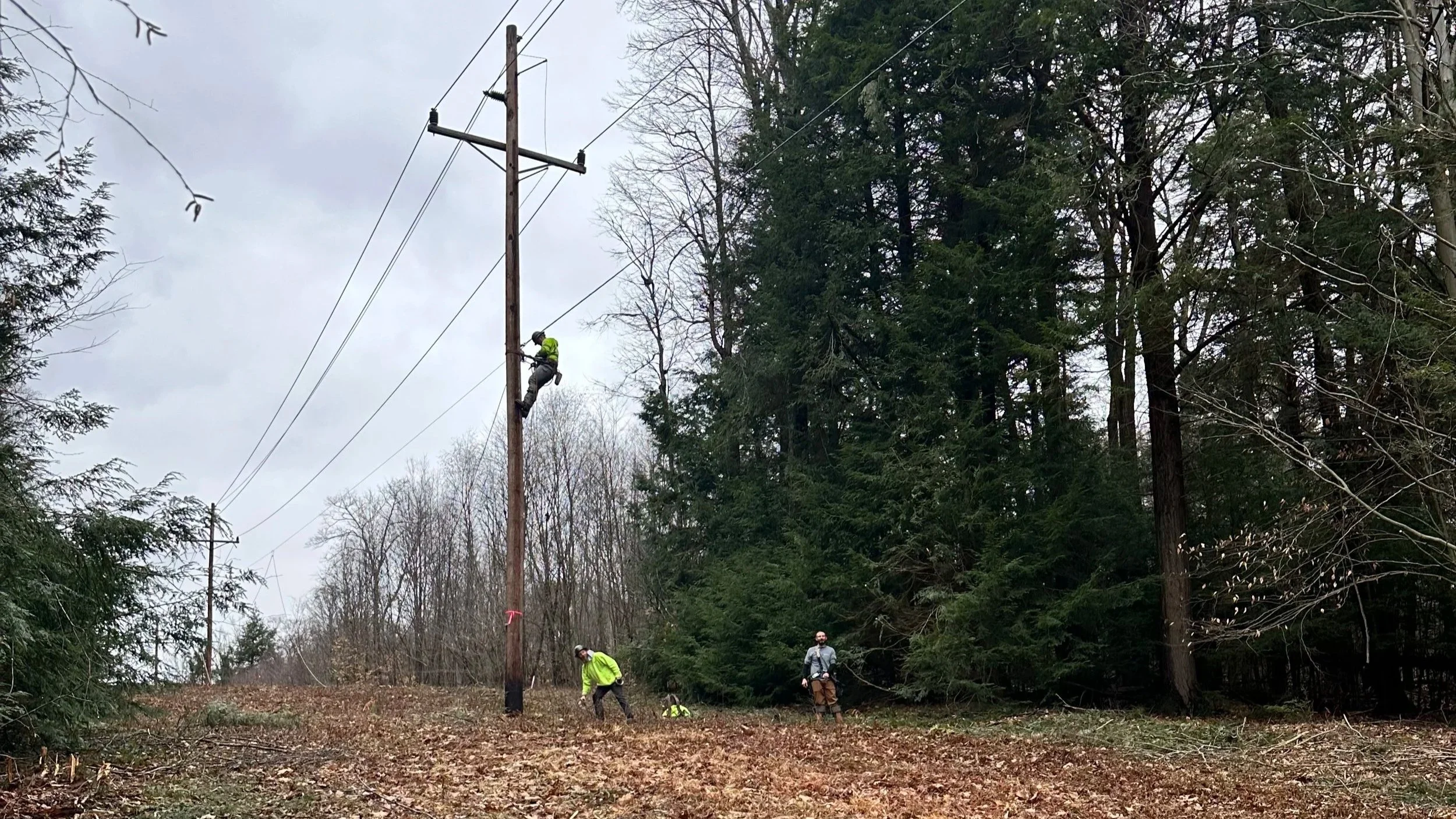
Aerial fiber construction lives and dies by clearance. Every cable lashed to a strand, every drop run to a home, and every mid-span attachment on a shared pole has to sit inside a precise vertical and horizontal envelope defined by the National Electrical Safety Code. Miss those numbers by a few inches, and a project can face failed inspections, costly rework, forced re-sagging, or liability exposure that lingers for years. For contractors, municipal broadband planners, ISPs, and network owners working in 2026, understanding how the NESC governs aerial fiber placement is the foundation that every pole attachment agreement, make-ready calculation, and storm restoration timeline is built on.
This field guide covers which edition of the NESC applies in 2026, where fiber belongs on the pole, the vertical and horizontal clearances that govern the work, and how those numbers change under real field conditions.
Which Edition of the NESC Governs Aerial Fiber Work in 2026
The code in effect across most of the country right now is the 2023 National Electrical Safety Code, published by the Institute of Electrical and Electronics Engineers on a five-year cycle. The 2023 edition introduced updated treatment of fiber-optic supply cables and a stated priority for customary inch-foot-pound measurements over metric values to prevent misreading errors in the field. The full code is available through the IEEE Standards Association.
The next edition is scheduled for 2028. Contractors should track state-level adoption carefully, because some states enforce older editions or add their own amendments. Pennsylvania enforces the NESC as the baseline for all utility construction, which means projects across the Commonwealth work to the 2023 edition unless a specific utility or project owner requires stricter standards.
Where Fiber Belongs on the Pole: The Communication Space
Every joint-use utility pole is divided into three zones from the ground up: the roadway clearance zone at the bottom, the communication space in the middle, and the supply space at the top where electric conductors live. Fiber optic cables are classified as communication cables and are placed in the communication space by default, sharing that zone with telephone, cable television, and other low-voltage signal lines.
The top of the communication space is bounded by what the NESC calls the Communication Worker Safety Zone: a forty-inch vertical buffer between the highest communication attachment and the lowest supply conductor, established by Rule 235C4 and related provisions. The buffer exists so that a communication technician working on fiber does not accidentally contact or arc across to an energized power conductor overhead. When fiber is being attached to an existing pole and that buffer is not present, make-ready work has to create it, usually by raising the supply line, lowering the communication lines, or replacing the pole.
Fiber can also be installed in the supply space, most commonly when an electric utility owns the fiber for its own operations such as SCADA or protective relaying. Supply-space fiber is subject to different clearance rules and must be installed by qualified electrical workers, not standard communication crews.
Vertical Clearances Above Ground, Roadways, and Water
NESC Table 232-1 is the reference every aerial fiber designer should have open during sag calculations. It sets the minimum vertical distance between a cable and whatever is underneath it: the ground, a roadway, a driveway, a pedestrian path, or a body of water. For communication conductors, the commonly cited numbers are fifteen and a half feet over roads and streets subject to truck traffic, fifteen feet over driveways and parking areas not normally used by heavy vehicles, and nine and a half feet over spaces limited to pedestrians only. That last reduced clearance is one of the most disputed and misapplied rules in the code, because the NESC defines a roadway to include its shoulder. Higher clearances apply over railroads, navigable waterways, and routes subject to oversized vehicle traffic.
These numbers assume final sag, which is the position the cable settles into after it has fully tensioned, loaded with ice and wind according to the district loading map, and deformed inelastically over time. Designers who calculate clearances off initial sag and forget the loaded condition routinely end up with violations that only appear during the first heavy winter. Manufacturer sag tables combined with the correct district loading values are the only reliable way to confirm a span will hold clearance across its service life.
Clearances From Supply Conductors and Guys
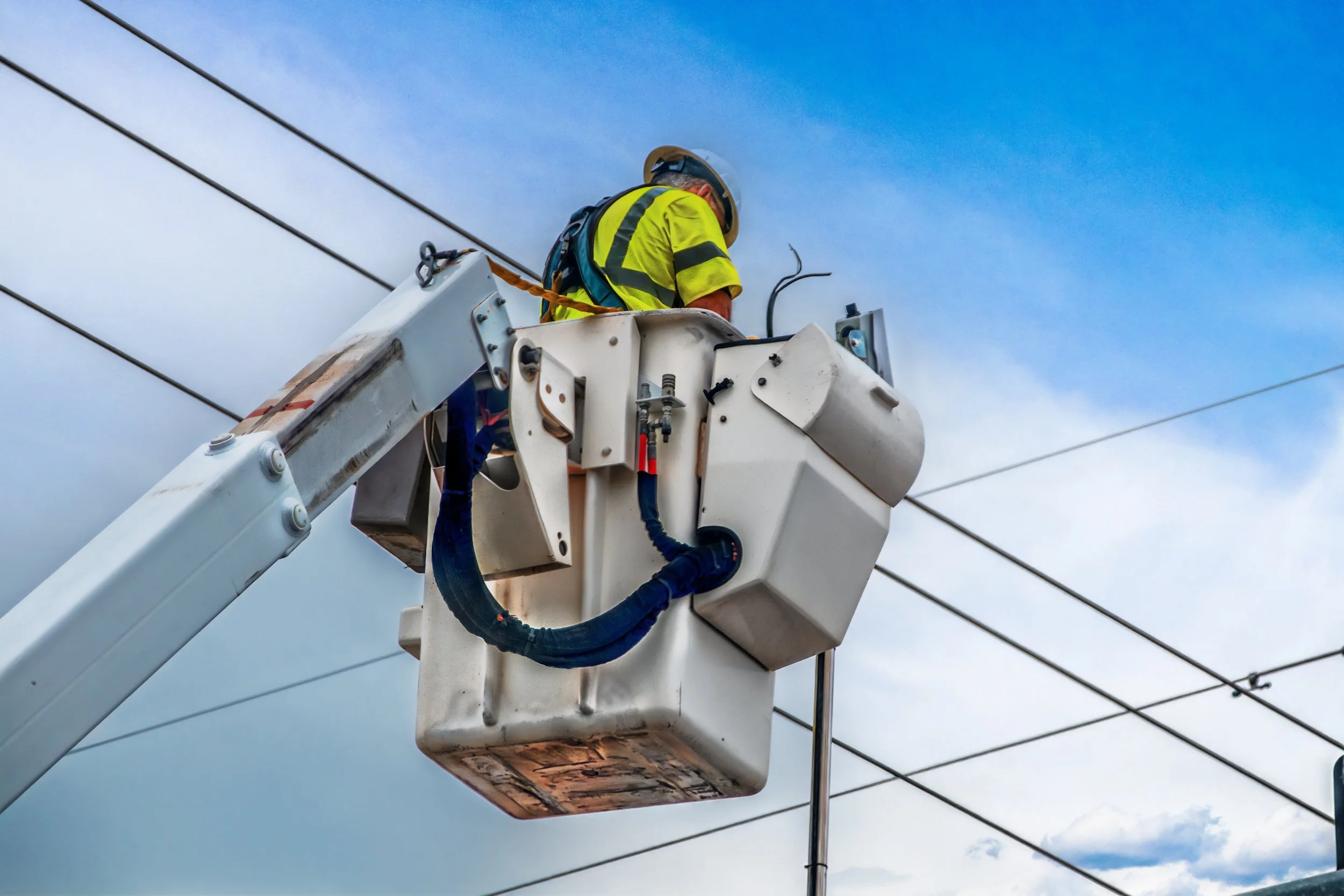
The relationship between communication cables and supply conductors on the same pole is one of the most technically dense parts of the NESC. Table 235-5 lays out the vertical clearances at the pole itself, while Rule 235C governs clearances at mid-span, where cable sag can bring communication and supply lines closer together than they are at the supports.
Aerial fiber crews should know the key numbers by heart: forty inches minimum between the top of the communication space and the bottom of the supply space at the pole, thirty inches minimum at mid-span between a communication cable and a multi-grounded neutral, forty inches to secondary supply conductors and to the top of a primary or secondary duct, progressively greater distances to higher-voltage primaries, and six inches between a grounded guy wire and a communication cable where they cross or run parallel.
Mid-span clearance is where a lot of otherwise clean designs fall apart. Communication messenger strand sags more than power conductors in hot weather, and it sags differently than primary wire under ice loading. A span that meets the forty-inch safety zone at the pole can close to less than thirty inches at mid-span on a hundred-degree summer day if the design did not account for differential sag. It is one of the most common reasons inspections fail.
Clearances From Buildings, Signs, and Other Structures
NESC Rule 234 governs how close aerial fiber can run to buildings, signs, bridges, antennas, and other structures. For communication cables, the commonly applied minimums are three feet horizontally from a building wall, eight feet vertically above a roof accessible to pedestrians, and three feet above a roof that is not readily accessible. These clearances assume final sag with wind displacement, which can push the span several inches toward the structure under heavy wind loading.
Urban and tight-right-of-way environments are where these rules become design constraints rather than box-checking exercises. A narrow alley with buildings on both sides may not physically accommodate the horizontal clearances the code requires, which forces the project into underground routing or alternate pole placement. These decisions belong in the design phase, because discovering a clearance problem after poles are set is an expensive problem to fix.
How Make-Ready Work Creates Code-Compliant Poles
Most aerial fiber projects in 2026 are attaching to existing utility poles owned by electric or telephone utilities, not building new pole lines. Clearance compliance almost always starts with make-ready work: the engineering analysis and physical modifications that bring a pole into compliance before the new fiber attachment is installed.
A typical make-ready scope includes loading analysis to confirm the pole can structurally carry the added attachment, clearance measurement against the full NESC table set, rearrangement of existing attachments to create room in the communication space, transfer to a taller replacement pole where needed, and coordination with every other attacher on the pole. The rural electric cooperative network has published extensive guidance on this process, and the NRECA joint-use clearance guide remains one of the clearest working references for field teams.
Make-ready is often the longest line item on an aerial fiber construction schedule. On projects with heavy pole populations, it can take six to twelve months from application to completion, and projects that underestimate this timeline are the ones that miss grant-funded completion deadlines.
What to Verify Before Construction Starts
Every aerial fiber project should have a clearance compliance checklist signed off before the first strand is lashed. At minimum, that checklist should confirm the NESC edition in effect, the cable type and its loaded sag values under the correct district loading, preservation of the Communication Worker Safety Zone at every pole, mid-span clearances that hold under worst-case thermal and loading conditions, horizontal clearances that meet Rule 234 minimums, completed make-ready work, and a pole attachment application approved in writing.
For network owners and municipal broadband planners, the question is whether the contractor bidding your project can demonstrate this work. A proposal that does not mention NESC compliance, make-ready planning, or sag analysis is a proposal from a contractor who will discover clearance problems on your time and your budget.
Building Networks That Stay Compliant for Decades
Clearance requirements are not a one-time box to check at construction completion. Every storm restoration, every pole replacement, and every new attacher that joins the pole after your fiber is installed can change the clearance picture. The contractors who build networks that stay compliant for decades are the ones who document clearance measurements during construction, keep as-built records capturing exact attachment heights and sag values, and respond to future make-ready requests in a way that preserves the original design.
TermLink Solutions builds aerial fiber networks across Pennsylvania and beyond to the standards the NESC actually requires. Our crews understand the 2023 code in the field, not just on paper, and we coordinate make-ready, loading analysis, and clearance verification as part of every project. If you are planning an aerial fiber build, a copper-to-fiber migration, or a post-storm rebuild where clearance compliance matters, reach out to our team and let's build your network right the first time.