

Multiport Service Terminals: How Modern Aerial FTTH Reaches the Home
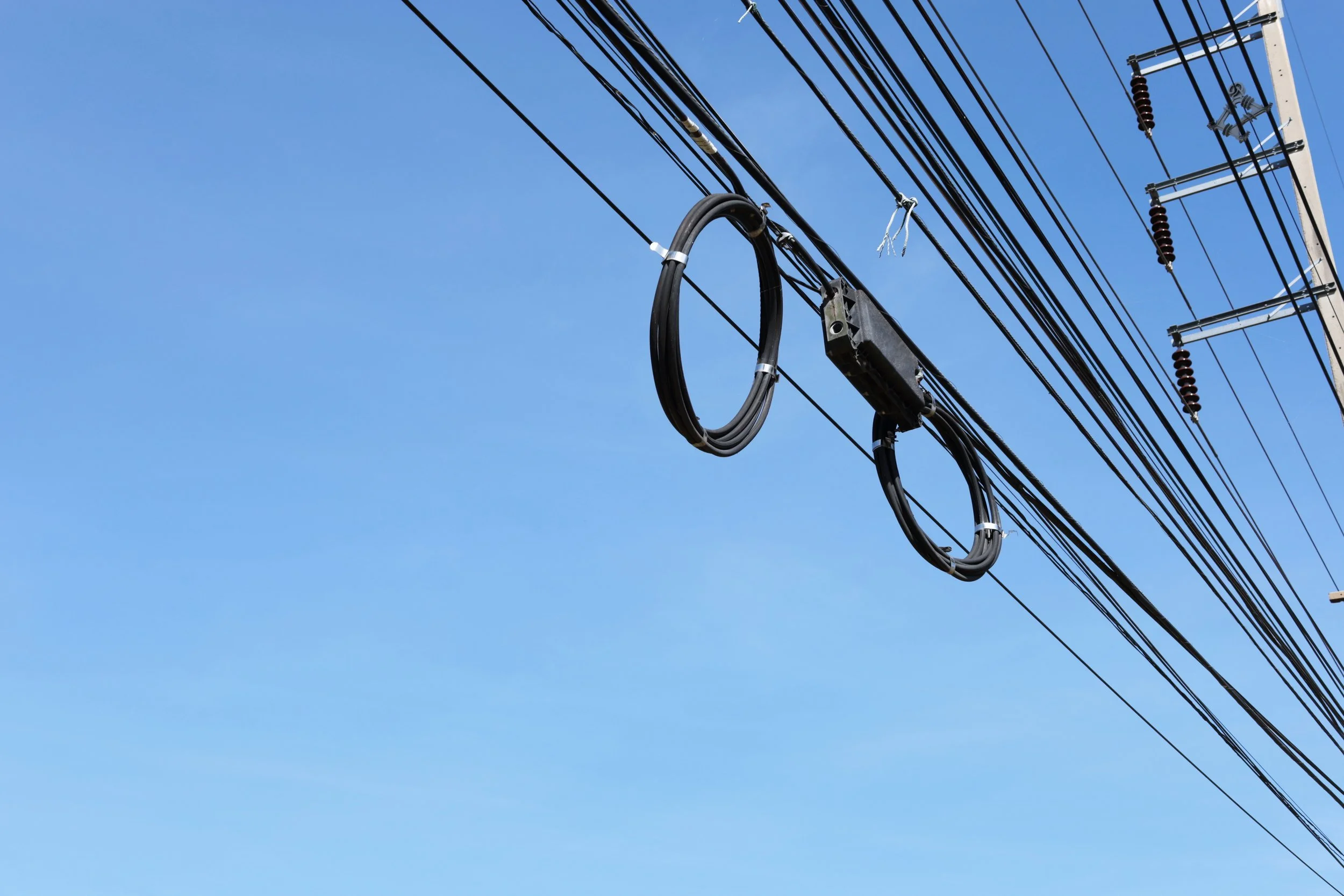
Most of what we cover in the Fiber Files happens above the road. Strand and lashing carry the cable, anchors and guys hold the line in tension, and clearance keeps the plant safe below the power space. All of that work exists to deliver one thing, and that is a working connection at the subscriber. The multiport service terminal is where the aerial network finally meets the home.
For a long time, that final connection was the slowest and most skill-dependent part of any fiber build. Modern hardened terminals have changed the equation. If your last mile still depends on a technician opening a closure and fusion splicing every drop, you are spending time and money that the current generation of aerial FTTH no longer requires.
What a Multiport Service Terminal Actually Is
A multiport service terminal, commonly called an MST, is a hardened outdoor enclosure that connects a feeder fiber to several subscriber drops through factory-sealed, plug-and-play ports. The terminal is assembled, sealed, and optically tested in the factory before it ever reaches the field. Each port accepts a hardened connector that is already environmentally rated for outdoor service.
The defining feature is that the MST eliminates field splicing at the customer drop point. A technician does not open the enclosure to activate a new subscriber. The drop cable simply plugs into an available port, and service is live. That single change is what makes the modern terminal so much faster than the closures that came before it.
Most terminals are built with four, six, eight, or twelve ports, and the port count is matched to how many homes a given section of the build needs to serve. The enclosures carry an IP68 environmental rating, operate across a wide temperature range, and are designed to remain in service for fifteen to thirty years once installed.
Why the Industry Moved Away From Field Splicing
The traditional approach placed a splice closure at the drop location and required a fusion splice for every home connected. That work is precise and slow, and it demands a skilled splicer on site for each activation. Every closure opening is also a chance for moisture, contamination, or a bad splice to enter the network.
The hardened terminal removes that exposure. Because the connectors are factory-terminated and pre-tested, the optical quality is set before the unit leaves the manufacturer. A crew installs the terminal once, and every future activation happens at the port without disturbing the sealed interior. By late 2025, pre-connectorized terminals had become the default drop strategy for the large majority of new FTTH connections in North America, and the reason is straightforward. The approach turns a specialized craft into a repeatable, scalable process.
How the Terminal Mounts on Aerial Plant
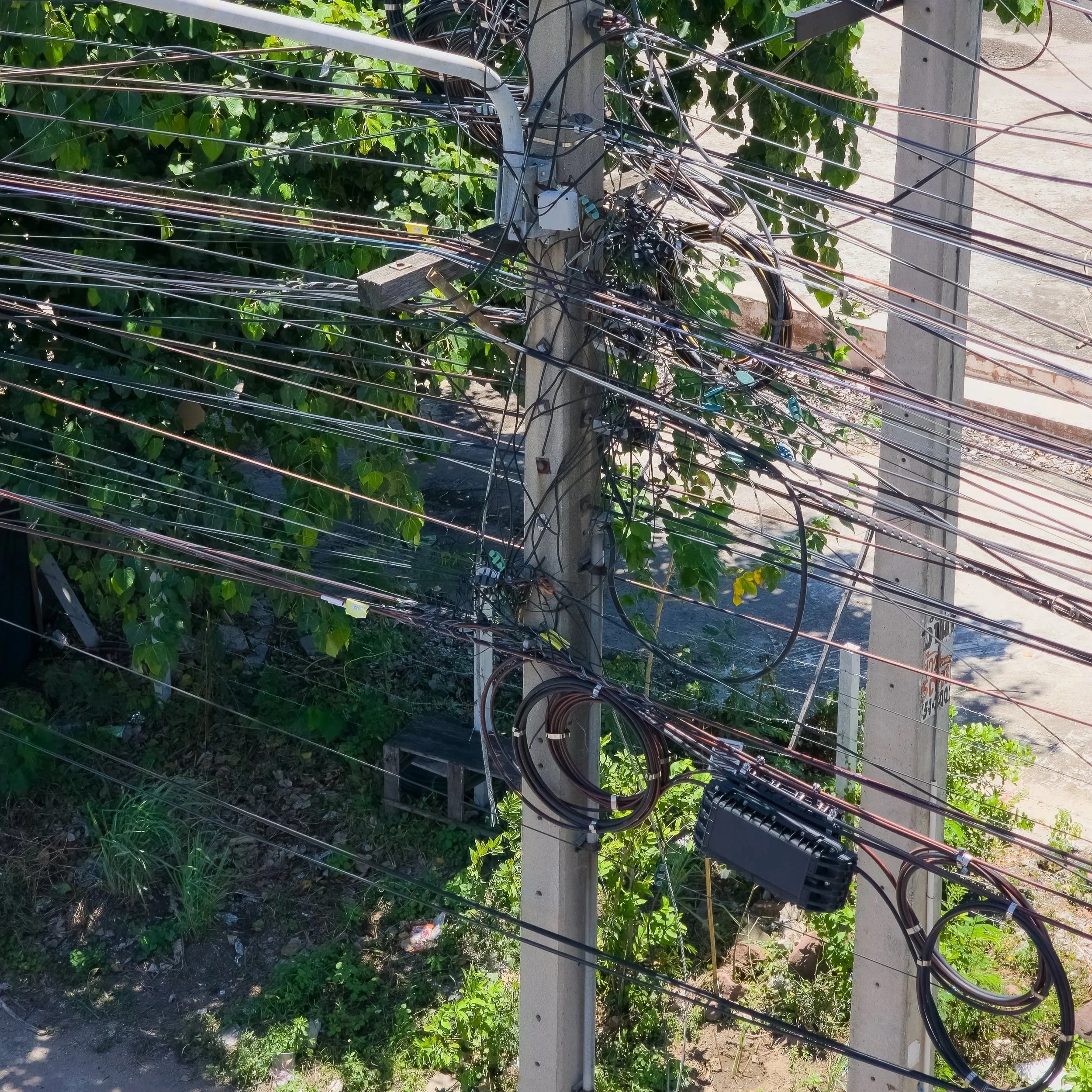
On an aerial build, the MST lives in the communication space below the power conductors, and it mounts one of two ways. A strand-mount terminal clamps directly to the messenger with stainless steel bands or a bracket kit, which places the unit right on the span where the homes are. A pole-mount terminal attaches to the pole itself, which suits locations where a terminal belongs at a framing point rather than mid-span.
Placement is a design decision, not an afterthought. The terminal has to sit where clearance is maintained, where the drops can reach their homes without excess strain, and where a bucket truck can reach the unit for future service. On a lashed line, the crew accounts for the added hardware when planning sag and support, because the terminal and its stored slack add weight at a specific point on the span.
Feeder and Splitter Configurations
Terminals come in two feeder styles. A stubbed terminal ships with a pre-terminated feeder cable, often a length of tens to hundreds of feet, that plugs into the distribution network with a hardened connector. A splice-in terminal includes a feed-through port so the feeder can be spliced to the distribution cable one time, inside a standard closure, at initial installation.
The terminal can also carry an optical splitter. In a passive optical network, a built-in splitter divides one feeder fiber among all of the terminal ports, which is what allows a single distribution fiber to serve an entire cluster of homes. That split adds insertion loss, which is why the splitter has to fit inside the network's loss budget. In a point-to-point design, the terminal provides a direct fanout with a dedicated fiber to each port. The choice depends on the network architecture, and matching the terminal to that architecture is part of getting the build right the first time.
The Drop Connection at the Home
The subscriber drop is a hardened, pre-connectorized cable that runs from an open port on the terminal to the optical network terminal at the home. For aerial spans, that drop is typically a figure-8 or toneable flat cable with a steel messenger for self-support, jacketed to hold up against sun, weather, and handling.
Because both ends are factory-terminated, the drop is a plug-and-play part. One end seats into the terminal port, the other lands at the home, and there is no field splicing at either point. When a new customer signs up on a span that already has a terminal in place, activation is a matter of running the drop and plugging it in. The heavy construction was finished when the terminal went up.
Why This Matters to the Network Owner
For an ISP, municipality, or broadband manager, the terminal is where deployment economics and long-term reliability meet. The pre-connectorized approach lowers the labor and skill required at every drop, speeds up the connection of new subscribers, and removes the repeated exposure that comes from opening closures in the field. It also sets a clean, tested optical baseline at the factory rather than at the top of a pole in variable conditions.
The practical result is a network that is faster to build, faster to grow, and easier to maintain. Homes along a span can be passed today and connected months later without sending a splicer back to the same location. Each terminal and its port assignments belong in the as-built package so the network owner knows exactly what is where when it comes time to activate. For a build racing a grant deadline or serving scattered rural homes along a long aerial route, that repeatability is the difference between a schedule that holds and one that slips.
The terminal is a small piece of hardware, but it carries the whole point of the build. Everything upstream, from the strand to the clearance to the anchor at the corner, exists so that the connection at the home works and keeps working. Getting the terminal placed, mounted, and configured correctly is how the aerial network delivers on its purpose. The connection at the home is where all of it comes together.
