

Summer Vegetation and Aerial Fiber: Managing Tree Contact Before It Causes Outages
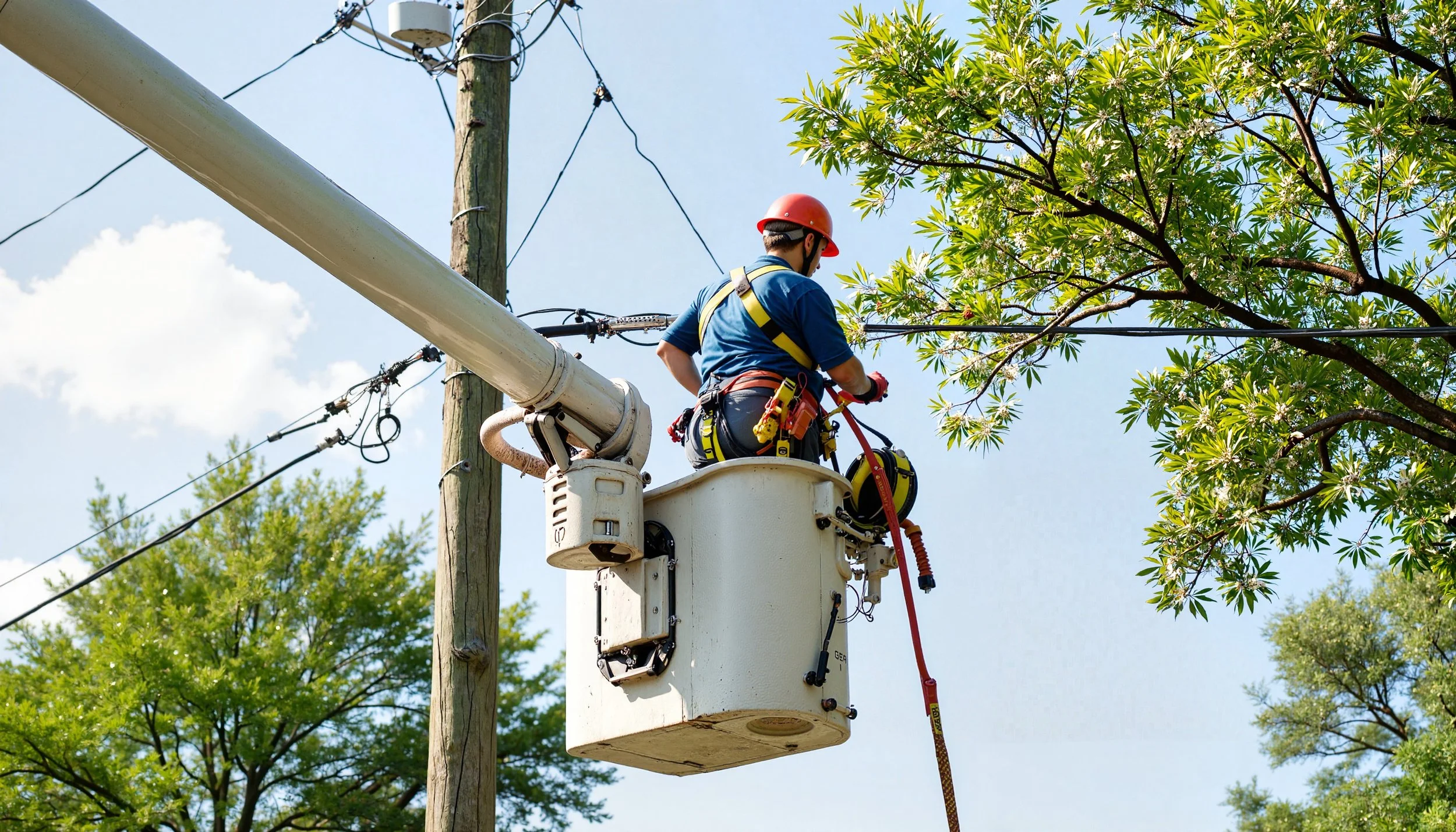
Aerial fiber runs through a right-of-way that is alive and growing, and in June it is growing fast. A branch that cleared the line comfortably in April can be resting on the cable by the middle of July, and a tree that looked harmless all spring can put a leafed-out limb across the span in the first real summer storm. Vegetation is the slow, patient threat to an aerial network, working season after season until it either wears through the cable or pulls it down. Managing it before it makes contact costs a fraction of what it takes to restore a line after a tree has taken it out.
This guide covers how vegetation actually damages aerial fiber, why summer is when it accelerates, and how to manage tree contact before it becomes an outage. Vegetation patrol is one piece of the larger program described in our guide to preventive aerial fiber inspections, and this post drills into the tree side of that work specifically.
Fiber Fails Differently Than Power
It helps to start with what fiber does not have to worry about. A power line fears a tree it never even touches, because vegetation close to an energized conductor can draw an arc that causes an outage or starts a fire. That is the hazard the whole electric vegetation-management world is built around. Fiber sits lower on the pole in the communications space and carries no current, so none of that applies to the cable itself.
What fiber faces instead is purely physical. A tree damages a fiber line by wearing on it, falling on it, or growing into it, and any of those produces the same result as an electrical fault, which is a dark network and a crew dispatched to find the break. The failure mode is mechanical rather than electrical, but the outage is just as real and often harder to locate.
The Ways Vegetation Takes Down a Line
The most insidious form of tree damage is abrasion. A branch that rests against the cable does not break it on day one. The wind moves the limb back and forth, and over many seasons that motion saws against the jacket like a slow file until it works through to the buffer tubes underneath. A tree-rub fault can take years to develop and then surfaces as creeping attenuation that is maddening to trace, because nothing looks broken from the road.
The faster failure comes from weight and storms. A summer limb heavy with leaves carries far more load and far more wind sail than the same branch did in winter, so a storm that would have passed harmlessly in March can drive that limb down onto the span in July. A whole tree coming down across the line takes the span with it. The third path is simple growth, where a tree expanding into the line loads it, displaces it, and steals the clearance the line was built with.
Why Summer Is When It Accelerates
June through August is peak growing season, which means the clearance a crew measured in spring is a moving target the rest of the year. Full leaf-out adds the weight and the wind exposure that turn a marginal limb into a falling one. The same summer thunderstorms that bring the lightning risk also bring the wind that drives vegetation into the line.
Heat works against the clearance from the other direction too. As the Federal Energy Regulatory Commission explains in its vegetation guidance, overhead lines sag lower in summer heat and sway in the wind, which is why prudent clearance is maintained well beyond what looks necessary on a cool, still day. The vegetation grows up while the line sags down, and the gap that looked generous in April closes from both sides by midsummer.
Who Trims, and Why a Fiber Crew Cannot Just Cut
This is where aerial fiber's shared-pole reality matters. The fiber may be in the lower communications space, but the trees that threaten it are usually growing up through the energized conductors above. Cutting that vegetation is line-clearance work that belongs to qualified arborists trained to prune near energized lines, following the national pruning and safety standards set by bodies such as the American National Standards Institute and the International Society of Arboriculture. A fiber technician with a pole saw is not the right answer near a primary conductor.
The practical path is coordination. The communications attacher works with the pole owner and the electric utility on clearing, and the most effective long-term tool is directional pruning, which trains a tree's future growth away from the line rather than simply cutting it back to regrow into the same problem.
Managing It Before It Is an Outage
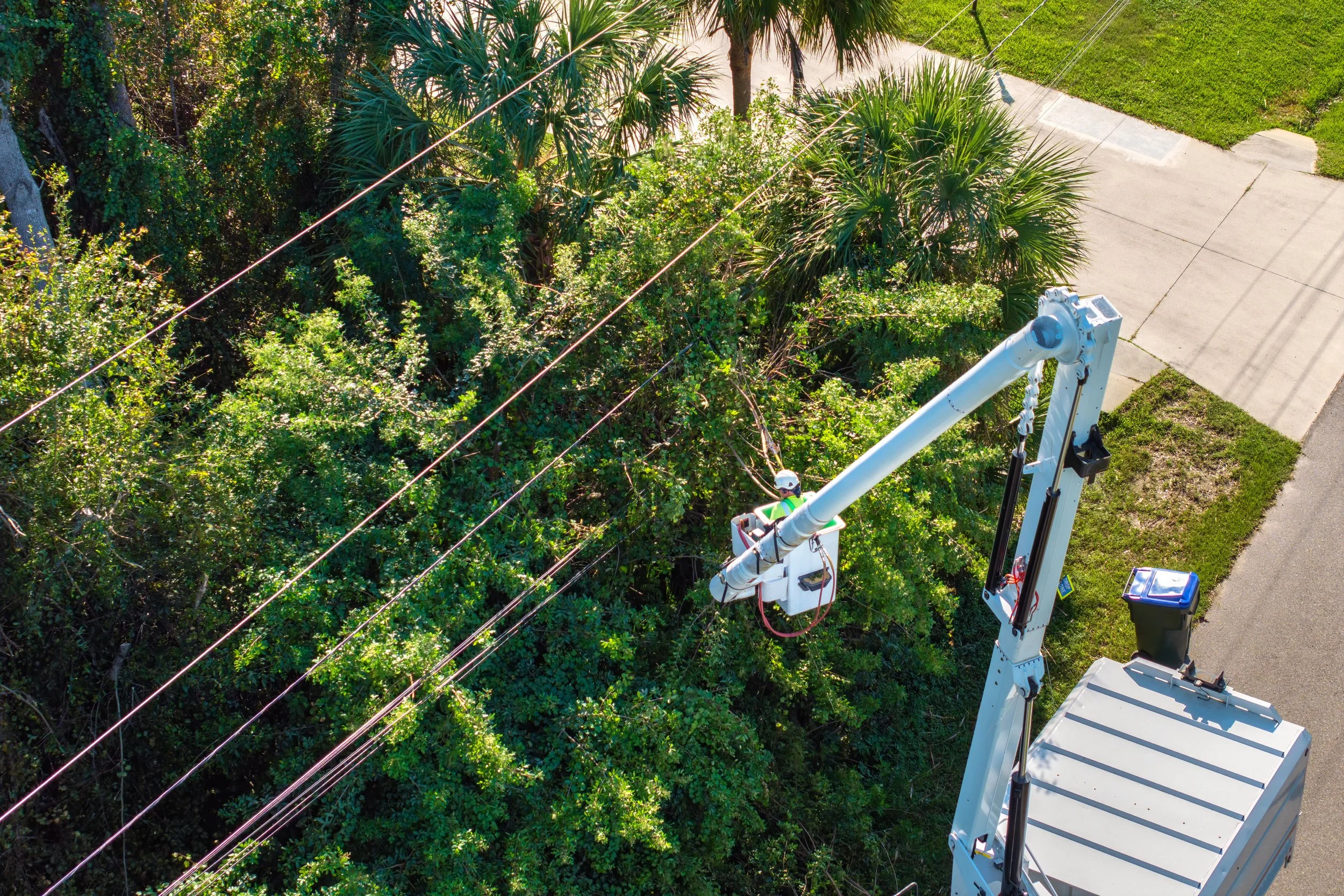
The work starts with patrolling the route specifically for vegetation, looking for the branches already resting on cable and the growth closing in on the span before either becomes a fault. Dead, dying, and leaning trees tall enough to reach the line deserve the most attention, because a danger tree outside the right-of-way can still fall across it and take the line down without ever having touched it. Where contact cannot be avoided in the near term, abrasion protection at the rub point buys time until a proper pruning can happen.
Long-term, the cheapest vegetation problem is the one never planted. Guiding property owners toward putting the right tree in the right place keeps a sapling planted today from becoming the limb that takes the line down in fifteen years. Vegetation management is less a single event than a standing relationship with a living right-of-way.
The Cheapest Outage Is the One the Tree Never Causes
Vegetation is the rare threat that announces itself well in advance, growing visibly closer every season before it ever causes a problem. A line that gets patrolled for encroachment, cleared by the right crews, and protected where contact is unavoidable is a line that rides out the summer while its neglected neighbor goes dark in the first storm.
TermLink Solutions helps network owners keep aerial fiber clear of the vegetation that threatens it, identifying encroachment and abrasion before they become outages and coordinating the line-clearance work that keeps the route open. If you want an aerial network managed against the slow threat of summer growth rather than restored after it, reach out to our team and let's keep your line clear before the trees close in.
