

Aerial Slack Storage: Where to Place Loops and How Much to Leave
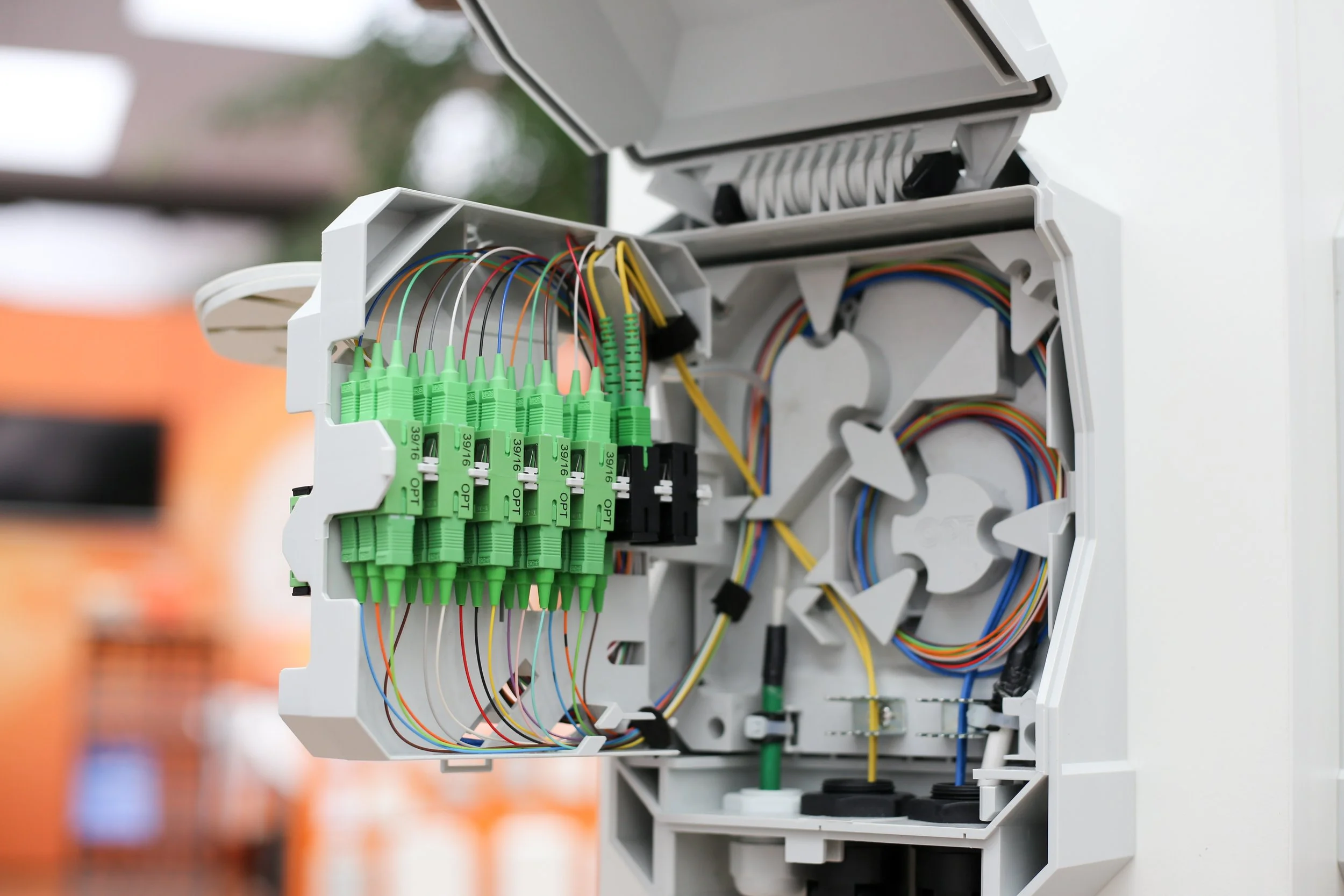
Fiber optic cable cannot be stretched. Once a span is up, the length that is up there is all there is, and every future splice, repair, or change consumes a little more of it. That single fact is the reason slack storage exists. A run built with stored slack lets a crew lower a closure to the ground to work on it and recover from a cut without pulling a fresh section of cable in from a reel. A run built without it turns a single break into a re-pull of the whole span. The cable that gets left behind on purpose is what makes the network maintainable for the next twenty years.
Slack storage looks like an afterthought, a few coils hung on the strand, but where those coils go and how much cable they hold decides how a future repair plays out. This guide covers why slack matters, where to place it, how much to leave, and how to store it without creating new problems. It connects directly to the work in our guide to mid-span access, since the slack stored today is what makes that kind of access possible tomorrow.
Why Stored Slack Is Not Optional
The clearest way to understand slack is to picture a fiber break in the middle of a span. To repair it, a crew has to bring the two cut ends together at a workable height, splice them, and protect the splice in a closure. If there is stored slack nearby, the crew pulls it in, lowers the work to the ground or to a splice trailer, and makes the repair. If there is no slack, there is no length to work with, and the only fix is cutting back to the nearest access point and pulling in an entirely new segment. One of those is an afternoon. The other is a project.
The same logic applies to planned work. Adding a drop, cutting in a new tap, or re-entering a closure all require enough cable to bring the closure down to where a technician can actually reach it. Slack is the difference between working at a comfortable height and trying to splice glass while hanging off a pole.
Where the Loops Belong
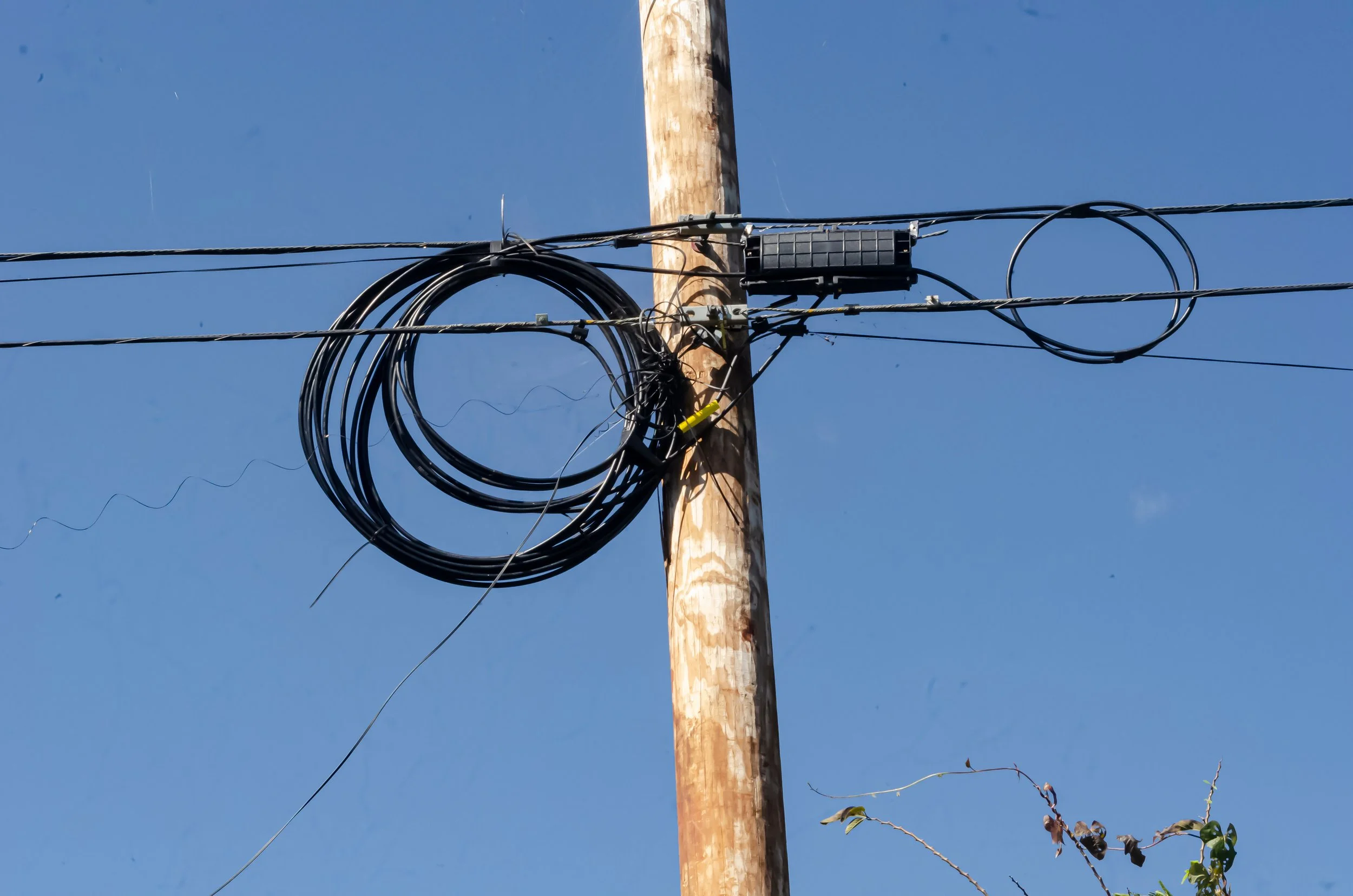
Slack gets stored wherever the network is most likely to need it. Every splice closure is the first priority, with storage placed on both sides so a future re-entry has length to draw from in either direction. According to Corning's procedure for lashed aerial installation, any point where the jacket is opened for a closure or an access cut-in should be built with coils on both sides holding at least five cable loops at or above the minimum bend radius. That gives the next crew something to work with no matter which direction the problem comes from.
Beyond closures, slack belongs at drop locations and at the access points where the network is designed to grow. On long runs that pass a stretch with no closure at all, placing a periodic storage loop is cheap insurance, because a break in that dead zone otherwise leaves a crew with no nearby length to borrow. Expansion loops at poles serve a related but separate purpose, giving the cable room to move as temperatures swing rather than storing length for maintenance.
How Much to Leave
The right amount of slack at a closure is enough to lower that closure to the working surface and back with margin to spare. In practice that means accounting for the height of the attachment plus the working length a splicer needs at ground level, which is why crews commonly store a generous coil rather than a token loop at each splice point. Too little slack is the same as none when the few feet available will not reach the ground.
There is such a thing as too much, though. Every loop of stored cable adds weight to the strand and presents more surface for wind to push on, so an enormous coil at every pole works against the tension and clearance the line was engineered for. The goal is enough length to do the likely future work, stored neatly, rather than every spare foot the reel had left.
Storing It Without Creating New Problems
How slack is stored matters as much as how much there is. The cable has to stay at or above its minimum bend radius through the entire coil, because winding it tighter than that induces the macrobend loss that shows up as attenuation long after the crew has left. Storage brackets made for the job hold the loop at a safe diameter, and the slack stored on the span stays organized instead of tangled. Where the cable passes a pole, an abrasion guide protects it from rubbing through over years of wind movement.
The stored loops also have to respect the same clearances as the rest of the line. A coil that sags below the line into the clearance envelope is a violation waiting to be cited, and a loop left loose enough to gallop in the wind will eventually chafe or fatigue. Securing the storage so it rides the span cleanly keeps it from becoming the very hazard it was meant to prevent.
Where Slack Storage Goes Wrong
The most expensive mistake is leaving too little slack or none at all, which quietly converts every future break into a span re-pull. A close second is coiling the cable tighter than its bend radius to make a neat package, trading a tidy install for attenuation that surfaces seasons later. Loops that sag into clearance or hang loose enough to gallop are the failures that turn up on the next inspection. The quietest problem of all is inconsistent placement that the next crew cannot predict, which is why where the slack lives belongs in the as-built record rather than only in the memory of whoever hung it.
Slack Is the Network's Room to Recover
Stored slack never carries a single photon and never shows up in a performance test. It earns its place the day something goes wrong, when the difference between a quick splice and a full re-pull comes down to whether there was enough cable in the right spot to work with. A line built with slack placed thoughtfully and stored within its bend radius is a line that can be fixed fast and changed without drama.
TermLink Solutions builds aerial fiber with maintenance designed in, storing slack where future crews will need it, coiling it within its bend radius, and recording where it lives so it can be found years later. If you want a network that can be repaired in an afternoon instead of a week, reach out to our team and let's build a line that leaves room to recover.
