

What a Proper Fiber As-Built Package Should Contain (and Why Yours Probably Doesn't)

When a fiber construction project wraps up, there is always a ribbon-cutting, a final invoice, and a handshake. And somewhere between those moments, the contractor should hand over an as-built package. That package is the single most important deliverable the project produces. It is the document that tells every future crew where the fiber is, how it was built, what it tests at, and how it should be maintained. Without it, everything that comes after construction becomes guesswork.
The problem is that a lot of as-built packages are not actually built. They are assembled hastily at project close-out from whatever field notes and test files the crew happened to keep, handed off as a thin folder of PDFs, and forgotten. Then three years later, when storm damage takes out a span or a new attacher needs splice locations, the network owner discovers that the documentation is incomplete, outdated, or missing entirely. This guide covers what a proper as-built package should contain, why each element matters, and what network owners should require from their contractors at project acceptance.
Why As-Built Documentation Matters More Than People Think
A fiber optic network is a 30-year infrastructure asset. Over its service life, it will be maintained by multiple crews, modified by expansion projects, restored after storms, and eventually evaluated for upgrade or replacement. Every one of those activities depends on accurate documentation that reflects what was actually installed, not what was originally designed.
The design drawings a contractor works from at the start of a project almost never match the final installed plant exactly. Routes get adjusted around unexpected obstructions. Splices get added at locations that were not originally planned. Cables get swapped for different counts based on availability. Hardware changes happen in the field. An as-built package captures what actually exists on the ground, which is the information every future maintenance, expansion, and troubleshooting activity has to work from. When that package is missing or wrong, every future project starts with a discovery phase that costs the owner real money.
The Core Elements of a Complete As-Built Package
A complete as-built package has eight components that every network owner should expect at project acceptance. The specific format varies by project and owner, but the substance is consistent across any well-executed fiber build.
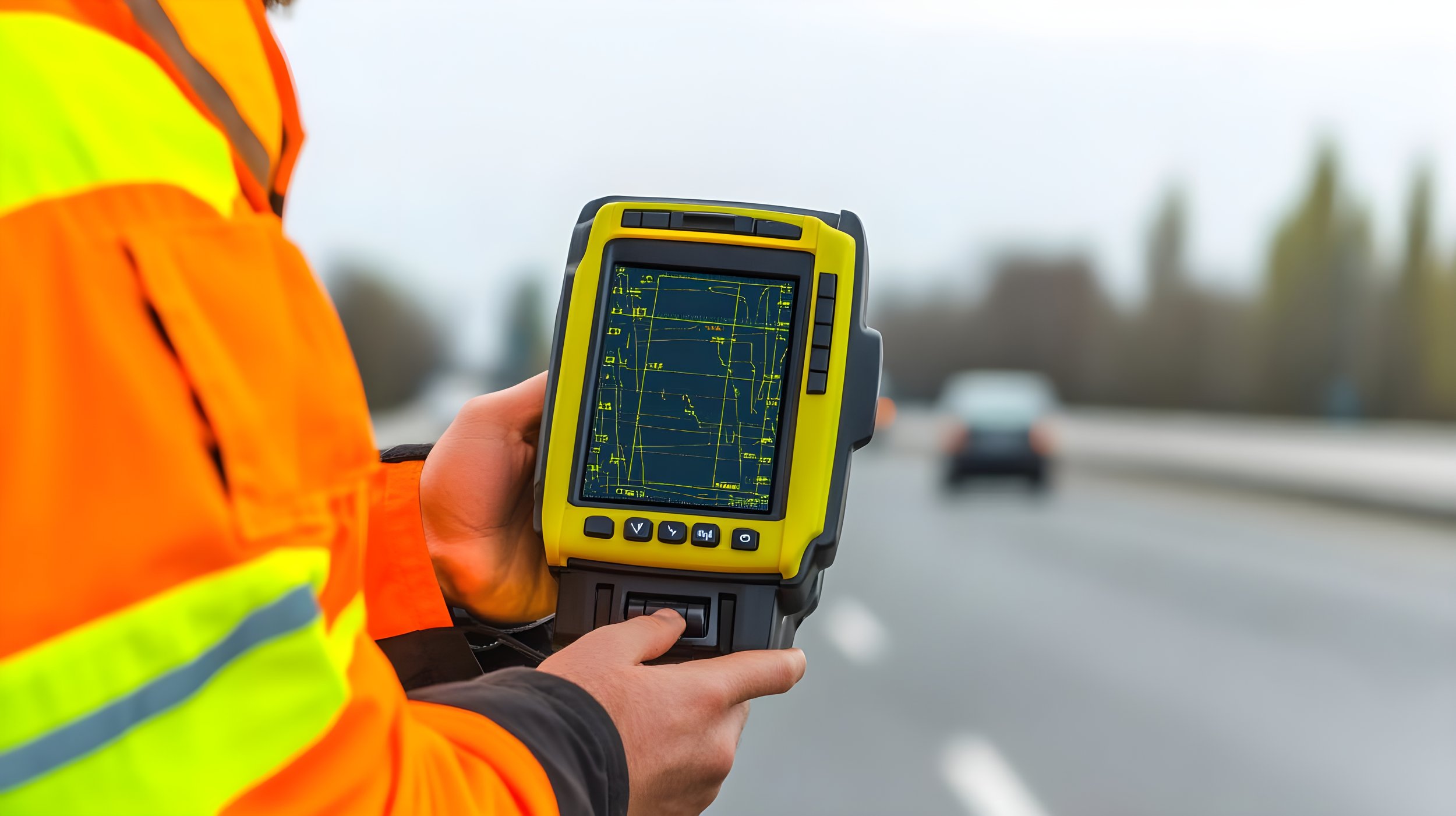
Route maps showing the physical path of every fiber segment, with GPS coordinates for key features including pole locations, underground vaults, splice points, and terminal locations. For aerial builds, the route map should identify each pole by the utility owner's pole number, not just a contractor-generated reference. For underground builds, the map should show duct assignments, depth of burial, and any deviations from designed routing.
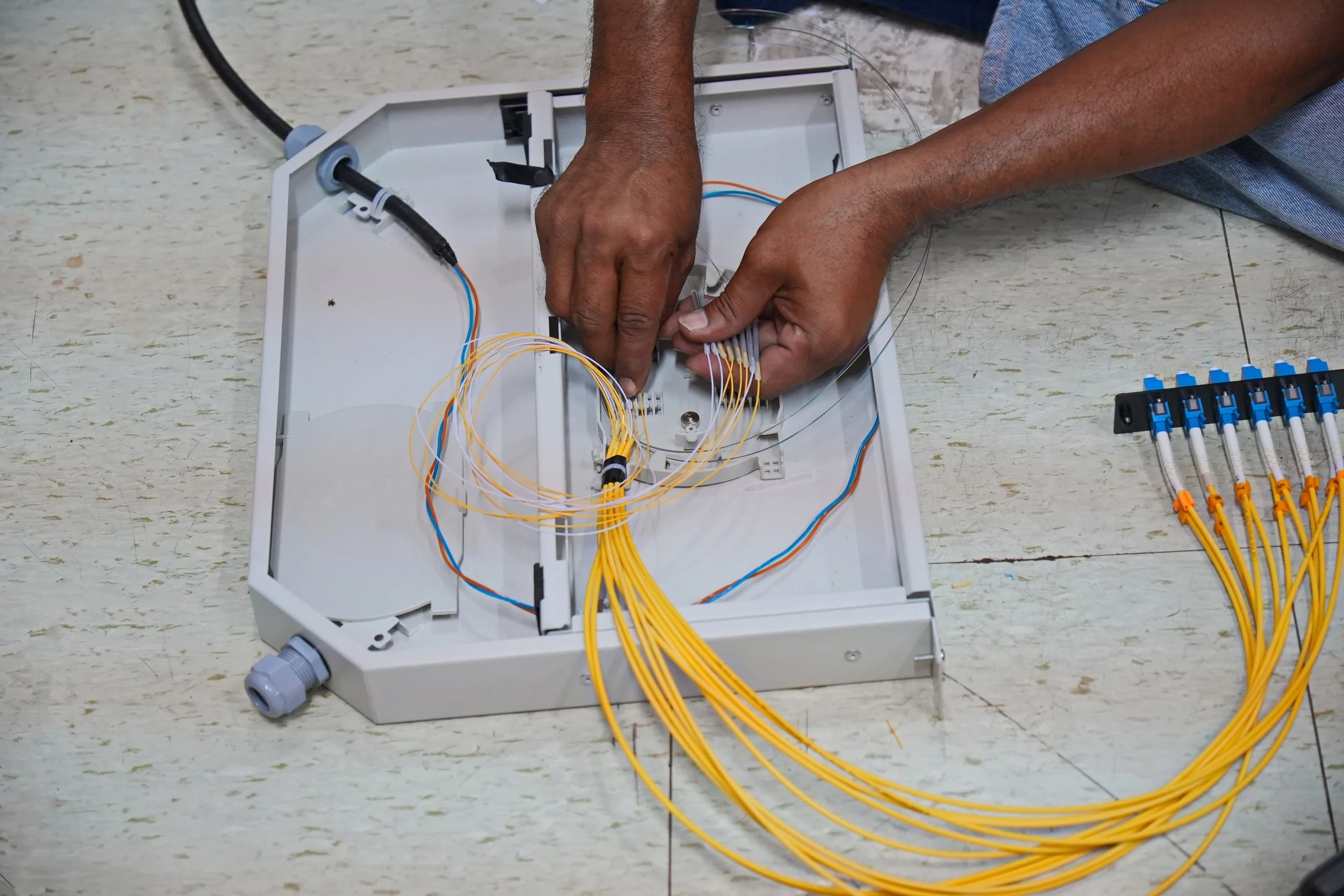
Splice diagrams showing fiber-to-fiber splice assignments at every splice enclosure, including which fiber in the incoming cable connects to which fiber in the outgoing cable. This documentation is essential for troubleshooting and for any future work that requires opening a splice enclosure. Without it, a technician responding to a service issue has to trace fiber relationships from scratch, which is slow, error-prone, and expensive.
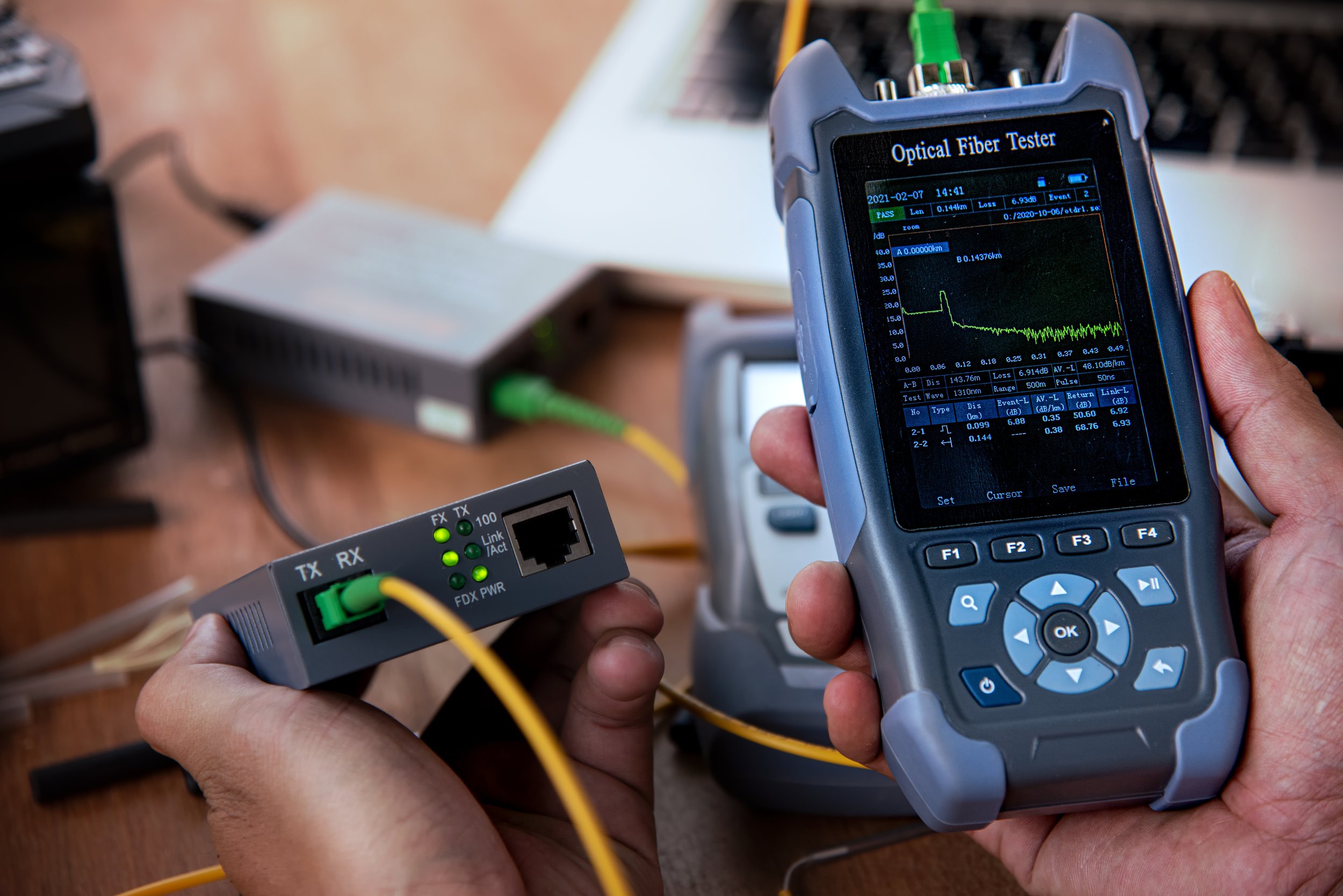
OTDR traces for every fiber in both directions at the operating wavelengths, saved in native format so future crews can open the files with standard test equipment software. Traces should be labeled with fiber identifier, direction, wavelength, date tested, and technician. A PDF summary of the traces is useful for a quick review, but the native files are what matter for future comparison testing.
Insertion loss test results showing measured end-to-end loss for every fiber, compared against the calculated loss budget. Results should document the test method, reference method, wavelengths tested, and the pass-fail criteria applied. A link that passed because the tester used the wrong reference method is not actually a passing link.
Cable specifications and material records documenting the specific cable type, manufacturer, fiber count, reel numbers, and lot numbers installed at each location. This information matters when a future crew needs to match cable for a repair or expansion, or when a manufacturing defect shows up years after installation.
Hardware inventory listing every splice enclosure, patch panel, terminal, and piece of attachment hardware installed in the network, with model numbers and installation locations. This is essential for stocking spare parts, planning replacements, and confirming warranty coverage.
Permit and agreement records including pole attachment applications, right-of-way documentation, railroad crossing permits, and any other regulatory approvals tied to the construction. These records become critical if a future attacher, regulator, or landowner challenges the network's right to exist on a particular piece of infrastructure.
A labeling scheme and cable identifier system consistent with industry administration standards. The ANSI/TIA-606-D standard provides the framework for telecommunications infrastructure administration and is what professional contractors align their labeling against. A labeling scheme that does not match the documentation is worse than no labeling at all, because it leads future crews to confident, wrong conclusions.
What Gets Left Out of Most As-Built Packages
The elements most commonly missing from an incomplete as-built package are the ones that take the most field discipline to produce during construction. OTDR traces in native format get replaced with PDF summaries because saving and organizing the native files requires consistent process from every field technician. Splice diagrams get reduced to a sketch because drawing the fiber-to-fiber relationships inside every splice enclosure is tedious and slow. GPS coordinates for underground features get approximated because getting an accurate reading in the field takes an extra minute per location.
The other common omission is updates made after the designed route. A contractor working from design drawings that show splices every two kilometers may end up adding a splice at a mid-span location to work around an obstruction or damaged cable. If the crew does not update the as-built to reflect that extra splice, the owner's documentation shows a network that does not exist and the actual network has no documentation at all.
The third common omission is test results that do not match the actual tested equipment. If a technician uses the wrong launch conditions, the wrong reference cables, or the wrong wavelength for a given cable type, the test results may technically exist but they do not represent the true performance of the network. An as-built package that looks complete on paper but contains invalid test data is worse than one that is honest about what was not tested properly.
How a Good As-Built Package Gets Built
Building a complete as-built package is not something that happens at the end of a project. It is a discipline maintained during construction, where every splice, every test, every route adjustment, and every hardware install gets documented as it happens. Crews that try to reconstruct as-built documentation from memory at project close-out produce packages full of errors and gaps, because no field technician remembers the exact splice tray fiber positions from a job three months ago.
Industry guidance on testing documentation and as-built deliverables is published by several organizations, and the Fiber Optic Association's standards library includes specific FOA standards for insertion loss testing, OTDR testing, and cable plant documentation that professional contractors use as the baseline for their field processes. A contractor whose documentation process aligns with these standards produces as-built packages that are consistent across projects, accurate in the field, and useful for the next 30 years of network operations.
What Network Owners Should Require at Acceptance
Network owners who want complete as-built packages should require them explicitly in the construction contract, not assume they will arrive at project close-out. The contract should specify what the as-built package must contain, what format each element must be delivered in, and when the owner will inspect the documentation for completeness before final payment is released.
At acceptance, the owner or owner's representative should walk through a sample of splice locations in the field and compare what exists against what the documentation claims exists. Any mismatches discovered during this walk-through are indicators of deeper documentation problems that should be addressed before the contract closes out. Owners who sign off on as-built packages without verifying them in the field are taking the contractor's word on the most important deliverable the project produces.
The owner should also require that the as-built package be delivered in a format that will still be accessible in 10, 20, and 30 years. Proprietary software formats tied to a specific contractor's internal tools are useless if that contractor goes out of business or stops supporting the software. Industry-standard formats such as PDF for documents, native OTDR formats opened by standard test equipment software, and open GIS formats for maps ensure the documentation survives whatever changes happen to the contractor, the owner's organization, or the software landscape.
As-Builts Are the Network's Long-Term Insurance Policy
A fiber network is an expensive, long-lived asset that depends on documentation to retain its value over time. A complete as-built package makes the network maintainable, expandable, and defensible. An incomplete as-built package makes the network fragile, because every future activity has to rediscover information that should have been captured at installation.
TermLink Solutions treats as-built documentation as a deliverable on equal footing with the physical construction itself. Our crews document splices, routes, tests, and hardware as the work is performed, not after, and we deliver complete as-built packages in industry-standard formats that support long-term network operations. If you are planning a new fiber build, evaluating an incomplete as-built package from a previous contractor, or trying to reconstruct documentation on an existing network, reach out to our team and let's make sure your network has the documentation it needs to operate reliably for decades.
