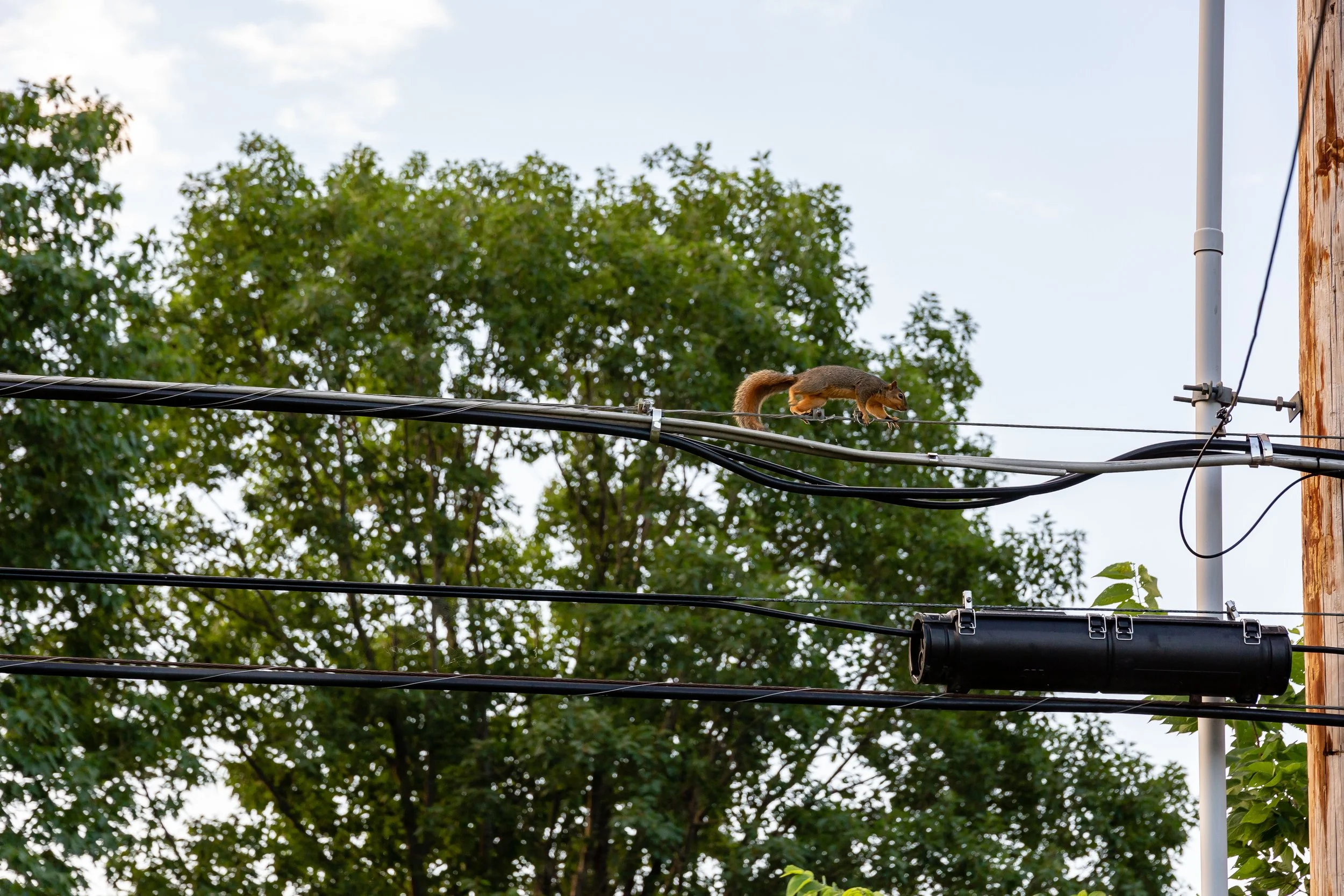
An aerial fiber line runs through the same airspace that squirrels travel, birds nest in, and summer storms tear through. Most of the time, none of that is a problem. The trouble starts when a chewed jacket, a stick nest, and a wind gust line up on the same span in the same week. Wildlife damage to aerial plant is rarely dramatic on its own. It becomes an outage when the weather arrives to finish what an animal started.
Wildlife is a real and measurable threat to overhead infrastructure. In some utility territories, animals account for more than a tenth of all power outages, and squirrels alone are estimated to cause roughly one in ten. Those figures describe the power grid, but the lesson carries straight over to the communications space below it. The same creatures that trouble the power line are working on your fiber, and summer is when they are busiest.
Why Squirrels Are the Real Threat to Fiber
If one animal keeps aerial fiber crews busy, it is the squirrel. A squirrel's incisors never stop growing throughout its life, which means the animal has to gnaw constantly just to keep its teeth in check. By some accounts those teeth can grow several inches a year, and a squirrel will wear them down on whatever is handy. A cable jacket suits the purpose well.
Aerial cable is especially exposed where trees grow close to the line, because overhanging branches give squirrels an easy bridge from the canopy onto the strand. Once an animal is on the cable, a jacket alone is not much of a defense. A squirrel's claws are as sharp as its teeth, and sustained gnawing can chew through the outer sheath, then the strength member, and eventually into the fibers themselves. That is a full break, and a full break is an outage and a truck roll.
The reason this matters so much in summer is that the damage is often partial and hidden. A jacket chewed halfway through does not fail on a calm day. It fails weeks later when a storm flexes the span, when wind and rain load the cable, or when heat and cold cycle the material past the point the weakened jacket can hold. The squirrel does the quiet work in June, and the July storm collects on it.
The Bird Problem Lives Mostly Above Your Cable
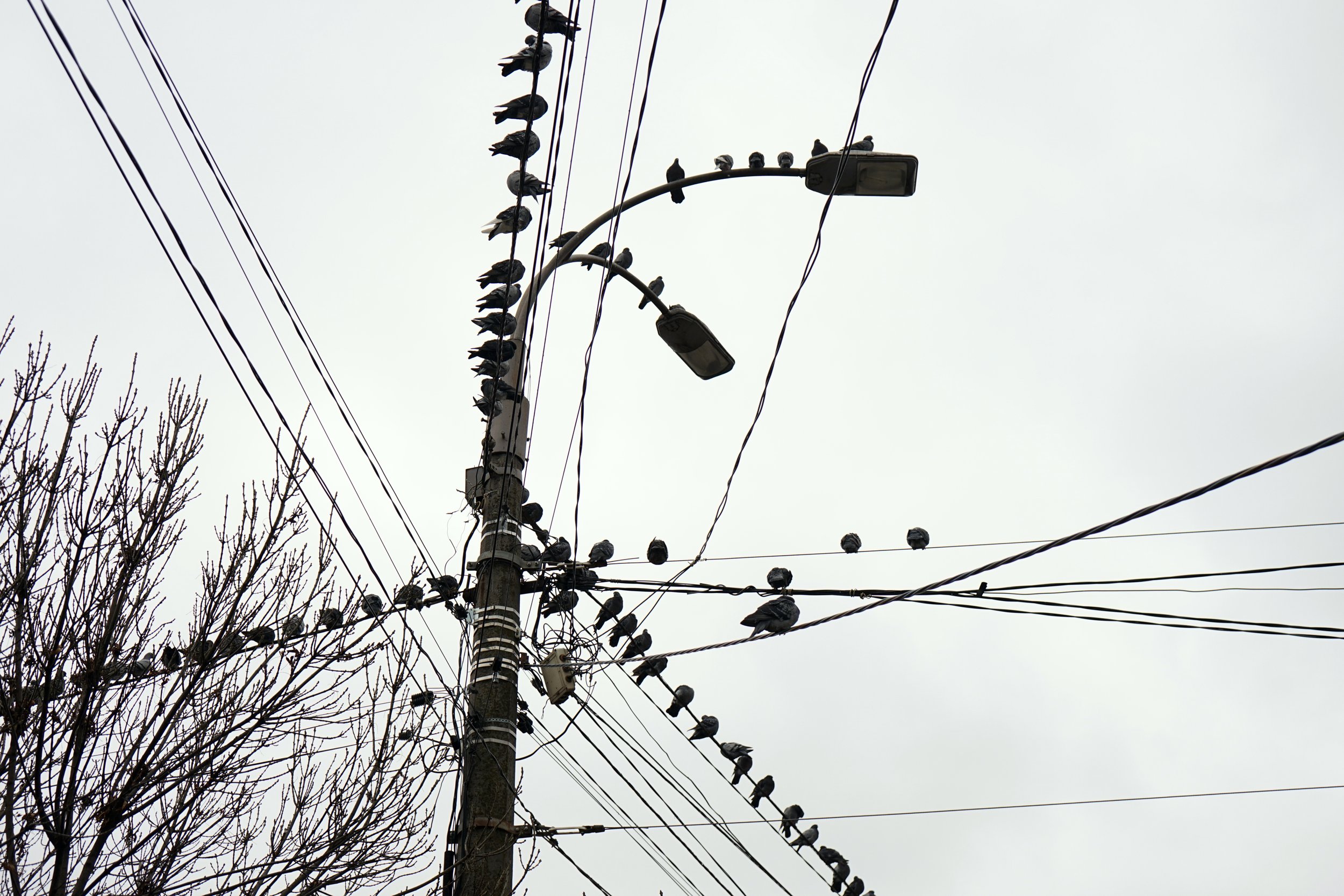
Birds damage overhead infrastructure too, but the mechanism is different, and being accurate about it matters. Birds are not chewing through your fiber the way squirrels do. The larger avian risk sits in the power space above the communications lines, where nesting and contact cause the real damage.
Large birds such as ospreys, hawks, and herons build heavy stick nests on pole framing and crossarms, and those nests create several problems at once. Nesting material can bridge energized conductors and trigger a flashover. Droppings foul insulators and hardware. In the worst cases, the heat of an electrical fault ignites the nest itself, and a pole fire follows. Utilities have documented osprey nests sparking fires and knocking out power, and the birds are stubborn enough to rebuild on the same pole within days of being moved.
None of that is a fiber problem until it is. A flashover or a pole fire in the power space above your line can take down everything below it, your cable included. This is exactly why clearance from energized conductors and proper grounding and bonding are not paperwork exercises. They are what keep an event in the power space from becoming an event on your plant. For a fiber crew, the practical takeaway is simpler still. When you see a large nest or heavy bird activity on a pole you are working, report it, because that structure carries a higher risk than the one next to it.
Why All of This Peaks in Summer
The three forces in the title converge in the warm months for a reason. Squirrel populations swell and young animals disperse in summer, which puts more of them on the move and looking for territory. Foliage is at its fullest, so more branches are in contact with or close to the line, giving more animals a path onto the strand. And summer is an active storm season across the Northeast, which supplies the wind, rain, and loading that turn a weakened cable into a broken one. Any one of these is manageable. Together, they are why outage calls cluster in the summer.
Building and Maintaining a Line That Holds Up
The good news is that most wildlife damage is preventable through choices made at construction and maintained afterward. It starts with the cable. When a route runs through known squirrel territory, an armored aerial cable is the strongest defense. Corrugated steel tape or steel wire armor puts a hard barrier between the animal and the fibers. Where a dielectric design is required to keep metal away from the power space, fiberglass-reinforced polymer armor provides similar protection without conductivity. Lighter measures exist as well, from thick nylon outer jackets that deter casual gnawing to glass yarns and anti-rodent additives that make the cable unpleasant to chew, though none of those match full armor in a heavy squirrel area.
The second defense is keeping the animals off the cable in the first place. Maintaining clearance between the line and nearby trees removes the bridge squirrels use to reach the strand, which is one more reason managing vegetation around the line pays off. The third defense is looking before the storm does. A preventive inspection that catches a half-chewed jacket or a growing nest in June is far cheaper than a restoration crew working a break in July.
Wildlife is a permanent neighbor of every aerial line, and it is not going anywhere. The networks that ride out the summer are not the ones with no squirrels or no birds. They are the ones built with the right cable, kept clear of the branches that invite trouble, and inspected before the weather exposes what an animal already started.
