

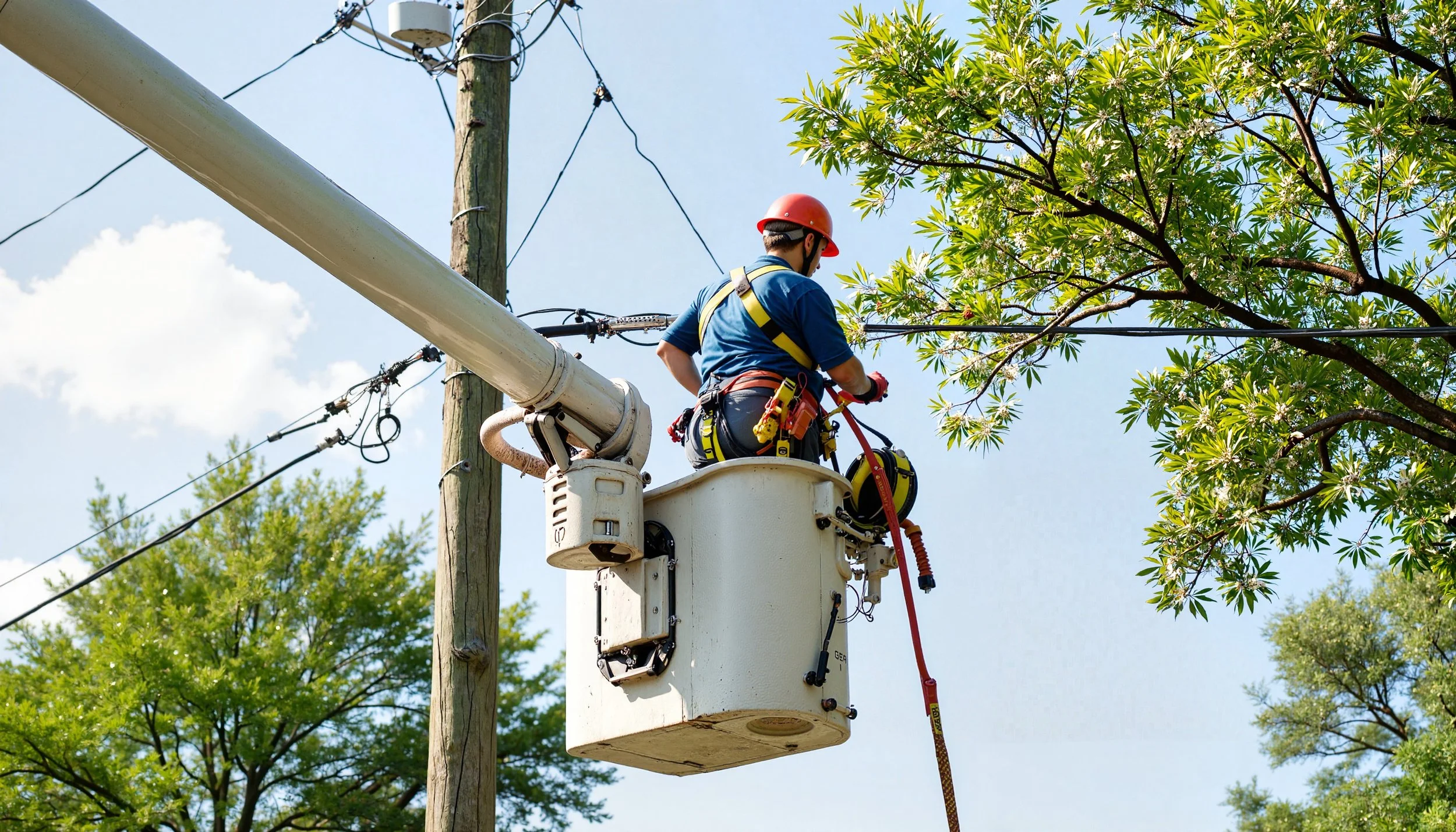
Every post in this series has treated aerial fiber as the thing being delivered, the connection that reaches a home or a business at the end of the span. There is another way to look at the same strand. That lashed line is also infrastructure for something else, because the wireless network almost everyone carries in their pocket runs on fiber. At its core, a wireless network is a fiber network with a radio on the end of it, and a good share of that fiber rides on poles.
The industry phrase for the link between the radio and the network is backhaul, and it is one of the largest and least visible markets an aerial crew can serve. The same messenger and cable you would lash for a fiber-to-the-home build can carry the backhaul that keeps a cell tower or a fixed wireless site connected. Understanding how that works opens a category of projects beyond the ISP and municipal builds that usually define aerial fiber.
What Backhaul Actually Is
Backhaul is the transport link that carries traffic from a cell site back to the carrier's core network, where it is switched onto the wider telecommunications system. A phone talks to an antenna, the antenna hands the traffic to the site's equipment, and backhaul moves it from there to the carrier's aggregation and switching points. Without that link, the radio is an island.
In the early years, cell sites were connected by microwave radio or copper, and both still exist. As traffic grew, fiber took over the connections that carry the most demand, because it delivers the bandwidth and the predictable low latency that modern networks require and does it without the interference and weather variability that affect wireless links. A tower without a fiber connection is increasingly a stranded asset, which is why fiber backhaul has become a prerequisite for serious wireless deployment.
Macro Towers and Fiber to the Antenna
At a traditional macro tower, a small equipment shelter or hut at the base is where the fiber backbone terminates. From there, fiber increasingly runs up the tower itself to the radios at the top, an approach known as fiber to the antenna. It replaced the thick coaxial runs that used to carry signal and power up the structure, which reduced weight and wind load on the tower and simplified the climb.
For an aerial crew, the relevant work is usually getting the fiber to the base of that tower. A tower sited along a rural road or at the edge of a service area is often reached most economically by lashing fiber along the existing pole line that already runs past it, rather than building a new path to the site.
Small Cells and the Densification Problem
The bigger shift is happening at street level. To meet demand in dense areas, carriers are deploying large numbers of small cells, which are low-power radio nodes mounted on utility poles, streetlights, and similar structures rather than tall towers. Each one covers a small area, sometimes only a few blocks, and each one needs a single fiber and power to operate.
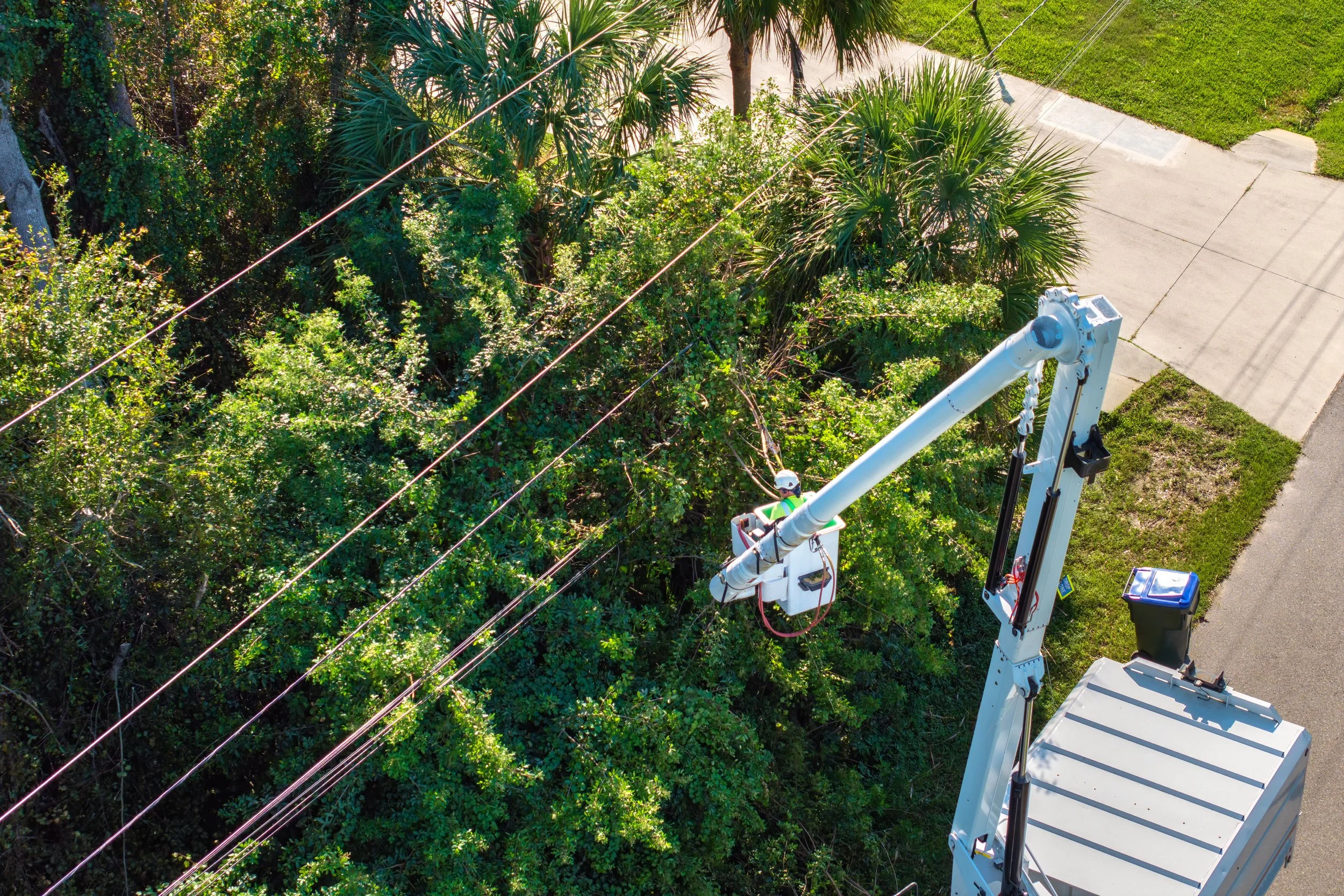
The consequence for construction is volume. Where a macro tower is one backhaul connection, a dense small cell build has many closely spaced connections, and 5G densification multiplies them further. A pole-mounted small cell also has to be made ready like any other attachment, with proper clearance from the energized conductors above it and the pole preparation that any new load requires. Many of these nodes are fed with hybrid cable that carries both fiber and power under one jacket, which adds weight the strand design has to account for.
Fixed Wireless Is Still Fiber
Fixed wireless access is often presented as an alternative to running fiber to the home, and for the last hundred feet it is. The signal reaches the house through the air from a nearby tower or node. What that framing leaves out is that the tower or node still needs a high-capacity connection back to the network, and that connection is almost always fiber. Fixed wireless does not remove the fiber. It moves the fiber back one step, to the radio site, where the backhaul demand is concentrated instead of spread across every home.
For a rural wireless provider, that backhaul link is the difference between a site that performs and one that chokes under load. Reaching those sites with aerial fiber, along the pole lines that already run through the service area, is frequently the fastest and most cost-effective way to build it.
Why Aerial Is Often the Right Build for Backhaul
Aerial construction suits backhaul work for the same reasons it suits fiber-to-the-home. Where pole infrastructure already exists, lashing fiber to an existing line reaches a tower or a corridor of small cells faster and at lower cost than building a new path. Time to market matters enormously in wireless, where a site that is not yet connected is not yet earning, and aerial builds move quickly once the poles are ready.
There is also a real efficiency in leveraging existing aerial plant. When a route already carries a lashed strand, extending or overlashing to serve a new radio site removes several steps and much of the cost from the deployment. The cable selection still has to fit the route, the clearances still have to hold, and the make-ready still has to be done, but the fundamentals are the aerial work this company already does every day.
Who This Opens the Door To
Framing aerial fiber as backhaul infrastructure widens the customer base well beyond internet service providers and municipalities. It includes the wireless carriers themselves, the tower companies that own and lease the structures, the neutral host operators building shared systems for multiple carriers, and the fixed wireless providers extending rural coverage. Middle-mile and backhaul routes are also a common use of grant-funded broadband dollars, which brings the same funding pressure and compliance requirements that govern last-mile builds.
The work itself does not change. It is still strand, still lashing, still clearance, still make-ready, still terminals and testing. What changes is what sits at the end of the fiber. Sometimes it is a home. Sometimes it is a radio that serves ten thousand homes through the air. The strand does not know the difference, and a crew that builds aerial fiber well can serve either one.
