Why Fiber Costs Less to Run: Energy Use, Maintenance, and Environmental Impact
Almost every conversation about fiber is a conversation about build cost. What does it cost per mile, what does the grant cover, what is the payback period.
That framing leaves out the more interesting number. Once a fiber network is in the ground or on the strand, it costs substantially less to operate than the copper and coaxial plant it replaces, and the gap shows up in electricity, in maintenance dispatches, and in carbon. For a municipality, a co-op board, or an operator building a case for capital, those operating numbers are often the ones that actually close the argument.
Copper needs power in the field. Fiber does not.
The physical difference is the whole story. Copper networks carry information as electrical signals, which weaken with distance and have to be regenerated. That means powered equipment in the outside plant, and powered equipment that generates heat and needs cooling at the central office. It draws that power continuously, whether traffic is heavy or the network is nearly idle.
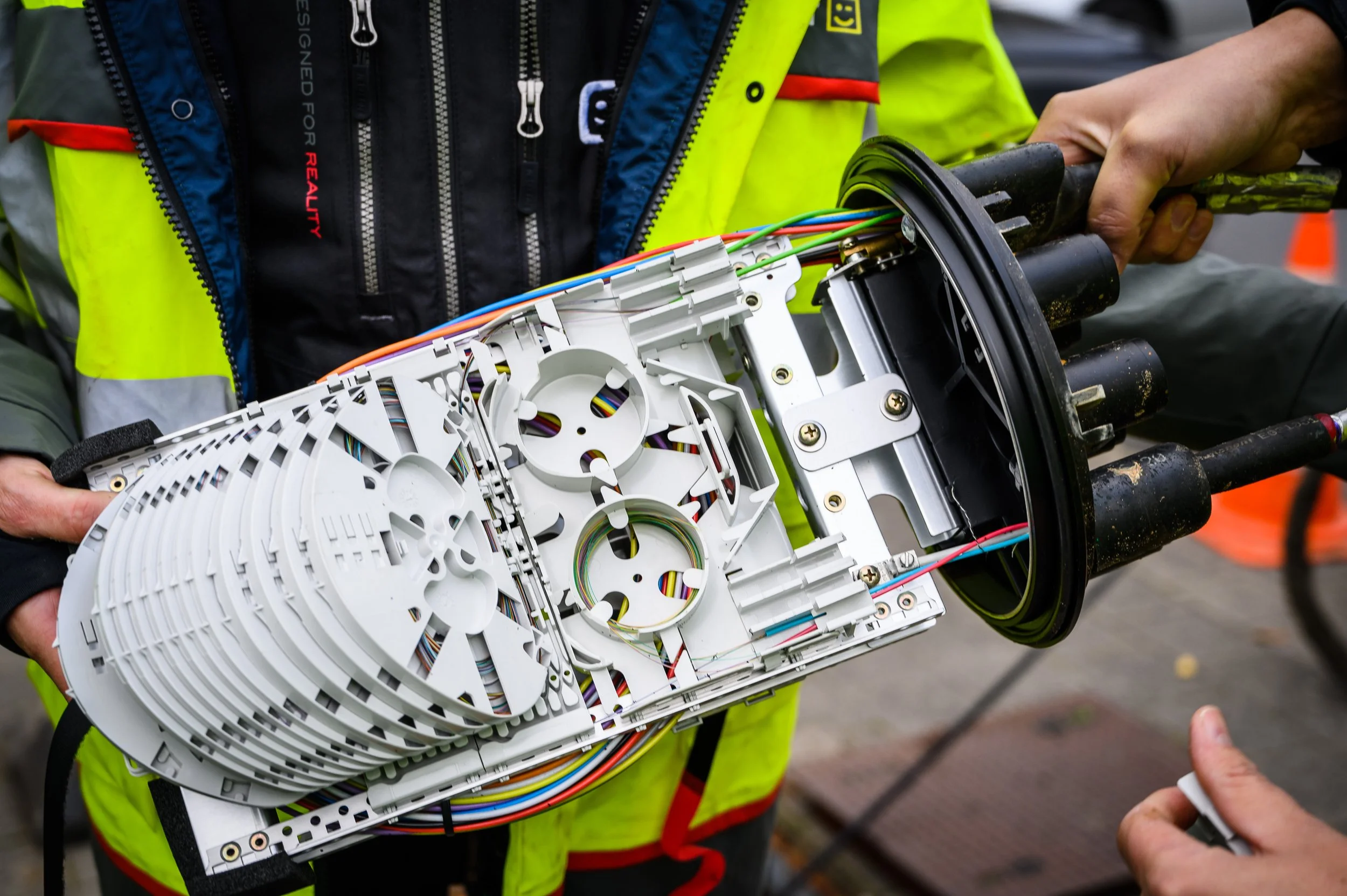
Fiber carries information as light. A passive optical network has no powered electronics between the head end and the customer premises at all. The splitters that divide the signal require no electricity, no cooling, no backup power, and no maintenance visits for any of those things.
Fiber is also immune to electromagnetic interference, which removes an entire category of fault that copper plant is subject to near power lines and industrial equipment.
The numbers behind it
The scale of the difference is easier to see in a large operator's reporting. AT&T's copper-to-fiber transition is estimated to have saved roughly 340,000 megawatt hours of electricity in 2024, which works out to about 346 kilowatt hours per subscriber switched, or roughly $66 in energy savings per subscriber per year. Applied across the remaining copper subscriber base nationally, policy analysts have put the potential energy cost savings somewhere between $398 million and $830 million.
Maintenance tells a similar story. Copper corrodes, absorbs moisture, and degrades when exposed to weather, and each failure means a truck roll that costs hundreds of dollars. Industry analysis places all-fiber network operating cost at roughly $91 less per home annually than copper-based DSL, and AT&T has reported fiber costing about 35 percent less per subscriber to maintain.
For a small operator or a municipal network, those per-subscriber figures are the ones worth putting in a pro forma. They compound every year for the twenty-five to thirty year service life of the plant.
The environmental case
Energy is the largest piece of the environmental argument, and multiple studies have estimated that replacing copper or coaxial plants with fiber can cut associated carbon emissions substantially, with some estimates reaching 90 percent or more.
Longevity is the piece people forget. A properly installed fiber plant has a service life measured in decades, and capacity upgrades happen by changing the electronics at each end rather than by replacing the cable. That is a fundamentally different waste profile from a network that has to be physically rebuilt to go faster.
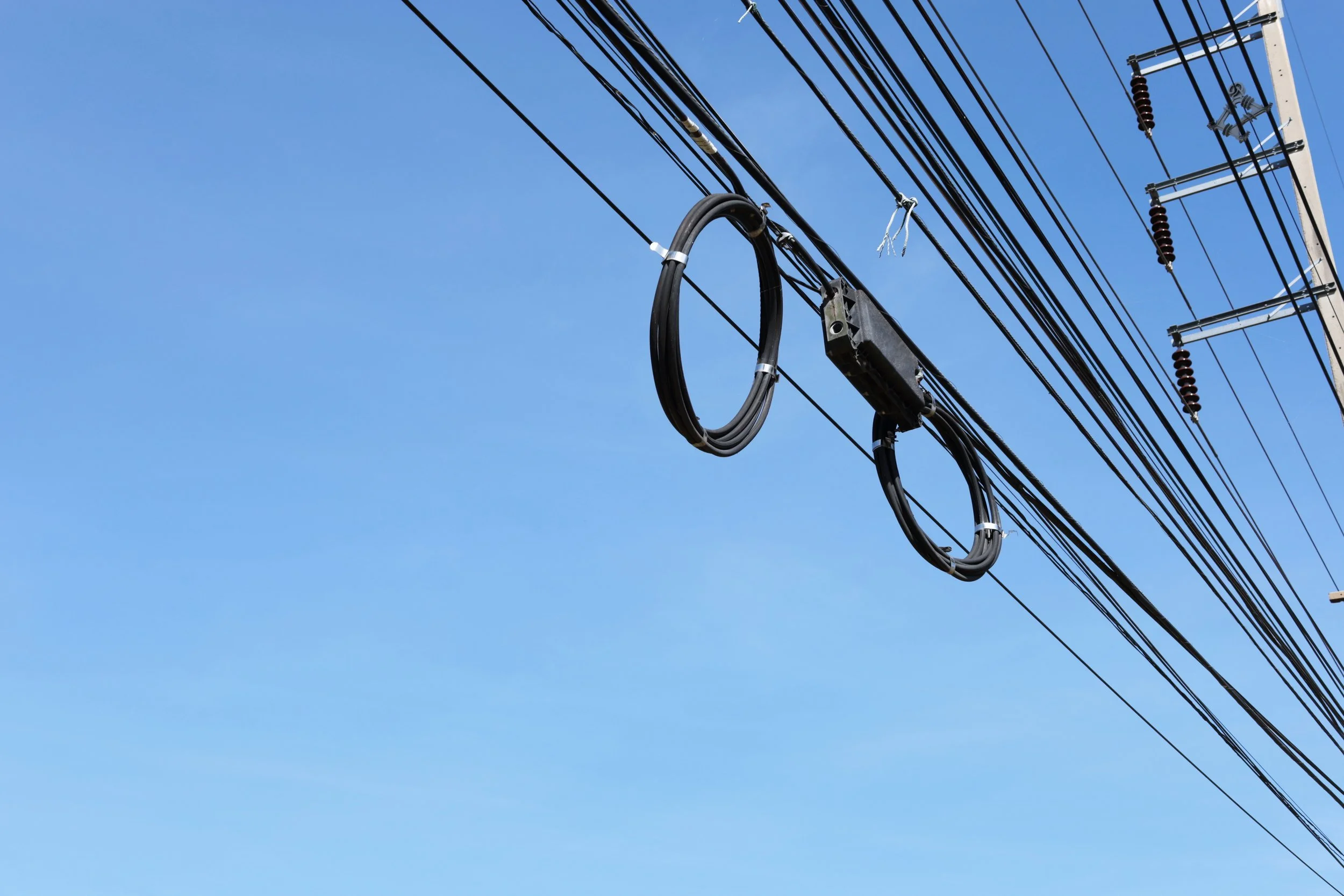
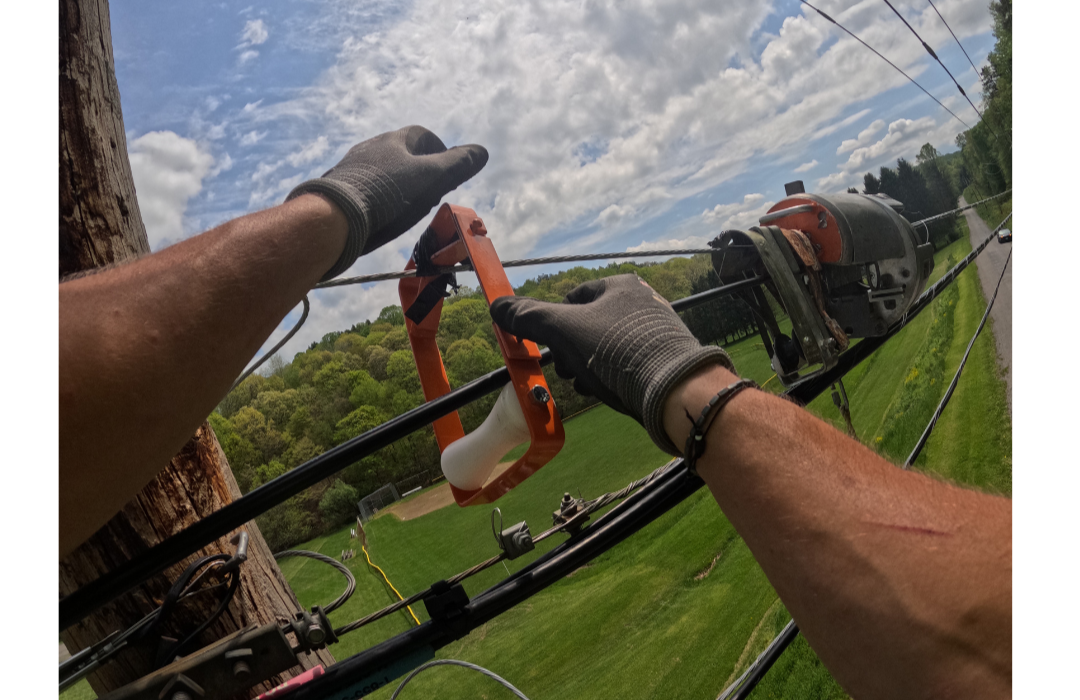
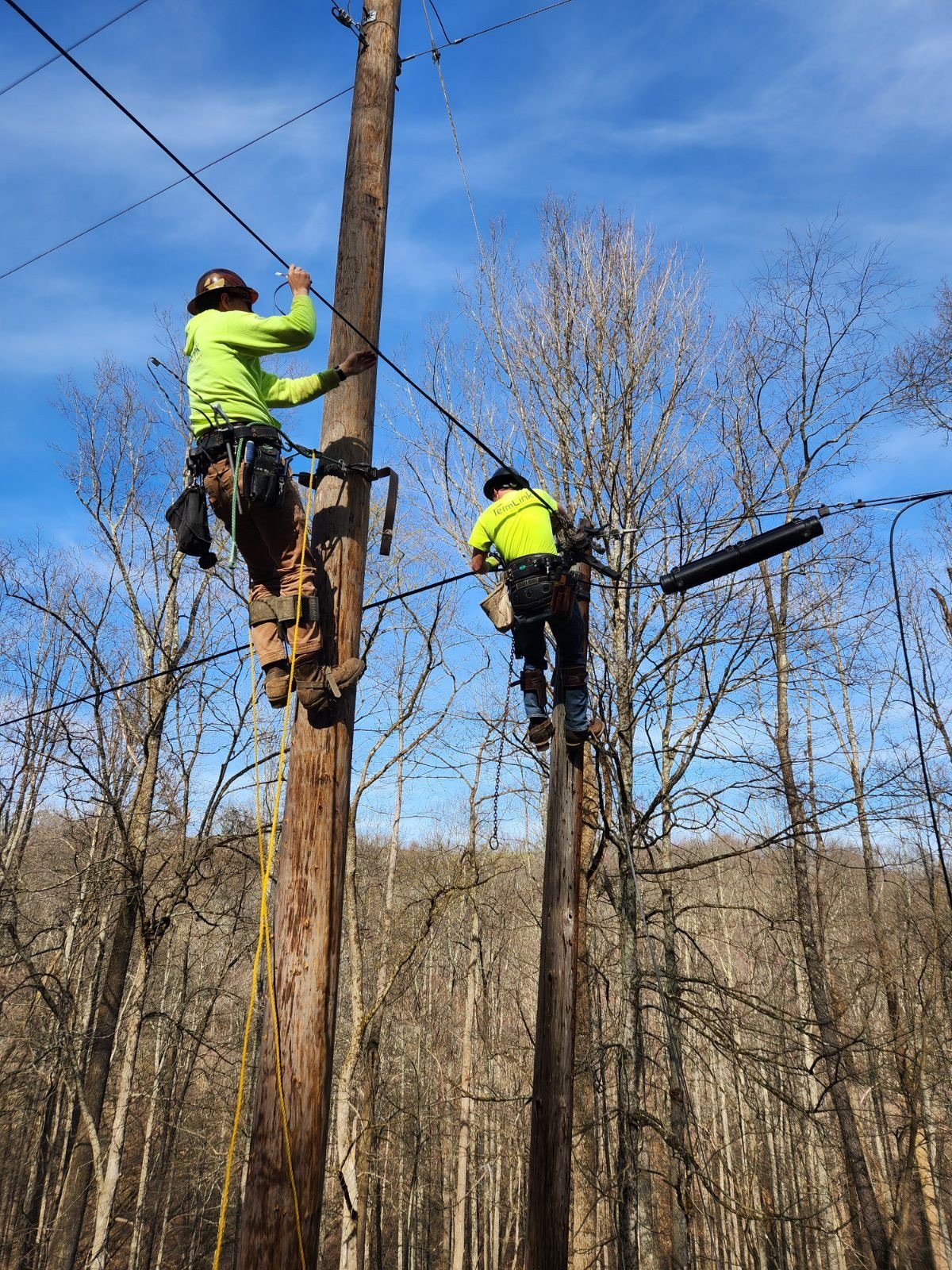
There is a construction footprint argument as well, and it is one aerial work owns outright. Building on existing pole lines means no trenching, no pavement cut and restoration, no spoil hauling, and no disturbance to root systems, wetlands, or agricultural ground along the route. The environmental cost of the build itself is a fraction of an underground equivalent, and the route can often follow existing utility corridors rather than opening new ones.
What this means for what people pay
The consumer price picture is more contested than the energy picture, and it is worth presenting honestly.
The industry view is that broadband is getting cheaper. USTelecom's 2026 Broadband Pricing Index reports that home internet prices have declined for eleven consecutive years while speeds have climbed, with roughly one in three households now subscribing to gigabit plans.
The countervailing view is that those averages hide a distribution problem. Research cited by the Benton Institute found that consumers in areas served by fewer providers tend to pay more, and that competitive options remain far scarcer in rural areas than in urban ones. At the highest service tiers, the share of rural households with more than one option is a small fraction of the urban share.
Both of those things are true at once, and together they make the actual point. Prices fall where there is a competitive alternative. In a community where the incumbent is aging DSL or nothing, the arrival of a fiber network is the competitive alternative, and that is the mechanism by which a build changes what residents pay.
Why this belongs in a funding application
Operating cost and environmental impact are not just talking points. They are scoring criteria.
Grant programs and municipal procurement increasingly ask applicants to demonstrate long-term sustainability of the proposed network, not merely that it can be built. An application that documents projected energy savings against the legacy plant being replaced, the reduced maintenance dispatch profile, the service life of the asset, and the construction footprint of an aerial route is answering questions the reviewers are actually asking.
The same material serves a municipal council or a co-op board weighing a capital decision. The build cost is the number that generates resistance. The operating cost is the number that answers it.
The practical takeaway
Fiber wins on the operating line, and it wins by margins large enough to matter to a small operator's balance sheet. Less electricity, fewer truck rolls, longer asset life, and a lighter construction footprint when the route goes aerial. Those are the arguments that hold up in a board meeting and in a grant narrative, and they are worth documenting properly rather than asserting.
TermLink Solutions builds, splices, and tests aerial fiber networks for ISPs, municipalities, businesses, and private landowners nationwide. If you are preparing a funding application or a capital request, our crews can help you scope the aerial route and understand what the finished network will actually cost to operate.
