
Storm damage to aerial fiber infrastructure is rarely a simple repair. High winds, falling limbs, pole displacement, vehicle impact, and flooding can create layered failures across multiple spans of a network. What appears to be a single downed line often involves structural stress, attachment damage, and compromised hardware along an entire corridor.
Effective restoration requires speed, coordination, documentation, and strict adherence to safety standards. It is not just about restringing cable. It is about restoring network integrity while managing risk, liability, and long-term reliability.
Below is what storm fiber restoration actually looks like in the field.
Step 1: Initial Damage Assessment
Before equipment is mobilized, a formal damage assessment is conducted. Crews identify broken spans, failed attachments, compromised messenger wire, and potential pole instability. Poles are evaluated for shifting, cracking, or structural weakening caused by ground saturation or impact.
This stage determines whether the damage is isolated or part of a broader corridor failure. Accurate assessment prevents incomplete repairs and reduces the likelihood of repeat service interruptions.
Step 2: Utility Coordination and Clearance
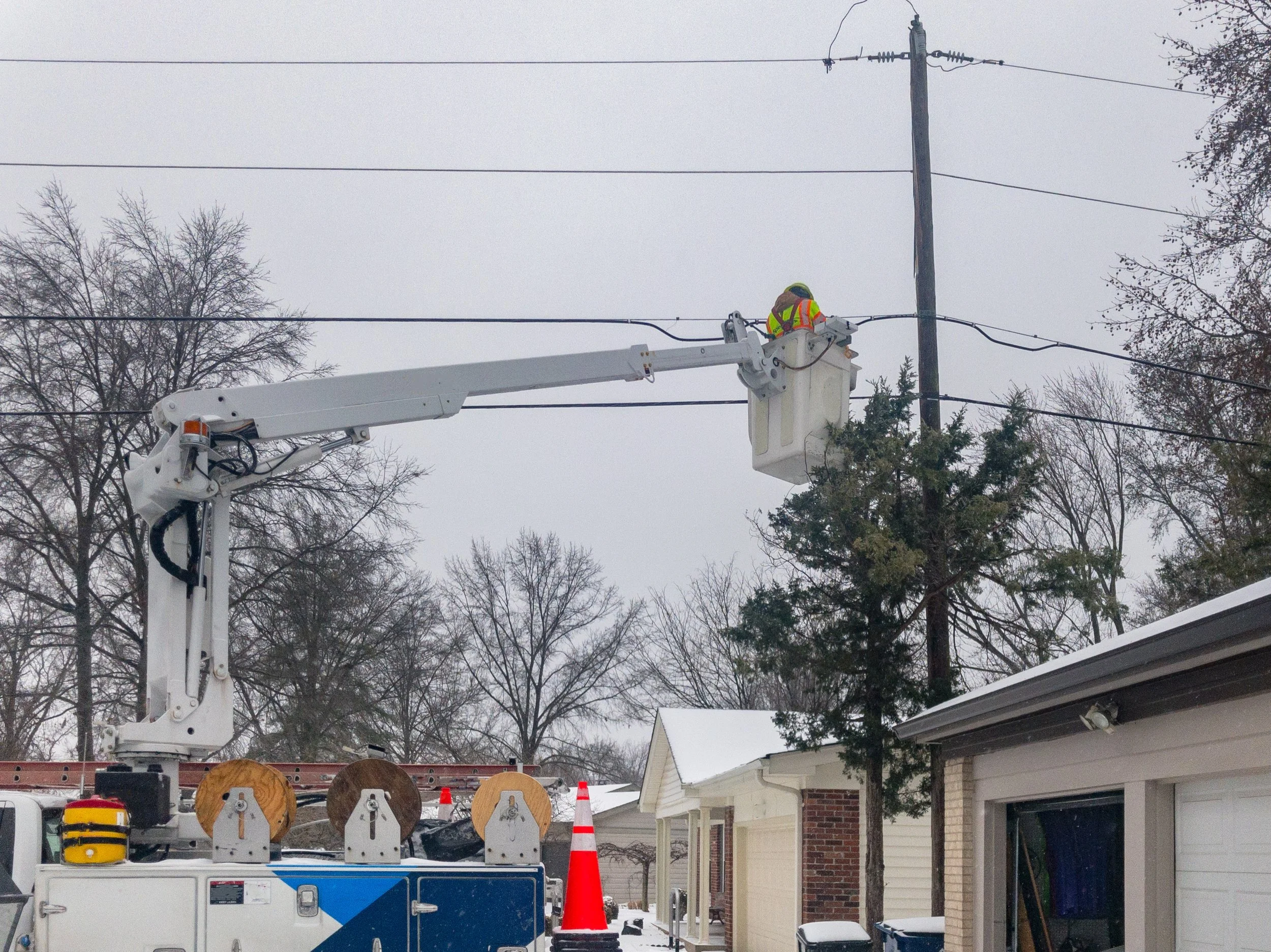
Aerial fiber is typically attached to utility poles owned by power or communications providers. Restoration begins only after confirming clearance and coordinating with the pole owner. In some cases, power lines must be evaluated or temporarily de-energized before fiber crews can safely access the structure.
Proper coordination ensures compliance with attachment agreements and reduces regulatory or liability exposure.
Step 3: Safety and Traffic Control Setup
Storm restoration often takes place along active roadways. Traffic control plans are implemented before bucket trucks are deployed. This may include lane closures, signage, flagging operations, and coordination with local authorities. Crew positioning, fall protection protocols, and OSHA compliance are confirmed prior to work beginning. Speed matters during restoration, but safety remains the priority.
Step 4: Material Staging and Equipment Deployment
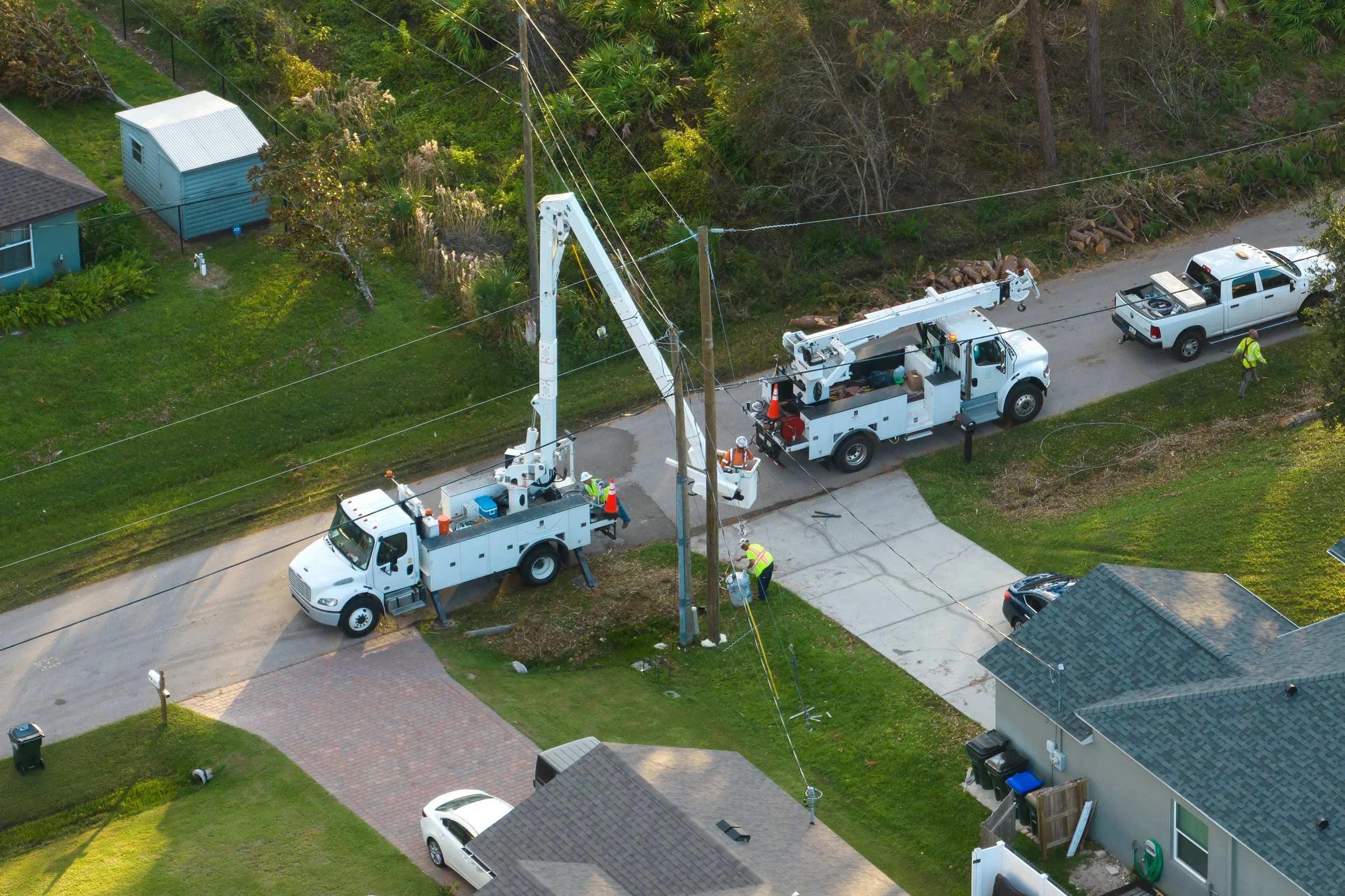
Once clearance is secured, replacement fiber, strand, hardware, anchors, and tools are staged. Efficient preparation minimizes downtime and allows crews to move continuously through the repair process. Bucket trucks are positioned to safely access affected spans while maintaining proper distance from energized lines and traffic flow.
Step 5: Removal of Damaged Infrastructure
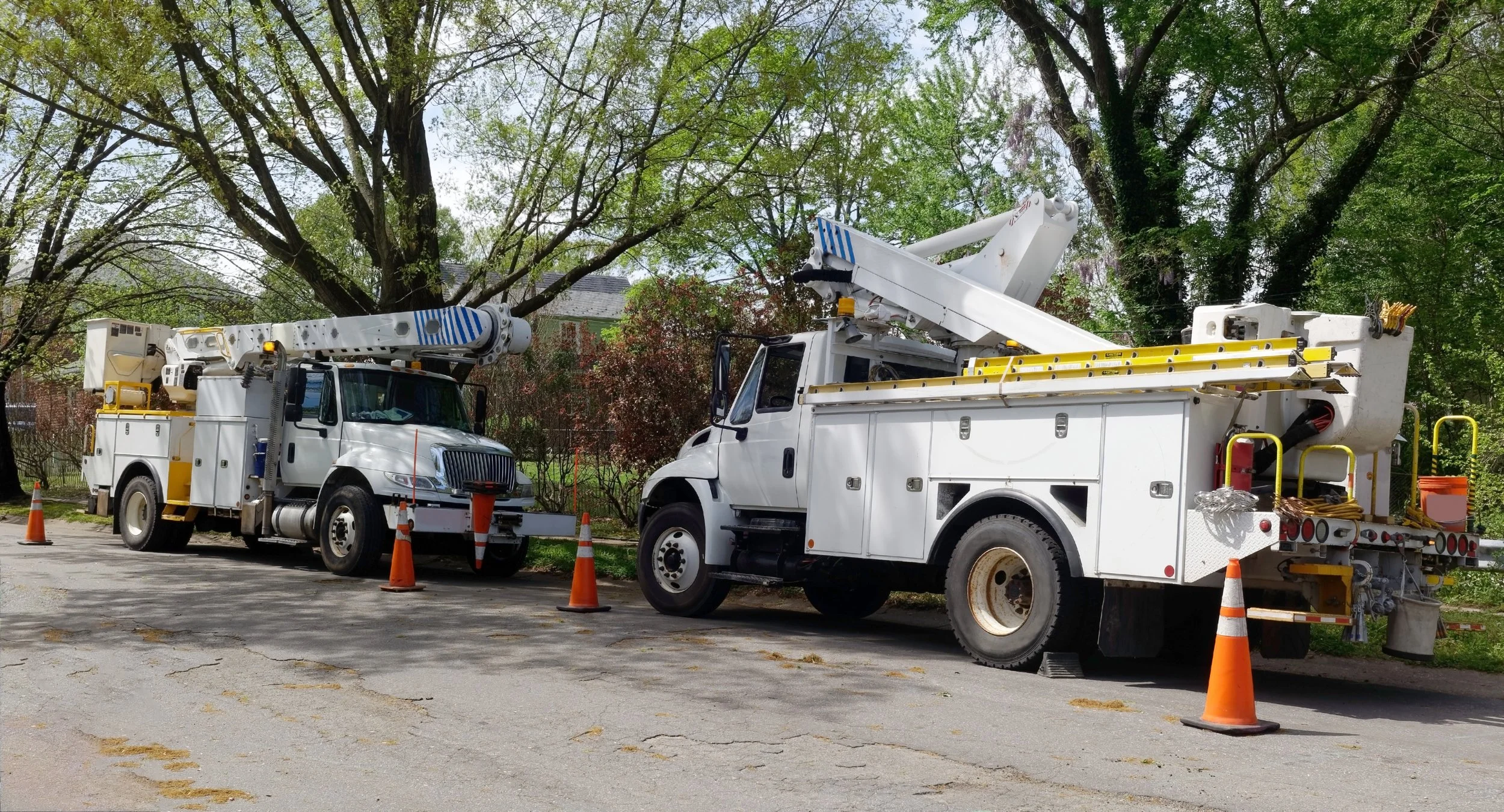
Damaged fiber, hardware, and compromised strand are removed carefully to prevent additional stress on adjacent spans. Crews inspect surrounding attachment points to identify hidden damage that may not be immediately visible. Leaving compromised hardware in place increases the risk of future failure, so this phase requires detailed attention.
Step 6: Reinstallation and Restringing
New strand and fiber are installed according to engineered tension specifications and clearance requirements. Proper sag and spacing are verified to prevent long-term strain issues. Attachments are secured in compliance with pole owner standards to ensure structural integrity and code compliance.
Step 7: Splicing and Signal Testing
After physical installation, technicians perform fiber splicing to restore connectivity. Splices are protected within approved enclosures, and signal testing is conducted to verify light levels and identify attenuation.
Service is not considered restored until the repaired segment meets performance standards.

Step 8: Documentation and Reporting
Storm restoration requires thorough documentation, including photographic records, repair summaries, material usage, and compliance verification. Clear reporting supports insurance claims, utility coordination, and internal quality control while creating a documented record for future inspections.
Why the Process Matters
Storm fiber restoration is not simply emergency response. It is structured infrastructure recovery that directly impacts network reliability, safety, and liability exposure. Every step, from assessment to documentation, determines whether the repair holds under the next weather event.
TermLink Solutions specializes in aerial fiber infrastructure and rapid storm restoration support. Our crews operate with disciplined safety standards, coordinated utility communication, and structured field reporting to ensure networks are restored efficiently and correctly the first time.
If your organization needs a reliable partner for aerial fiber storm restoration, contact TermLink Solutions to discuss how we can support your infrastructure recovery needs.
