
Every state and territory in the country now has an approved BEAD spending plan. That is a real milestone after four years of maps and challenges and revisions. It is also the moment where a lot of people outside the industry assume the hard part is over.
It is not. An approved plan does not put a strand in the air. It starts a clock on a sequence of steps that has to run in order, and most of that sequence happens before a bucket truck ever leaves the yard. If your organization is holding an award, or if you are a municipality waiting on a provider who is, understanding that sequence is the difference between a realistic schedule and a frustrating one.
We wrote earlier about how grant-funded broadband work reaches the construction phase and what providers should look for in a build partner. This post picks up where that one left off, now that the funding side is settled.
What the approvals actually mean
According to the NTIA progress dashboard, all 56 states and territories have received approval of their Final Proposals. Most have also cleared the federal review that makes grant funds available, and the large majority have signed and returned their award agreements. Across the approved plans, states are set to spend roughly $18.2 billion to serve about 3.79 million locations.
That is the headline. The important part is quieter. Approval is a funding decision. It confirms who gets money and roughly where it goes. It does not clear a route, secure a pole, or authorize a single splice.
Step one is contracting between the state and the provider
Signing the federal award agreement is the state's step. The provider's step comes next, when the state broadband office executes subgrantee contracts with each awarded ISP. Those contracts set milestone schedules, reporting obligations, and compliance conditions that follow the project for its entire life.
Nothing else can start until this is done. Providers who treated the provisional award as a green light and staffed up early have been sitting on payroll while the paperwork caught up.
Step two is design, and design is where the route stops being a map
Award applications are built on location counts and estimated route miles. Construction is built on a designed route with real poles on it.
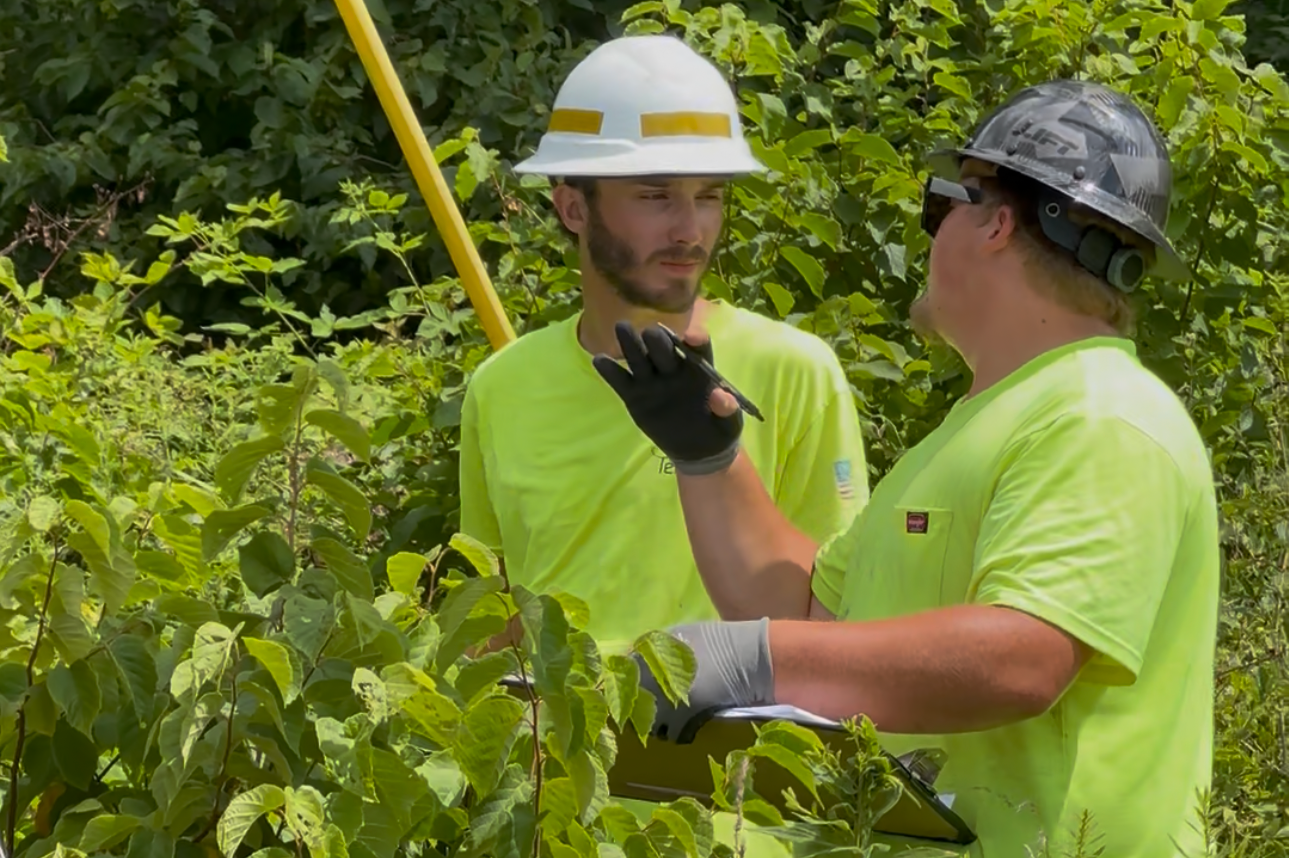
That means field survey work. Someone walks or drives the route, records what is on every pole, measures existing attachments, and identifies where the proposed line can ride. Pole loading gets calculated. Clearance gets verified. The design comes back with a route that may look meaningfully different from the one in the application, because the field always has an opinion.
This phase is also where the design, redline, and as-built chain begins. What gets designed here becomes the record that the state audits later.
Step three is environmental review, and it is a hard gate
This is the step that surprises people. BEAD projects are federally funded, which means they carry federal environmental and historic preservation obligations. Reviews run under the National Environmental Policy Act, Section 106 of the National Historic Preservation Act, Section 7 of the Endangered Species Act, and Section 404 of the Clean Water Act where wetlands are involved.
The NTIA general terms and conditions are direct about what this means in practice. A subgrantee may not begin grant-funded implementation, and funds are not disbursed, until the required environmental review is complete and the appropriate decision document has been issued. A narrow set of pre-implementation activities is permitted, but construction is not among them.
For aerial work, the review is often lighter than it would be for other methods, since attaching to an existing pole line in an existing right of way disturbs very little ground. Lighter is not the same as skipped. The documentation still has to be prepared, submitted, and approved, and that takes calendar time that belongs on the schedule from day one.
Step four is permitting and pole attachments
Once the route is designed and the environmental file is clear, the provider applies for permits and for attachment rights on every pole it intends to use. Each pole owner has its own application process, its own engineering review, and its own queue.
Then comes make-ready. If existing attachments have to be rearranged or a pole has to be replaced to create room for the new line, that work happens before the fiber goes up, and the new attacher generally pays for it. Our guide to utility pole attachment agreements covers what those agreements typically require and where they tend to stall.
This is the single most common source of delay in aerial broadband builds, and it is not a federal problem to solve. Local and utility processes control the pace. Pennsylvania has recognized this directly. The Pennsylvania Broadband Development Authority has stated that permit applications are expected to be reviewed within 90 days specifically to keep BEAD construction on schedule, which tells you how much weight the state is putting on this step.
Step five is construction, and it is the shortest phase
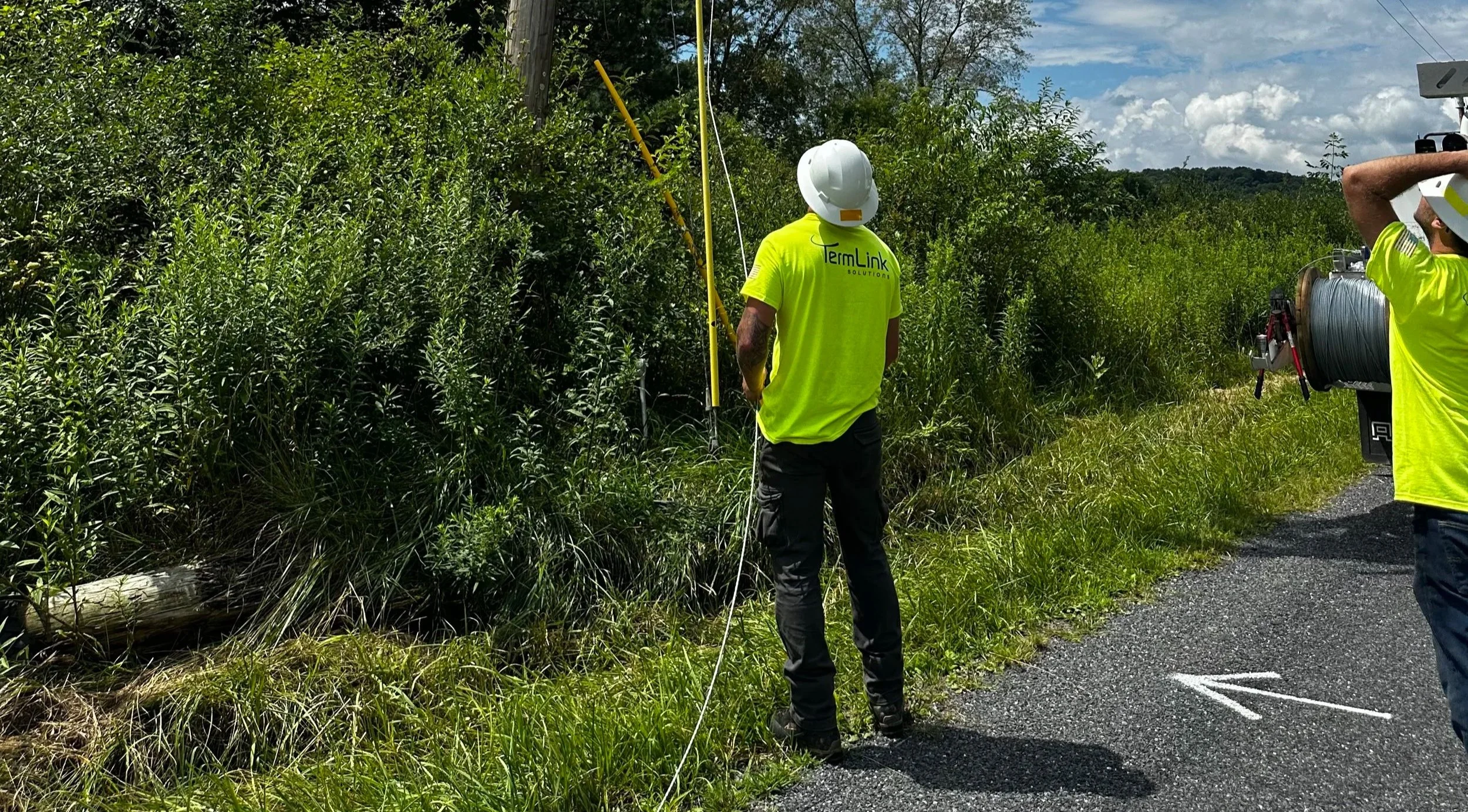
Strand goes up. Cable gets lashed. Slack gets stored, terminals get placed, and splicing follows.
Crews who have worked grant-funded builds know the pattern. Everything upstream takes months and construction takes weeks. That imbalance is exactly why the upstream steps deserve more attention than they usually get, and why a contractor who can mobilize the moment make-ready clears is worth more than one who is merely available.
Step six is testing, acceptance, and reporting
The build is not finished when the light turns on. Acceptance testing has to document that the plant performs to specification. Records have to be updated so the as-built reflects what is actually hanging on the poles. Milestone reports go back to the state, and those reports are tied to reimbursement.
Providers who treat documentation as an afterthought discover its importance at the worst possible time, which is usually during a compliance review or after a span fails.

What this means if you are holding an award
The practical takeaway is to run the slow steps in parallel rather than in sequence. Environmental documentation and pole applications do not have to wait on each other. Design can progress while contracts finalize. Every week that a permit application sits unfiled is a week added to the far end of the project.
It also means selecting a construction partner earlier than feels necessary. A contractor brought in during design can flag route problems while they are still cheap to fix. A contractor brought in after make-ready clears is starting cold on a schedule that has already been spent.
BEAD has moved from a funding story to a construction story. The organizations that finish on time will be the ones that understood, back in 2026, how much of the work happens before the first strand goes up.
Planning a BEAD-funded aerial build? TermLink Solutions provides turn-key aerial fiber construction, splicing, and testing for ISPs, municipalities, and businesses nationwide. If you are working through design or waiting on make-ready and want a crew ready to mobilize the day it clears, reach out to our team and let us walk your route with you.
