

Splice Closures Explained: Dome, Inline, and What Reentry Costs You Later
A splice closure gets selected once, usually under schedule pressure, usually on the basis of fiber count and price. It then stays on the strand for twenty or thirty years, and during that time a technician opens it repeatedly to add a branch, cut in a customer, restore after a cut, or chase a fault.
Every one of those visits costs money, and how much it costs was decided by whoever picked the closure. That is the part of the decision people underweight, and it is the part worth thinking about hardest.
Dome and inline: what actually differs
A dome closure, sometimes called a butt or vertical closure, has all cable entries through a base at one end, with a dome-shaped cover over the splice trays. Cables go in and come back out at the same end.
An inline closure, sometimes called horizontal or cylindrical, takes cables in at both ends. It has a lower profile and is a natural shape for a straight-through splice at a point where the route continues in the same direction.
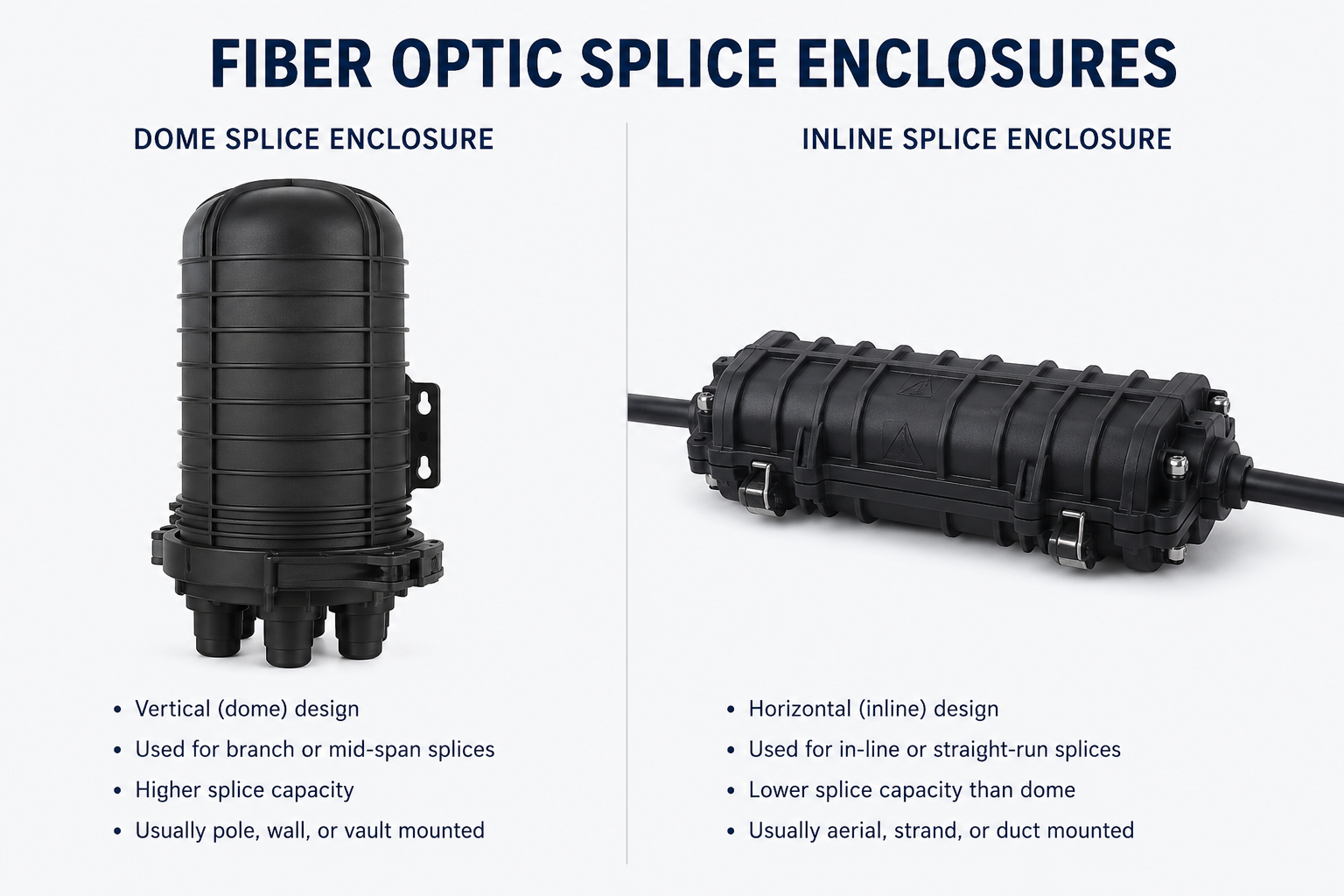
The functional difference that matters is what happens later. On a dome closure, spare ports on the base mean you can bring a new cable in without disturbing what is already there, which makes it the better choice at any point where the network is likely to grow. On an inline closure, adding a third cable to a two-ended body is awkward at best.
The tradeoff runs the other way on profile. An inline body presents less bulk and less wind surface on the strand, which is a real consideration on long spans and in high wind areas.
The general rule that holds up in the field is that branch and growth points want dome closures, and express or straight-through splice points want inline. Most aerial FTTH plants end up predominantly domed for exactly that reason.
Sealing method is the reentry decision
This is the single most consequential specification line, and it is often filled in by default.
Mechanical seals, which include compression gaskets, wrap-around seals, and gel blocks, are designed to be opened and reclosed repeatedly. A technician releases the clamps, does the work, and reseals with the same hardware. Some manufacturers now build closures with modular cold-seal base segments specifically so that cables can be added at several points without taking the seal apart and reinstalling it.
Heat shrink seals create an excellent barrier and are generally intended as a permanent installation. Reentry means cutting the sleeve off and installing a new one, which requires a torch, a consumable that has to be on the truck, and a technician comfortable applying heat next to live fibers while working aloft.
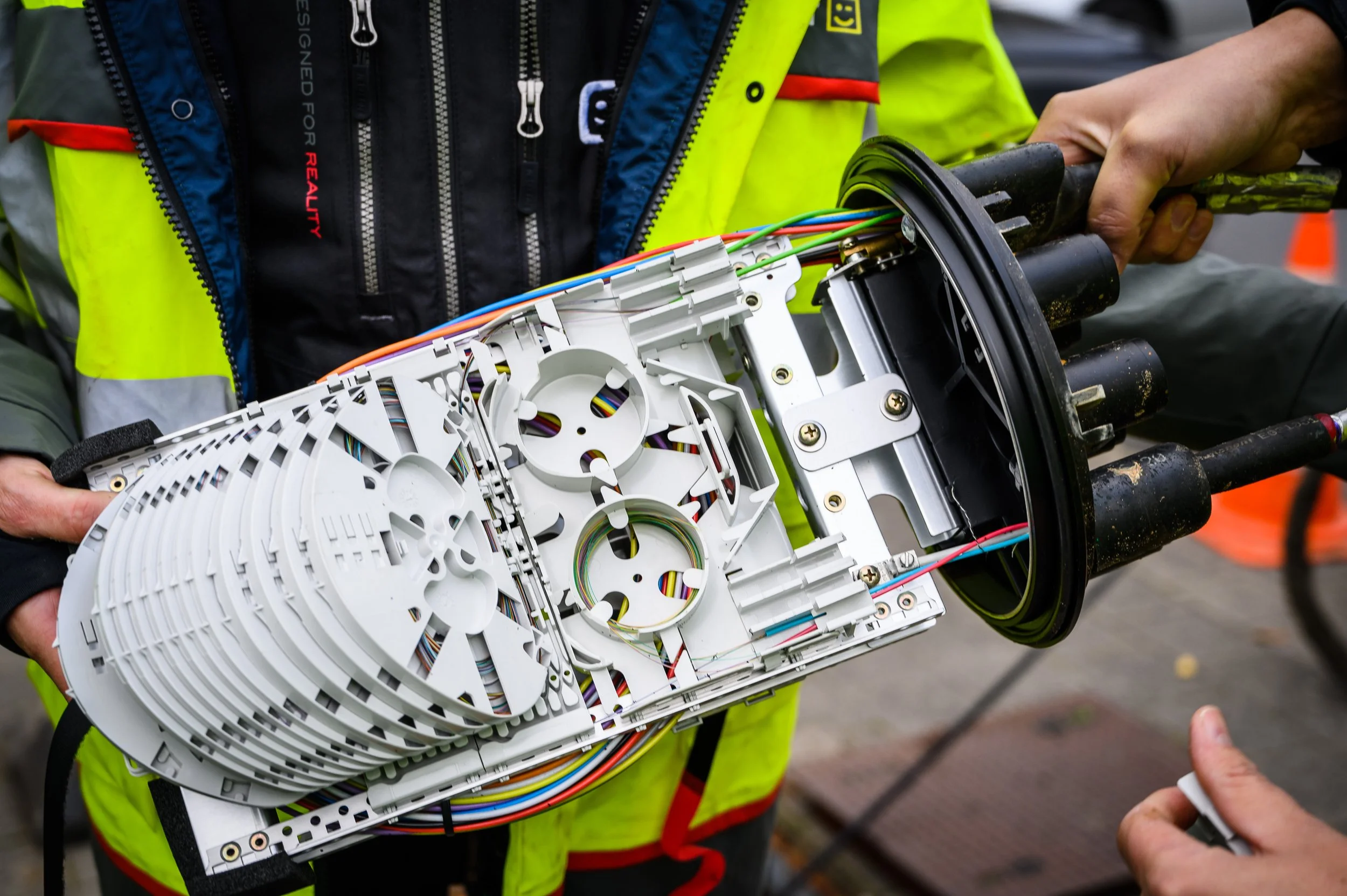
Neither is wrong. The mistake is specifying heat shrink at a location you already know will be reentered, which on distribution plant is most of them.
Capacity is more than a fiber count
Closure capacity depends on tray count, tray type, and what you are splicing. The same closure body will hold a certain number of single-fusion splices, roughly double that in flat ribbon, and several times that again in rollable ribbon at the smaller coating size. A closure rated for hundreds of fibers in one construction may be undersized in another.
Two things follow from that. First, buy capacity against the fiber count your network will carry in ten years, not the count you are splicing this week, because the price difference between a closure with two spare trays and one packed to the lid is trivial next to the cost of replacing it. Second, if the plant may migrate to ribbon later, confirm the closure supports ribbon trays before you standardize on it.
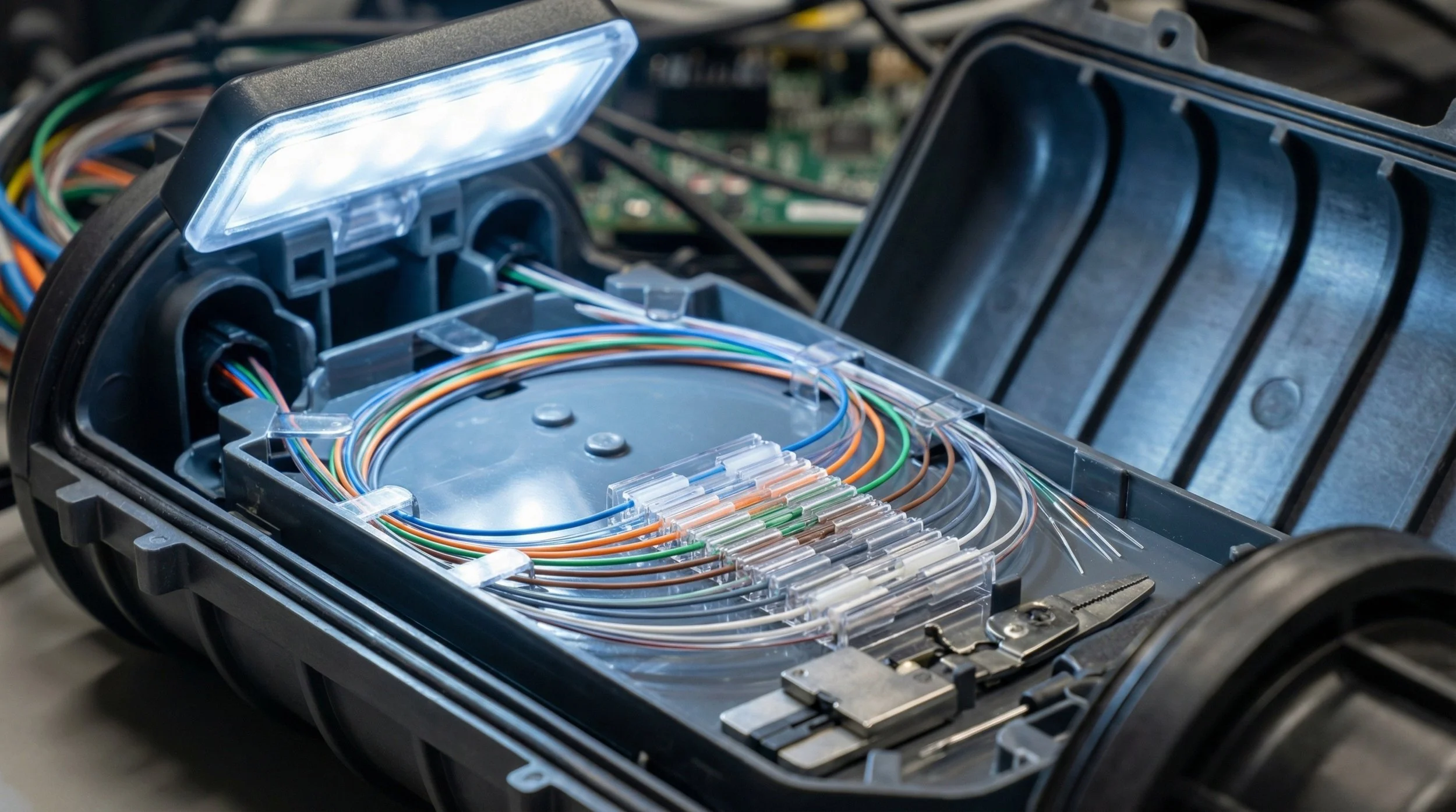
Express capability belongs in the same conversation. A closure that lets uncut buffer tubes loop through while you splice only what you need is the difference between a clean mid-span access and cutting fibers you had no reason to touch.
What reentry actually costs
The visible cost is the truck roll, and it is the smaller number.
The larger costs are the ones that come from decisions made at the original install. A tray packed to capacity means the next technician has to reroute existing splices to make room, and rerouting stressed fibers that were working fine. Poor labeling inside the closure means someone spends an hour with an OTDR and a visual fault locator identifying what should have been written on a tray tag. A slack loop sized just long enough to reach the closure position means the closure cannot be brought down to a bucket comfortably, so every reentry is performed at arm's length in whatever weather is happening that day.
None of those are equipment failures. They are documentation and workmanship decisions that got made once and then got paid for repeatedly.
The aerial specifics
Weight on the strand matters, and carrier technical requirements have historically set limits on assembled closure weight for exactly that reason. A heavy closure at midspan changes sag locally and adds load at the attachment.
Mounting orientation matters for water. A closure that traps water at a cable entry will eventually let it in regardless of its rating, so the base should be oriented to drain and the cable should carry a drip loop below the entry.
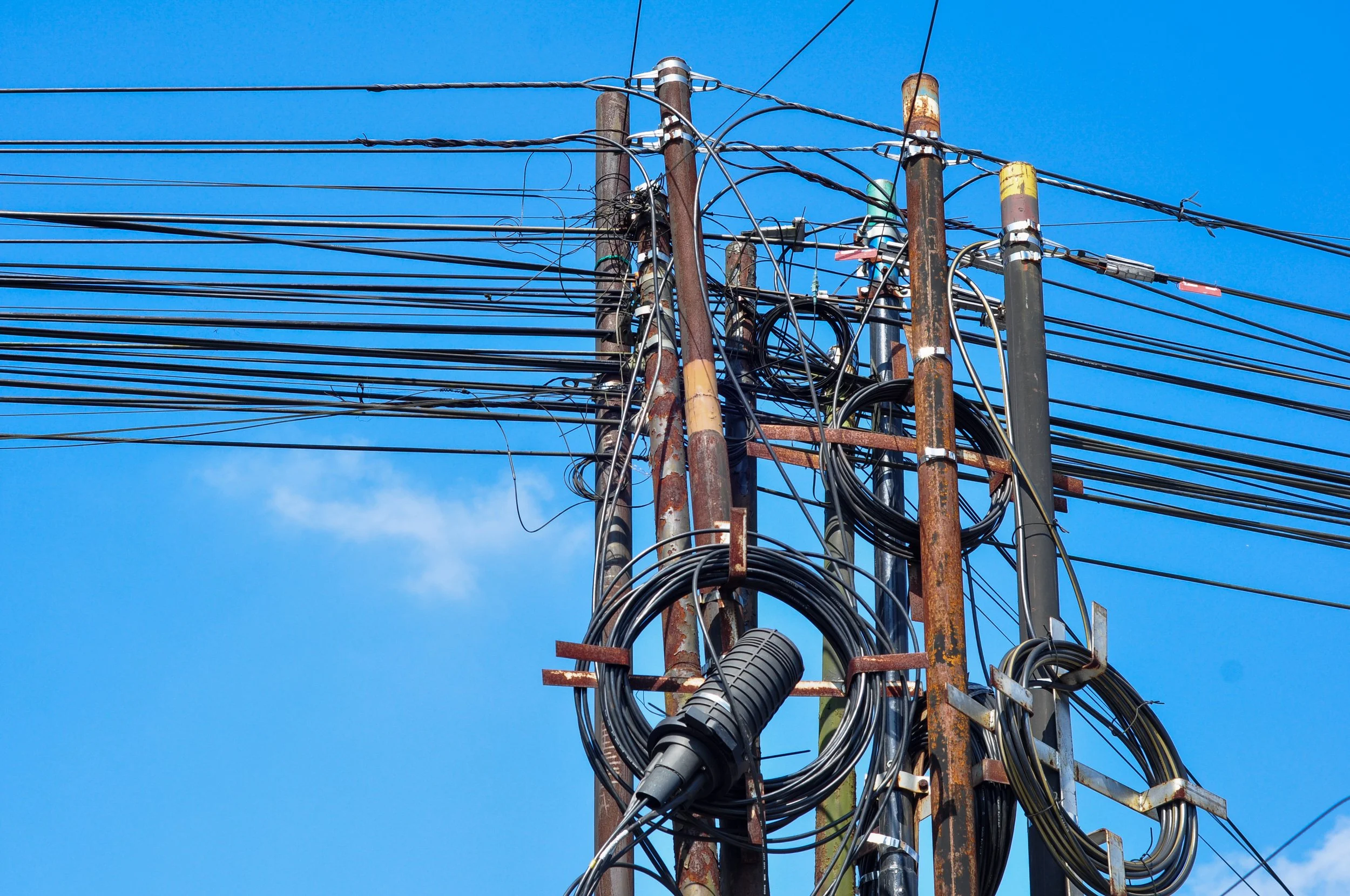
UV exposure matters over the life of the plant. An aerial closure sits in direct sun for decades, and housing material that chalks and embrittles turns a sealing surface into a maintenance item.
Slack is the one people get wrong most often. Size the storage loop so the closure can be lowered to working height, not merely so it reaches the pole. That single decision determines whether every future reentry is comfortable ground-adjacent work or awkward bucket work.
What to put in the specification
Name the sealing method, and name it as re-enterable where reentry is expected.
Name minimum spare port count rather than only total port count, since a closure with no spare ports has no growth path.
Name tray capacity in the fiber construction you actually plan to deploy, and confirm ribbon tray availability if migration is possible.
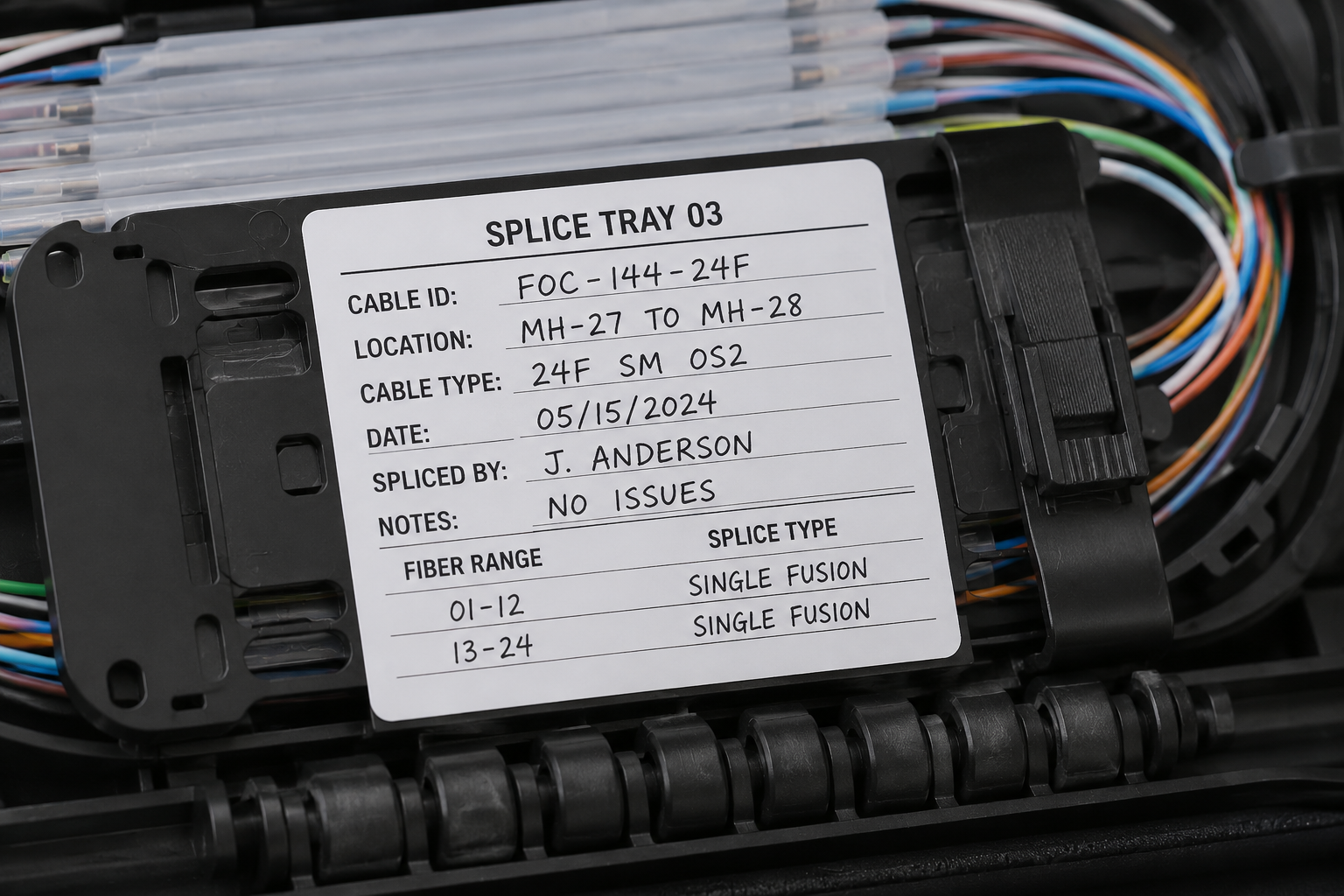
Require internal labeling of trays and cables that matches the identifiers in the as-built package, so a technician opening the closure in year six can orient without testing.
Require slack storage sized to lower the closure to working height.
Require that the closure be listed as compliant with the industry generic requirements for fiber optic splice closures, which cover the environmental and mechanical testing a closure is expected to survive, including thermal aging, freeze and thaw cycling, and water tightness.
The practical takeaway
The closure is a twenty-year decision made in an afternoon. Fiber count and price are the easy inputs. Sealing method, spare ports, tray headroom, labeling, and slack length are the ones that determine what every future visit costs, and they are all decided before anyone climbs the pole.
TermLink Solutions builds, splices, and maintains aerial fiber plant for ISPs, municipalities, businesses, and private landowners nationwide. If you are standardizing closure hardware across a build, our crews can flag the reentry implications before the order goes in rather than after the first service call.
