

What "The Last Mile Is Done" Actually Means for a Contractor
You hear it at every industry event now, usually from someone who has never pulled strand. The last mile is done. The grant money is the last of it. Fiber construction had its run.
It is wrong on the facts, and it is right about something important. Both halves of that are worth understanding, especially if your business depends on the answer.
Start with the actual numbers
Fiber currently reaches roughly 84.5 million unique U.S. residences, which is just over 60 percent of all households. Counting homes served by more than one provider, total passings are approaching 100 million nationwide. 2025 was the strongest deployment year on record, adding 11.8 million homes passed.
Read that again. Just over 60 percent. Nearly four out of every ten American households still cannot buy a fiber connection. Whatever "done" means, it does not mean that.
The Fiber Broadband Association's own market research projects a strong construction market through 2030. The addresses have not run out.
So why does it feel like the music slowed down?
Because the money got cautious, and that is a different problem than the addresses running out.
An AlixPartners survey of 100 fiber operators and investors found that 66 percent of respondents are slowing or stopping new builds to protect unit economics. Half have reduced investment in new market expansion, and another 16 percent have stopped entirely.
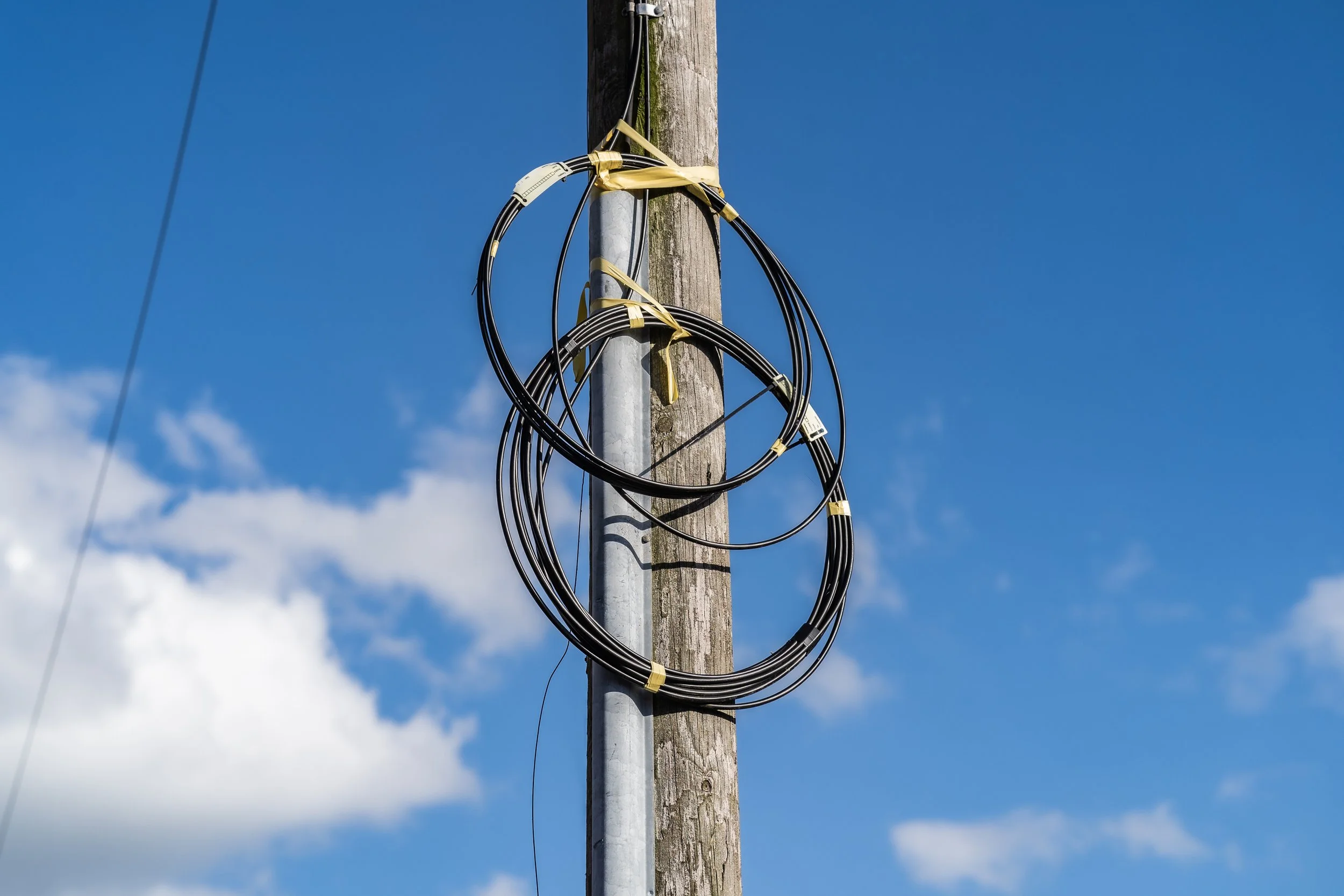
That is not a construction problem. It is a returns problem. The cheap capital that funded the build wave is gone, the dense and easy markets were built first, and what remains costs more per location than what came before it. Operators are not running out of places to build. They are getting choosier about which ones pay back.
The number that explains everything
Fiber take rates sit at roughly 46.5 percent, which means fewer than half of the homes that can get fiber actually subscribe.
That single figure reframes the whole industry. For a decade, the scorecard was homes passed, because coverage was the constraint. A home passed is a unit of infrastructure. It is not a subscriber and it is not a return.
With 100 million passings on the ground and less than half of them earning revenue, the industry's hardest problem is no longer reaching homes. It is connecting the ones already reached and keeping that plant working well enough that they stay.
What that changes for a contractor
The work does not disappear. It changes shape, and the shape matters more than the volume.
Greenfield gives way to infill. Long production routes through untouched territory become shorter segments filling gaps in an existing footprint. That is harder work per foot, with more coordination, more existing plant to work around, and less room to run a big crew at speed.
Passings give way to connections. If take rate is the constraint, the money moves toward the last few hundred feet. Drops, terminal work, and service turn-ups become the volume line item rather than the afterthought. Our post on multiport service terminals covers where that connection actually happens, and it is the part of the network that gets touched most often once a route is built.
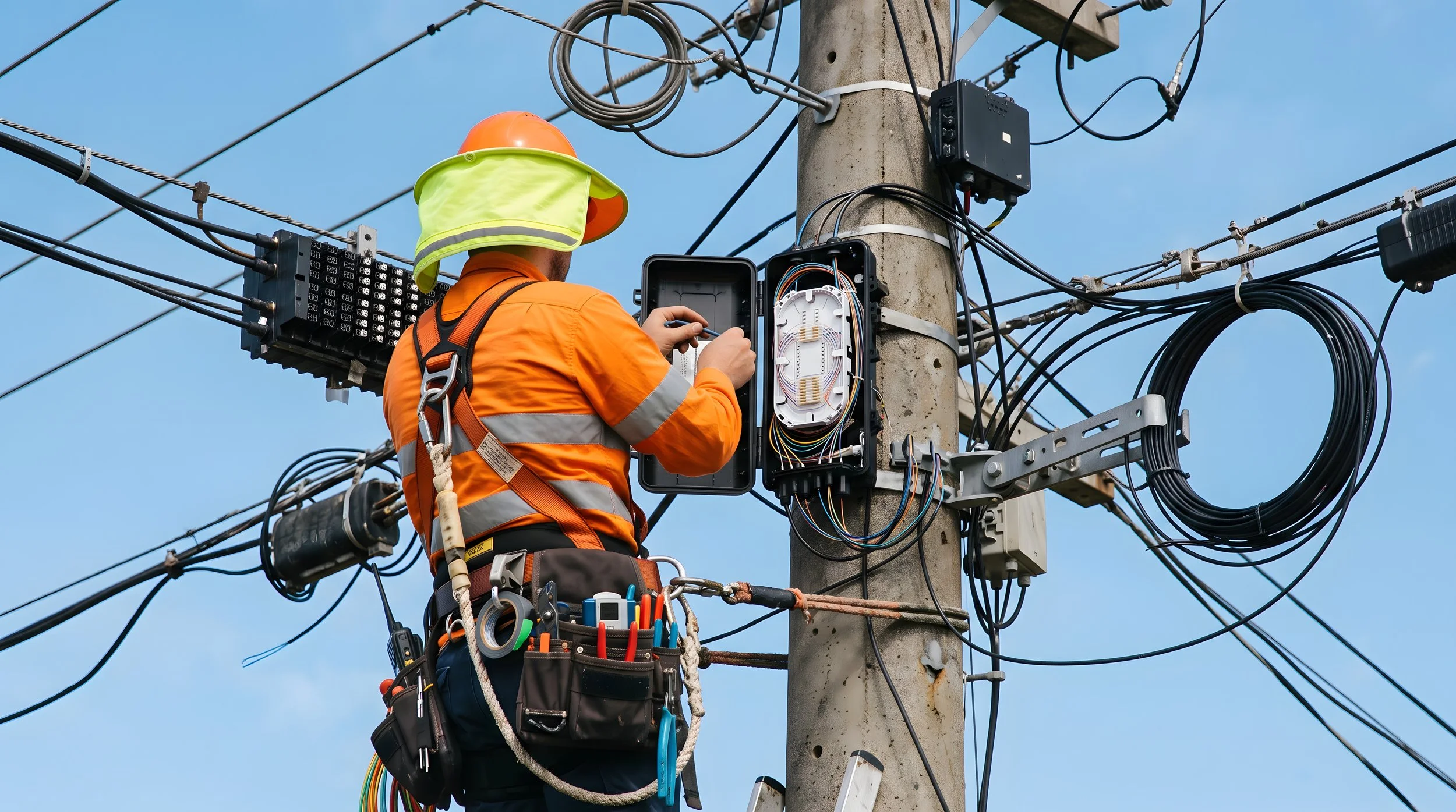
Building gives way to maintaining. There are now roughly 100 million passings of aerial and buried plant in this country, much of it built fast during a boom, some of it documented poorly. That plant needs inspection, testing, restoration, and honest recordkeeping for the next thirty years. Our post on what a fiber audit tells you about your network exists because owners are starting to ask what they actually have.
New construction gives way to rework. Upgrades, densification, and replacement of early plant that was not built to last are all growing categories, and none of them look like a greenfield route on a schedule.
Consolidation is going to change who signs your contract
The same survey found 73 percent of operators saying they were likely to engage in M&A over the next year. More pointedly, 95 percent expect that activity to focus on companies with fewer than 500,000 fiber passings, and half expect the most activity among operators with fewer than 100,000.
That is a precise description of the regional and independent ISPs most fiber contractors work for.
If your customer list is built on operators in that range, some meaningful portion of it will be owned by somebody else within a couple of years. New owners bring their own vendor lists, their own standards, and their own procurement processes. The relationship you have with a local operations manager may not survive an acquisition, but a documented record of clean work and accurate as-builts travels better than a relationship does.
What actually separates contractors in this phase
Boom conditions reward one thing, which is production. A crew that can put up a lot of strand quickly gets all the work it can handle when everyone is racing to pass homes.
A mature market rewards range. The contractors who do well from here are the ones who can move between a splicing job, a testing scope, an audit, a restoration call, and a short infill segment without retooling the business each time. Smaller scopes, more of them, awarded by owners who care about whether the last crew left a usable record.
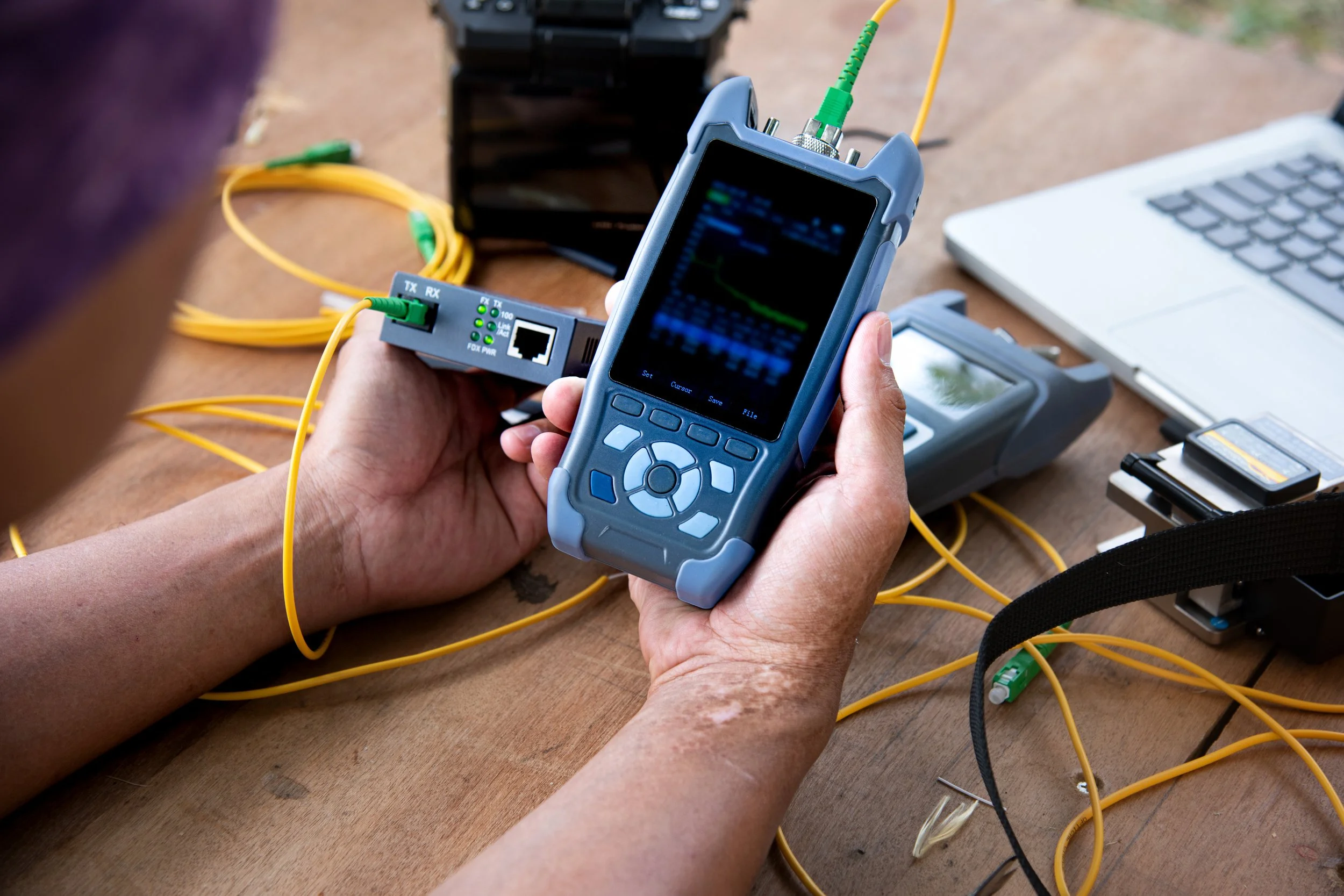
That is a different business than a boom business. It is also a more durable one, because maintenance and connection work does not stop when capital markets tighten. Somebody still has to fix the span.
The honest version
The last mile is not done. Forty percent of American households would tell you that if anyone asked them.
What is done is the phase where fiber construction meant long greenfield routes funded by cheap money and measured in homes passed. That phase built an enormous amount of plant, and every foot of it now belongs to someone who has to keep it running.
The next decade of this industry is about connecting what has been passed and maintaining what has been built. That is less exciting than a build boom. It is also the part that never ends.
Looking for a crew that does more than production? TermLink Solutions provides turn-key aerial fiber construction, splicing, testing, and restoration for ISPs, municipalities, and businesses nationwide, with crews based in Central Pennsylvania. If you are past the build phase and need a partner who can handle the work that comes after it, contact our team.
