

What a Fiber Audit Actually Tells You About Your Network
An inspection asks whether your plant is healthy. An audit asks a harder question: is your record of the network true, and what do you actually have.
Those are not the same question, and most operators only discover the gap between them under pressure. It surfaces when a pole owner sends an attachment invoice that does not match your count, when a buyer's diligence team asks for a fiber inventory you cannot produce, when a grant reporting deadline requires documenting what was built, or when someone asks how many spare strands are available on a route and nobody can answer without driving it.
A fiber audit is the deliberate version of finding out, done on your schedule rather than someone else's.
An audit has three layers
The word gets used loosely, so it is worth separating what an audit can actually consist of.
A field audit is physical verification. A crew works the route pole by pole, confirming what is attached where, at what height, on whose pole, with what hardware. It captures pole numbers and ownership, closure and terminal positions, slack storage locations, and anything present that no drawing shows.

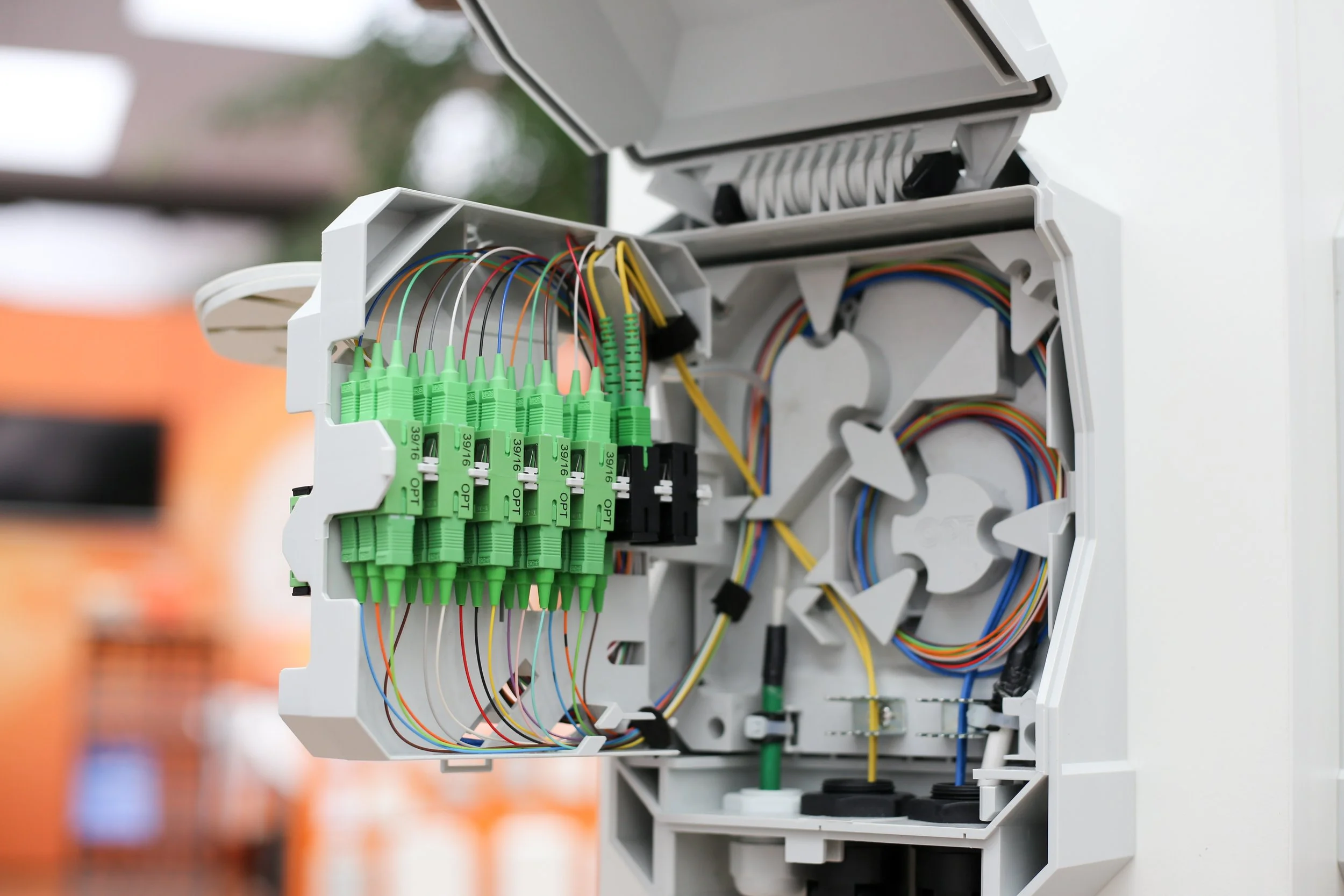
An optical audit is verification through the glass. Every strand gets tested, which establishes continuity, length, loss, and event structure across each span. It also separates what is actually carrying traffic from what is dark, which is frequently different from what the records claim.
A records audit is the reconciliation. The field and optical results get compared against the as-built package, the GIS layer, and the pole attachment permits on file, and every place they disagree becomes a line item.
Any one of the three is useful. All three together are what people mean when they say visibility.
What the field layer finds
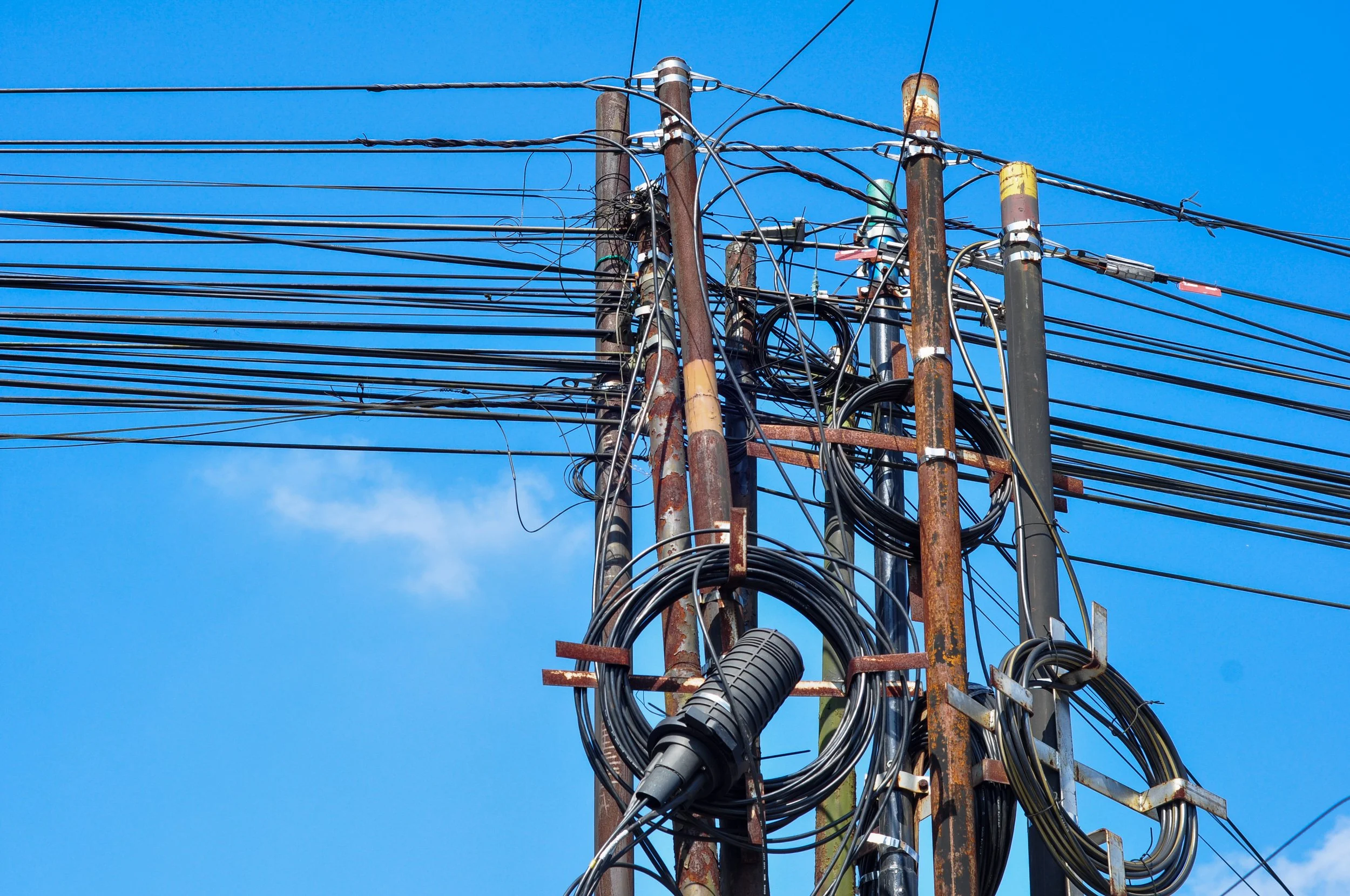
Attachment counts drift. Plant gets extended, repaired, rerouted, and occasionally abandoned in place across years, and each of those events is a chance for the record and the reality to separate.
Field audits routinely turn up attachments on poles that are not in the permit file, closures that sit a span away from where the drawing puts them, drops that were added without documentation, and dead plant still hanging that nobody has authority to remove. They also turn up the opposite, which is billing for attachments that are no longer there.
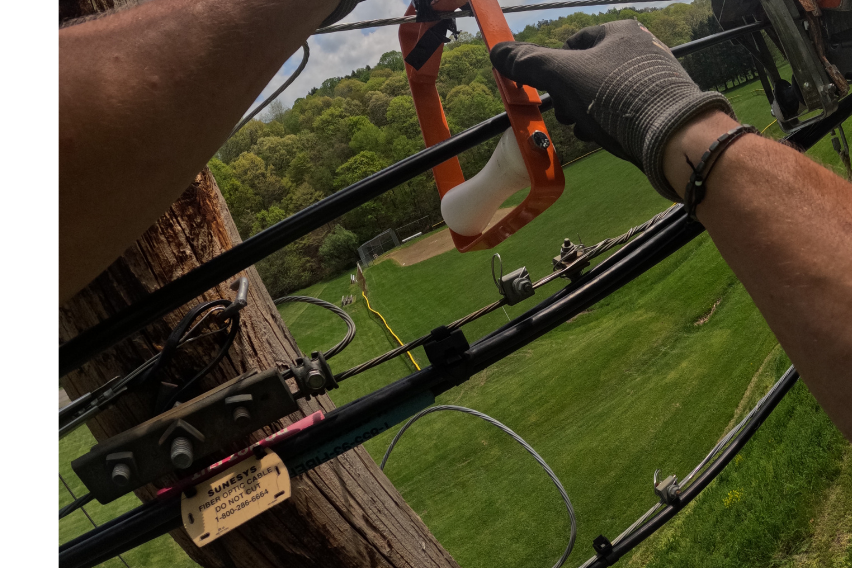
The pole number is the anchor for all of it. If a pole was replaced at some point and renumbered, everything indexed to the old number quietly detaches from reality.
What the optical layer finds
The single most valuable output is an honest spare count.
Operators plan expansions against a fiber count from the design. The design says 288, twelve are lit, so 276 are available. The audit finds that some of those were consumed by a customer turn-up that never made it back into records, several are broken from an old repair that used adjacent strands, and a handful show loss high enough that nobody should sell them. The real available count is lower, and knowing that before you commit to serving a new anchor tenant is considerably cheaper than knowing it after.
Optical audits also produce the baseline that makes future restoration fast. If you never captured native trace files at acceptance, an audit is the second chance to establish that reference.
The deliverable is the discrepancy list
The output people expect is a report saying the network is fine. The output that has value is a list of every place the record and the field disagree, with a recommendation for each one.
Some items get fixed in the field. Some get fixed in the drawing. Some get escalated to a pole owner or a permit office. The list is the work product, and an audit that produces a clean bill of health with no discrepancies should be treated the same way as an as-built that matches the design exactly, which is to say with suspicion.
Audit before the pole owner does
This is the section with money attached, and it is the reason attachers should not wait.
Pole owners run joint use audits to reconcile their own inventory, and the outcome for an attacher can be expensive. Under the federal framework, an attachment installed without a required permit is unauthorized, and pole owners have been permitted to recover up to five years of back rent on it. Where an attacher was offered the chance to participate in a joint audit and declined, an additional per-attachment charge has also been allowed.
Your actual exposure depends on your specific joint use agreement and on state rules where a state regulates attachments itself, so treat the federal framework as the shape of the risk rather than as the number.
There is a meaningful protection in the same framework. The pole owner is expected to provide specific identification of the attachments in question, meaning pole number and location rather than a bare count, so the attacher can verify before any penalty is assessed. That protection is only useful if you can actually verify, and verification requires records good enough to argue from.
An operator with a current audit walks into that conversation with a defensible position. An operator without one is negotiating against the pole owner's data using nothing.
Worth knowing as well: many joint use agreements permit the pole owner to pass audit costs through to attachers, and the terms around who pays and how back rent is calculated are frequently vague in agreements that were written to govern new attachments rather than to inventory existing ones. Reading your agreement before an audit lands is part of the preparation.
The other reasons operators audit
Acquisition is the most common. Networks get bought and sold, and fiber inventory quality is diligence material on both sides. A seller with a verified inventory defends valuation. A buyer without one is purchasing an assumption.
Inherited plant is the second. Municipalities, cooperatives, and operators who acquired systems frequently own plant that was built by someone else with documentation that left with them.
Grant compliance is the third. Funded builds carry reporting obligations about what was constructed and where, and reviewers compare against what was funded.
Monetization is the fourth and the most overlooked. You cannot lease dark fiber you cannot prove you have, and an IRU negotiation moves faster when the strand count and its condition are documented rather than asserted.
What to put in the audit scope
Name the layers you want, since a field audit and an optical audit are different work with different costs.
Require pole-by-pole capture with GPS-tagged photographs, because a photograph settles a dispute that a spreadsheet cannot.
Require reconciliation against your existing GIS and permit records as a deliverable, not just raw collection. Raw data without reconciliation is a second data set to maintain rather than an answer.
Require the discrepancy list to be categorized by what action each item needs and who owns it.
Require native test files rather than summary reports, so the results remain useful to whoever holds them next.
Define the update path. An audit is accurate on the day it is finished, and if nothing changes about how field work gets documented afterward, the drift starts again immediately.
The practical takeaway
An audit is not an inspection and it is not a redraw of the as-built. It is the reconciliation between what you believe you own and what is physically there, and it converts an assumption into an asset record you can bill from, sell from, borrow against, and restore from.
The operators who do this on their own schedule tend to find it a routine expense. The ones who wait usually do it under a deadline set by a pole owner, a buyer, or an auditor, and it costs more in every sense.
TermLink Solutions performs aerial fiber construction, splicing, testing, and network auditing for ISPs, municipalities, businesses, and private landowners nationwide. If your records and your plant have drifted apart, our crews can walk the route and tell you exactly where.
