

What Belongs in a Restoration Plan Before an Outage Ever Happens
Every operator has a restoration plan. Most of them are written during the first bad outage, in real time, by whoever picked up the phone.
That version works, eventually. It just costs three or four times what a prepared response costs, and it burns credibility with customers while it is happening. The alternative is doing the same thinking on a Tuesday in October when nothing is broken, and the difference between those two approaches is almost entirely about decisions and inventory rather than about technique.
This is not a guide to making the repair. It is a list of what needs to exist before anyone is dispatched.
Documentation you can reach when systems are down
The as-built package is the foundation, and it has to be current. A restoration crew works from it to find slack loops, closure positions, and splice points that are not visible from the road at night.
Baseline test results belong with it. If you have native OTDR trace files from acceptance, a post-event shot can be compared against a known-good picture of the same span, which turns fault location into arithmetic. Without a baseline, the crew is characterizing the span from scratch during an outage.

Circuit-to-fiber mapping is the piece most often missing. Knowing which customers and which services ride which strands tells you the size of the event and the restoration order before anyone leaves the yard. Finding that out by listening to which phones ring is a slower method.
Access information rounds it out. Gate codes, landowner contacts, easement terms that address emergency access, and pole owner emergency contacts. Store all of it somewhere reachable when the network you are restoring is the network your systems run on. A restoration plan that lives only in a cloud application you cannot reach is not a plan.
Materials that are actually on the shelf
Spare cable has to match what is deployed. A reel of 144 count does nothing for a route built with 288, and the mismatch is common because the spares were bought before the plant grew.
Stock enough length to replace a full span rather than only enough to make a splice. Storm damage on aerial plants frequently takes out a span, not a point.
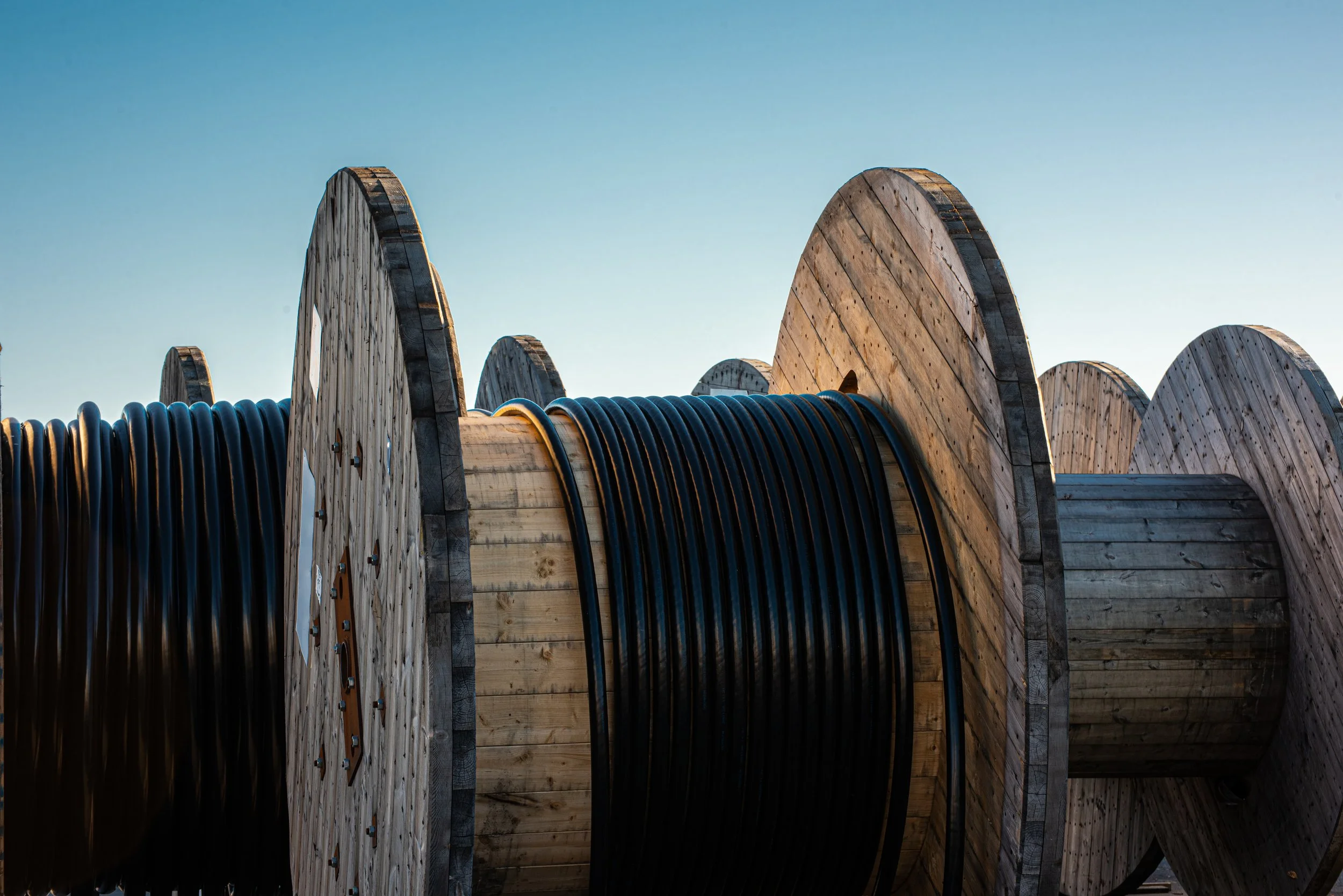
The rest of the list is unglamorous and gets forgotten anyway. Closures and trays matching the hardware in the field, splice protectors, terminals, strand, anchors, guy hardware, and lashing wire.
Two disciplines make the inventory real. Inventory it on a schedule, because a reel that has sat outside for six years may not be usable and you do not want to discover that during an event. And confirm that whoever responds can physically get to it at two in the morning on a holiday weekend, which means keys, codes, and a second person who knows where things are.
The contractor agreement signed in advance
This is the item that separates operators who restore quickly from operators who wait.
After a regional weather event, every qualified aerial crew within driving distance is already committed. An operator calling around for help on the morning after is negotiating for capacity that is largely spoken for, at whatever rate the market will bear, with no established relationship.
A master service agreement or standby agreement executed in advance solves the queue problem and the rate problem at the same time. Rates are agreed when nobody is under pressure, insurance and safety qualifications are verified once, and the contractor already knows your plant.
The Federal Communications Commission made essentially this argument when providers objected that resiliency requirements were burdensome for small operators. Its response was that the provisions require preparation and coordination in advance of an emergency, which reduces the resources needed during an actual event. That logic holds regardless of which rules apply to you.
Mutual aid arrangements with neighboring operators work on the same principle, and the FCC's resiliency framework specifically contemplates establishing agreements to share physical assets and to consult with one another before and during emergencies.
Decisions made while nobody is under pressure
Restoration priority is a business decision, not a field decision, and it should be settled in writing. Which routes come back first, which customers carry service level commitments, and what happens when two priorities conflict.
Temporary versus permanent repair authority needs a rule. Somebody has to be able to authorize a temporary restoration to get service back, and something has to trigger the permanent fix afterward so the temporary does not quietly become the plant.

Spend authority thresholds matter more than people expect. If a supervisor at three in the morning cannot approve materials without a purchase order that requires a signature from someone asleep, the outage is now longer for procedural reasons.
Emergency procurement rules deserve the same treatment. Define in advance when normal purchasing gets suspended and who declares it.
Communication and reporting obligations
Customer notification is the visible part. Decide in advance who sends it, how fast, and what a status update looks like, because ad hoc communication during an outage is where reputational damage accumulates.
Regulatory reporting is the part that surprises smaller operators. Federal outage reporting obligations exist for communications providers, with defined thresholds and deadlines, and the time to learn where yours sit is not while the clock is running. Establish who files, what triggers filing, and where the login credentials live.
External coordination is the third piece. Pole owners, state and local transportation agencies for road occupancy, and municipal emergency management all need a named point of contact from your side rather than whoever happens to call them.
The dependency you do not control
On an aerial plant, the honest constraint is that you are not first in line.
When a storm takes down a pole line, the electric utility owns the restoration sequence. The poles have to be set, the energized conductors have to be made safe, and the corridor has to be cleared before any communications attacher can work. Power first. Fiber second. That is not a preference, it is a safety requirement and a practical one, and the FCC has examined electric power outages as one of the primary underlying causes of communications service disruption.
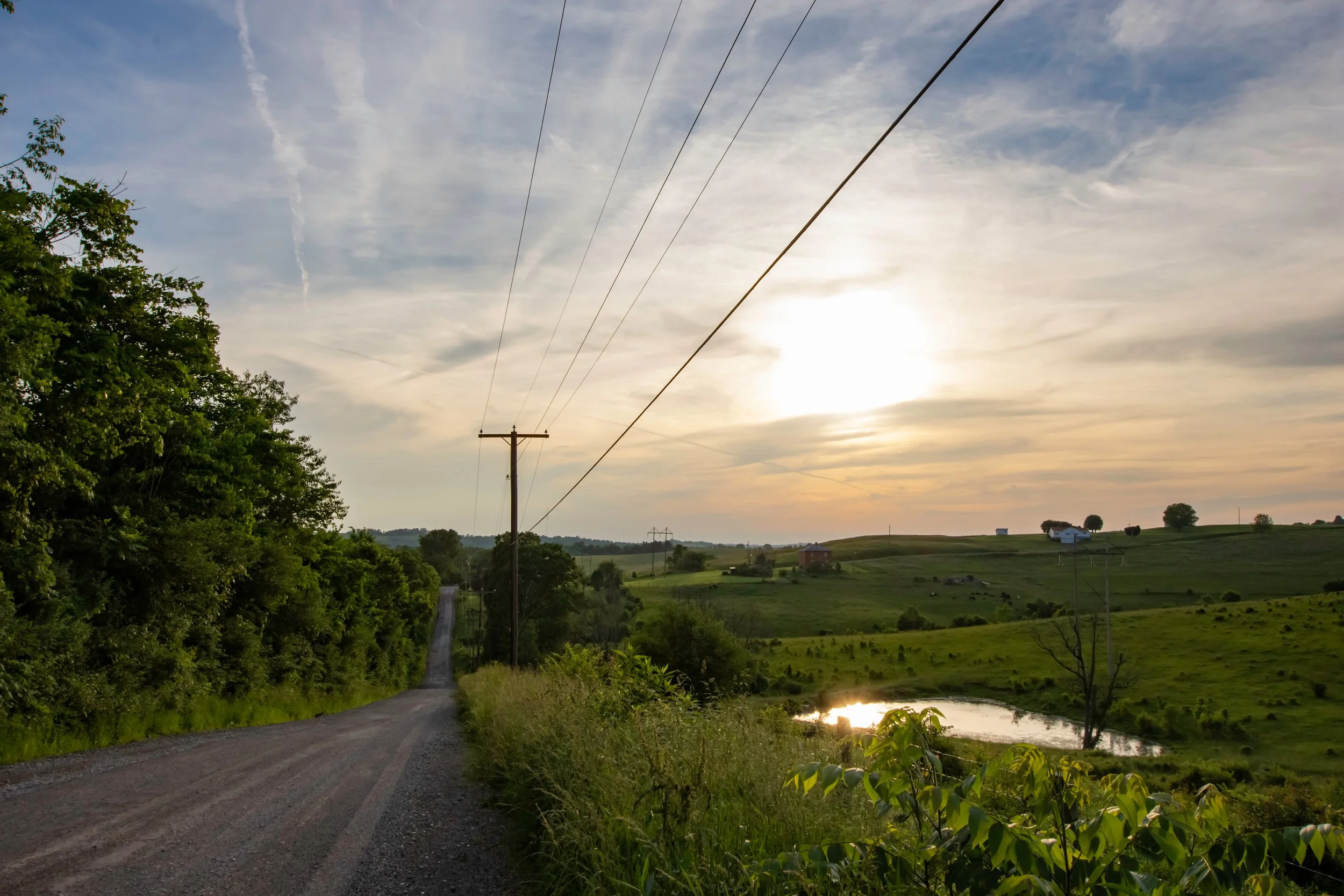
The planning consequence is that your restoration timeline is partly the utility's timeline. Build the relationship and the notification path before you need it, understand how the utility sequences its own restoration in your service area, and set customer expectations against reality rather than against how fast your crew could splice if the pole were standing.
Test the plan
A plan nobody has exercised is a document, not a capability.
Run a tabletop at least annually. Pick a plausible scenario, walk the sequence, and find out who does not know their role. Verify the as-built by using it to locate something in the field. Open the storage location and count what is actually there against what the list says.
The point of the exercise is finding the gaps while they are cheap. Every one you find on a Tuesday is one you are not finding during an event.
The practical takeaway
Restoration speed is mostly determined before the event. Current documentation, matched spares you can reach, a contractor agreement already signed, priority and authority decided in writing, and a realistic understanding of where you sit behind the power utility. None of that is technique, and all of it is the difference between a four-hour restoration and a two-day one.
TermLink Solutions provides aerial fiber construction, splicing, testing, and emergency restoration for ISPs, municipalities, businesses, and private landowners nationwide. If you want a standby agreement in place before storm season rather than after it, our crews are available to scope one against your plant.
