

Most fiber construction news is about large internet provider buildouts and grant-funded networks. A lot of fiber work happens on a much smaller scale. Farmers, ranchers, and rural landowners hire crews to run fiber across their own property, whether that means connecting a barn to the house, reaching a shop at the back of the field, or bringing service from the road to a home set far off it.
These projects follow the same construction practices as a full network build, just on a smaller footprint. Here is what a private aerial fiber run on a farm or rural property involves, from the first walk of the property to the day the connection goes live.
Why Farms Are Running Their Own Fiber
Modern farms depend on connectivity more than ever. Barn cameras, livestock monitoring, grain bin sensors, and precision agriculture equipment all need a reliable connection to work well. The USDA has estimated that broadband and precision agriculture together could deliver $47 billion in national economic benefits every year, with $18 billion of that depending directly on high-speed, reliable internet.
The productivity gains show up in the field too. An FCC working paper found that doubling broadband connections in farm areas was associated with roughly a 3.6 percent increase in corn yields, with similar gains across other major crops.
The challenge is distance. Even when a provider brings fiber to the road, the house, barns, and outbuildings may sit hundreds or thousands of feet away. Wi-Fi fades quickly across open ground, and standard Ethernet cable is limited to about 328 feet. Fiber carries a clean signal over long distances, it is not affected by lightning-induced surges the way copper is, and it has room to grow as more equipment comes online.
The Most Common Types of Private Runs
Most private fiber projects fall into one of three types. The first is a road-to-home run, where a provider's service ends at the road and the property owner needs fiber carried the rest of the way to the house. The second is a building-to-building run that connects the house to barns, a shop, a grain facility, or other outbuildings so the whole property shares one reliable network. The third links separate parcels or neighboring properties owned by the same family or operation.
Many projects combine all three. A single build might start at the road, run to the house, and branch out to two barns and an equipment shed.
Step One: Walking the Property
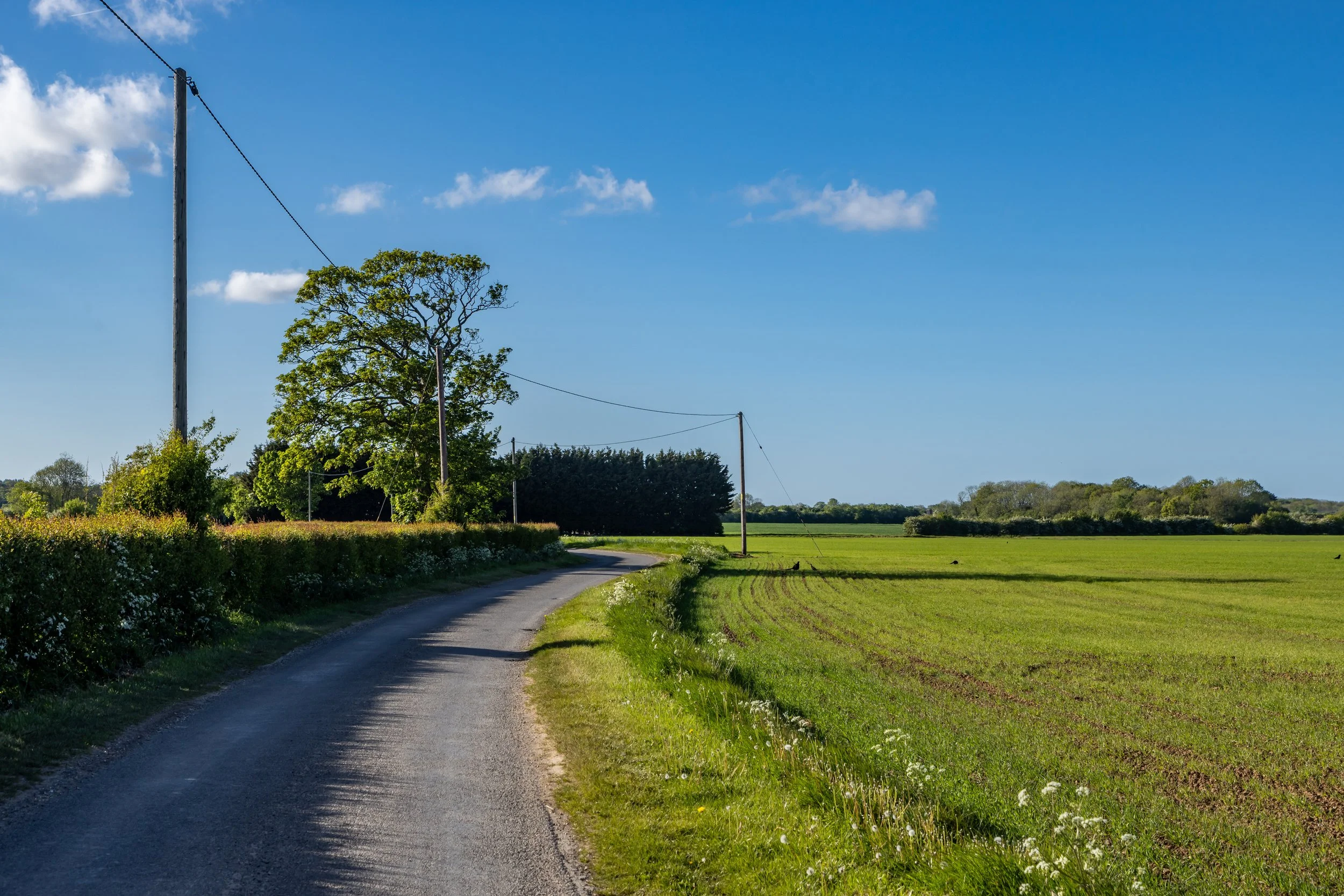
Every private run starts with a site visit. The crew walks the route with the landowner to measure distances, confirm where the fiber will end inside each building, and identify anything that affects the path. Tree lines, field crossings, livestock areas, and farm lanes all shape where the route can go.
Farm lanes deserve special attention. Tall equipment like combines and sprayers travels on these lanes, so any span crossing them has to be high enough to clear that equipment safely. The walkthrough is also when the crew confirms bucket truck access, since soft fields, planted crops, and livestock timing can all affect when and where a truck can drive.
Step Two: Designing the Aerial Route
With measurements in hand, the route gets designed around poles. Some projects can use existing utility poles along the road, which requires attachment approval from the pole owner. Others need new poles set on the property to carry the fiber between buildings.
Pole placement and span length are planned to meet clearance requirements for aerial fiber, especially over driveways, lanes, and anywhere equipment passes underneath. This is also the time to plan for growth. Choosing a fiber count with spare strands costs very little up front and makes it easy to add a new building, camera system, or second service later without rebuilding the line.
Step Three: Building the Line
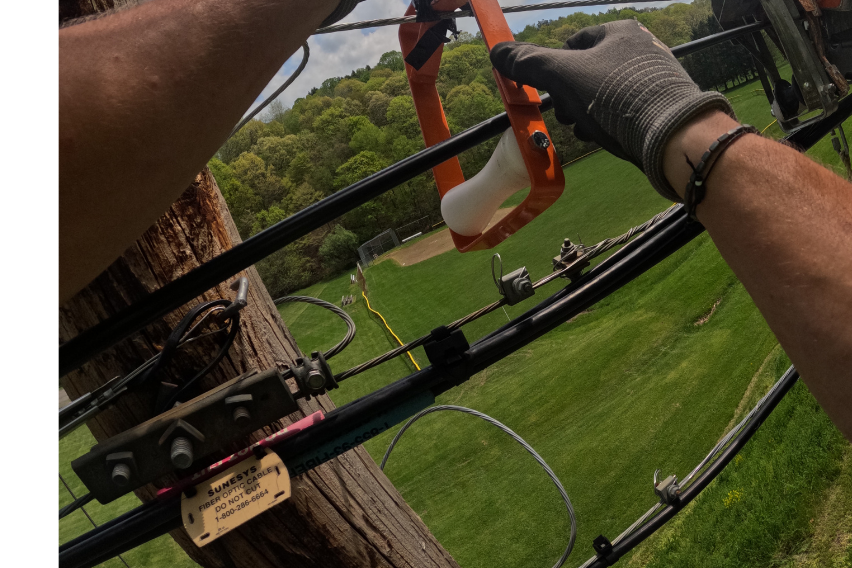
Construction follows the same method used on large aerial builds. The crew places a steel messenger strand from pole to pole, then lashes the fiber cable to the strand so it can hang safely through wind, ice, and temperature swings. The Fiber Optic Association notes that most fiber cables are not strong enough to hang on their own, which is why the messenger carries the load and the fiber rides beneath it.
At each building, the crew leaves slack for future access and brings the cable down the structure to the point where it enters.
Step Four: Splicing, Testing, and Handoff
Once the cable is hung, splicers join the fibers at each endpoint and at any branch points along the route. Every fiber is then tested to confirm it performs as designed, and the results are recorded so the landowner has proof the line is sound.
The final piece is documentation. A simple map of where the fiber runs, which poles carry it, and how many spare fibers are available saves time and money years later, whether the owner is adding a building or troubleshooting a problem. From there, the internet provider or the landowner's network installer connects the equipment inside each building and brings the network live.
What Landowners Should Have Ready
A few details make the first conversation with a fiber crew go faster. It helps to know who provides internet service to the property and where their equipment ends. It also helps to have a list of every building that needs a connection now, plus any buildings planned in the next few years.
If the route crosses a neighbor's property or a road, the landowner should expect permission or a permit to be part of the process. Finally, sharing the farm's calendar helps the crew schedule around planting, harvest, and livestock moves so the work does not get in the way of the operation.
Bring Fiber to Your Property With TermLink
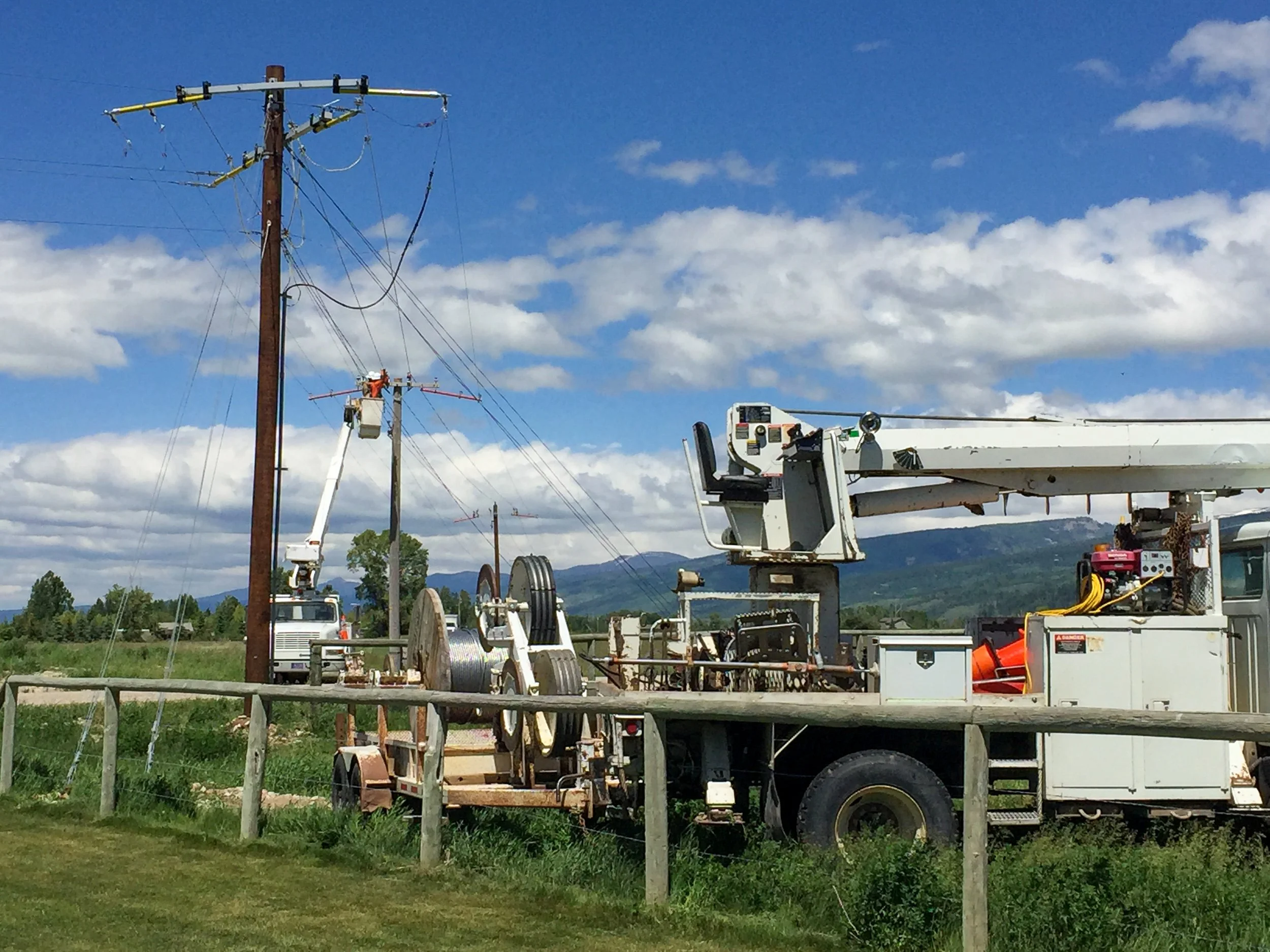
TermLink Solutions builds aerial fiber for private landowners as well as internet providers and municipalities. No project is too small, and our crews bring the same construction, splicing, and testing standards to a single farm run that we bring to a full network build.
If you are ready to connect your farm or rural property, contact our team to schedule a site visit and talk through your route.
