

The ARPA Broadband Deadline Is December 31. Here Is What Happens to Unfinished Builds.
BEAD gets most of the headlines, but another pot of federal broadband money is running out of time much sooner. The American Rescue Plan Act (ARPA) funded thousands of broadband projects across the country, and the clock on that money stops at the end of this year. For internet service providers, municipalities, and electric cooperatives with ARPA-funded fiber still in the field, the next three months decide whether those dollars get spent or sent back.
Here is how the ARPA broadband deadline works, what happens to unfinished builds, and what project owners can still do to get across the line.
Two ARPA Programs, One Deadline
Most ARPA broadband money came through two Treasury programs. The Capital Projects Fund sent roughly $10 billion to states, territories, and tribal governments for capital projects, and about $8 billion of it went to broadband. The State and Local Fiscal Recovery Funds were much broader, but many states, counties, and towns used part of their allocation to build fiber into unserved areas.
Both programs share the same end date. Under the Treasury's Capital Projects Fund guidance, recipients can use grant funds for costs incurred through December 31, 2026. State and local fiscal recovery funds had to be obligated by the end of 2024, and the final expenditure deadline for those funds is also December 31, 2026.
What Happens to Money That Is Not Spent
The rule is simple. Treasury requires recipients to return any grant funds that are not used by the end of the period of performance. There is no carryover into next year and no rolling the balance into a new project. If a build is only partly finished on December 31, the unspent portion goes back to Washington, and the community that was supposed to be served is left waiting.
That is a real risk right now. In West Virginia, the state's Broadband Enhancement Council reported in September that about half of the 42,496 locations targeted by its ARPA-funded projects have service available, with the December 31 deadline approaching before remaining funds are reclaimed. West Virginia is not an outlier. Many states started their ARPA builds later than planned, and supply delays and permitting backlogs pushed a lot of construction into 2026.

The Extension Most Projects Will Not Get
Treasury did create a narrow path for more time. In May 2026, it announced that Capital Projects Fund broadband infrastructure projects could request a six-month extension to June 30, 2027. The conditions are strict. Requests were due by July 31, 2026, and a project had to show material progress along with delays caused by circumstances outside the grantee's control, such as permitting, supply chain problems, labor shortages, or severe weather.
Treasury also made clear that it would not approve extensions for poor planning, project management failures, or financing shortfalls. Even an approved project has to reach substantial completion by June 30, 2027, which means the network is actually delivering service to end users. The extension does not apply to state and local fiscal recovery funds, so projects funded that way are still working against December 31.
For most project owners, the practical takeaway is that the extension window has closed. If a build is not already on an approved extension, the deadline is the end of this year.
Why the Last Mile Is the Hardest Part
A fiber build that looks mostly done on a map can still be months from delivering service. Strand and cable on the poles is only part of the job. Before a home can connect, the fiber has to be spliced, tested, and documented, and every drop location has to be reachable from a working terminal.
That is where unfinished projects tend to stall. Make-ready work and pole attachment approvals can hold a route for weeks. Crews that were scheduled months ago are now stretched across BEAD work, and winter weather in much of the country shortens the working day right when the pressure is highest. A project that is 80 percent built can easily miss the deadline if the final spans, splicing, and acceptance testing are not staffed and sequenced now.

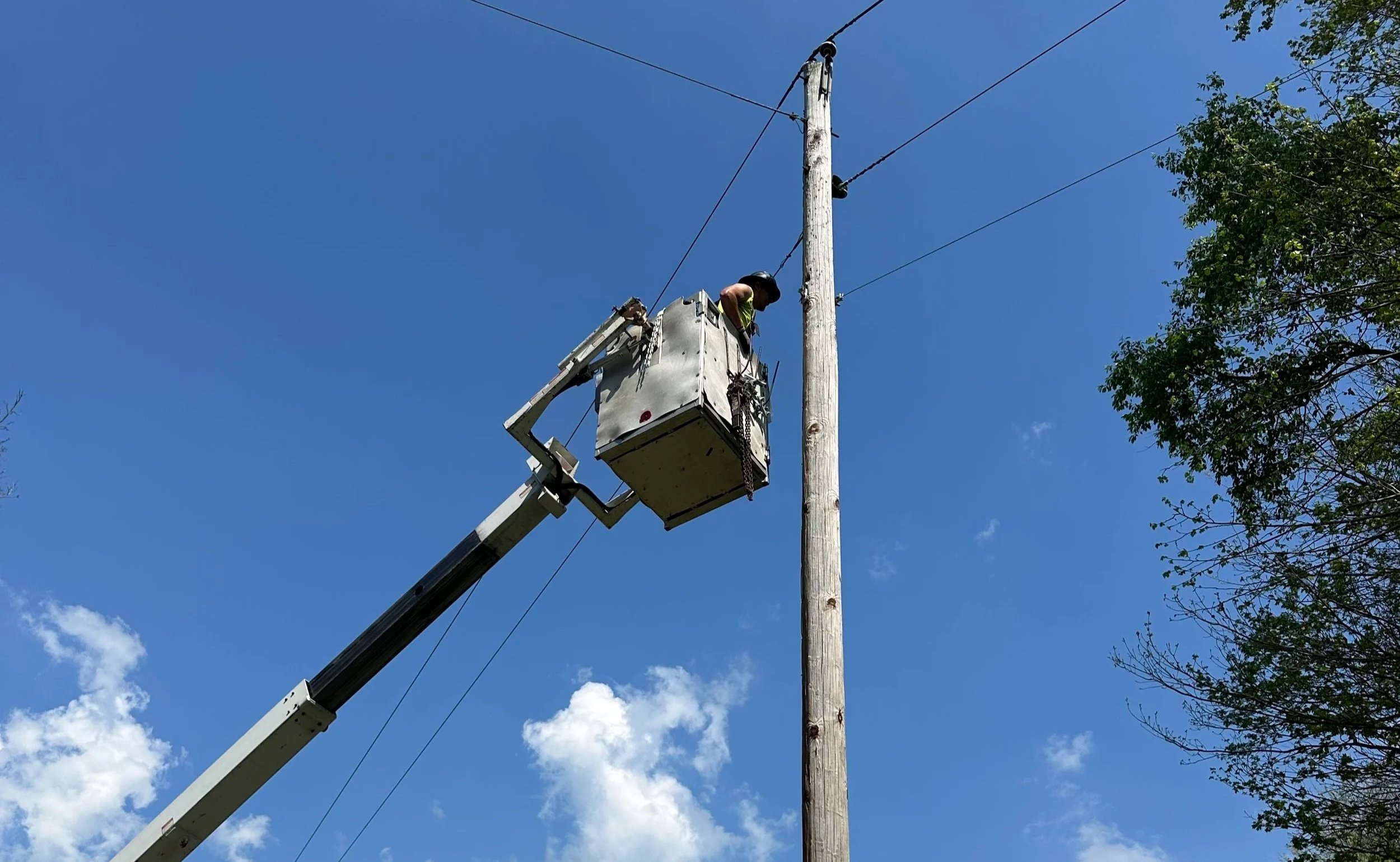
Aerial construction is often the fastest way to close those gaps. Existing pole lines let crews place strand and cable without waiting on excavation permits, and a well-organized aerial crew can move through a route quickly once make-ready is clear.
What Project Owners Should Do Before December 31
The first step is confirming which deadline actually applies. Local governments that received ARPA money passed through a state may be working under a grant agreement with an earlier date than December 31. The second step is getting an honest picture of what is left. That means walking the remaining route span by span and counting the splices, terminals, and test results still outstanding, rather than relying on percent-complete estimates.
From there, the priority is sequencing. Routes that unlock the most locations should be finished first, and splicing and testing crews should follow close behind the construction crews instead of waiting for the entire build to be hung. Closeout documentation also needs to be ready as the work finishes, since test results and as-built records are what prove the network is delivering service. For projects that also carry grant compliance requirements from other programs, the same records discipline carries forward.
Finish Your ARPA Build With TermLink
TermLink Solutions provides turn-key aerial fiber construction, splicing, and testing for ISPs, municipalities, cooperatives, and private owners nationwide. Our Pennsylvania-based crews mobilize quickly and arrive fully equipped, which makes us a strong fit for grant-funded projects that need added capacity to finish on time.
If your ARPA-funded build is racing the December 31 deadline, contact our team to talk through what is left on your route and how quickly we can get crews on it.
