

Pennsylvania's Build, By the Numbers, and What It Means for Local Scheduling
Every county in Pennsylvania has a broadband project attached to it now. All 67 of them.
That is the part of this story that gets lost behind the headline dollar figure. The Commonwealth's BEAD plan is not a rural initiative aimed at a handful of underserved pockets. It is a statewide construction program with a defined location count, a defined technology mix, and a clock that has already started. If you sit on a borough council or a board of supervisors, a piece of it is coming to your right of way whether or not anyone has told you yet.
Here is what the numbers actually say, and what they mean for anyone trying to plan around them locally.
The headline figures
NTIA approved and executed an agreement with the Commonwealth to deploy $711,295,843 in BEAD grants. Pennsylvania was originally allocated roughly $1.16 billion, so the final figure came in more than $400 million below the original allocation.
That funding is distributed among 20 approved entities across 69 projects, covering 129,356 unserved and underserved locations. Those are the remaining locations in the state without high-speed internet service, which means this program is scoped to finish the job rather than chip away at it.
The technology split says more than the dollar figure
Of the 129,356 locations, 74,878 are slated for fiber. Another 29,884 are assigned to low Earth orbit satellite. Fixed wireless covers 17,739, and hybrid fiber coax covers 6,855.
That works out to roughly 58 percent fiber and roughly 23 percent satellite. The practical implication for a local official is that your municipality almost certainly contains more than one of these. A single township can have a fiber build running down its main road and satellite assigned to the properties at the end of the hollows, funded under the same program.
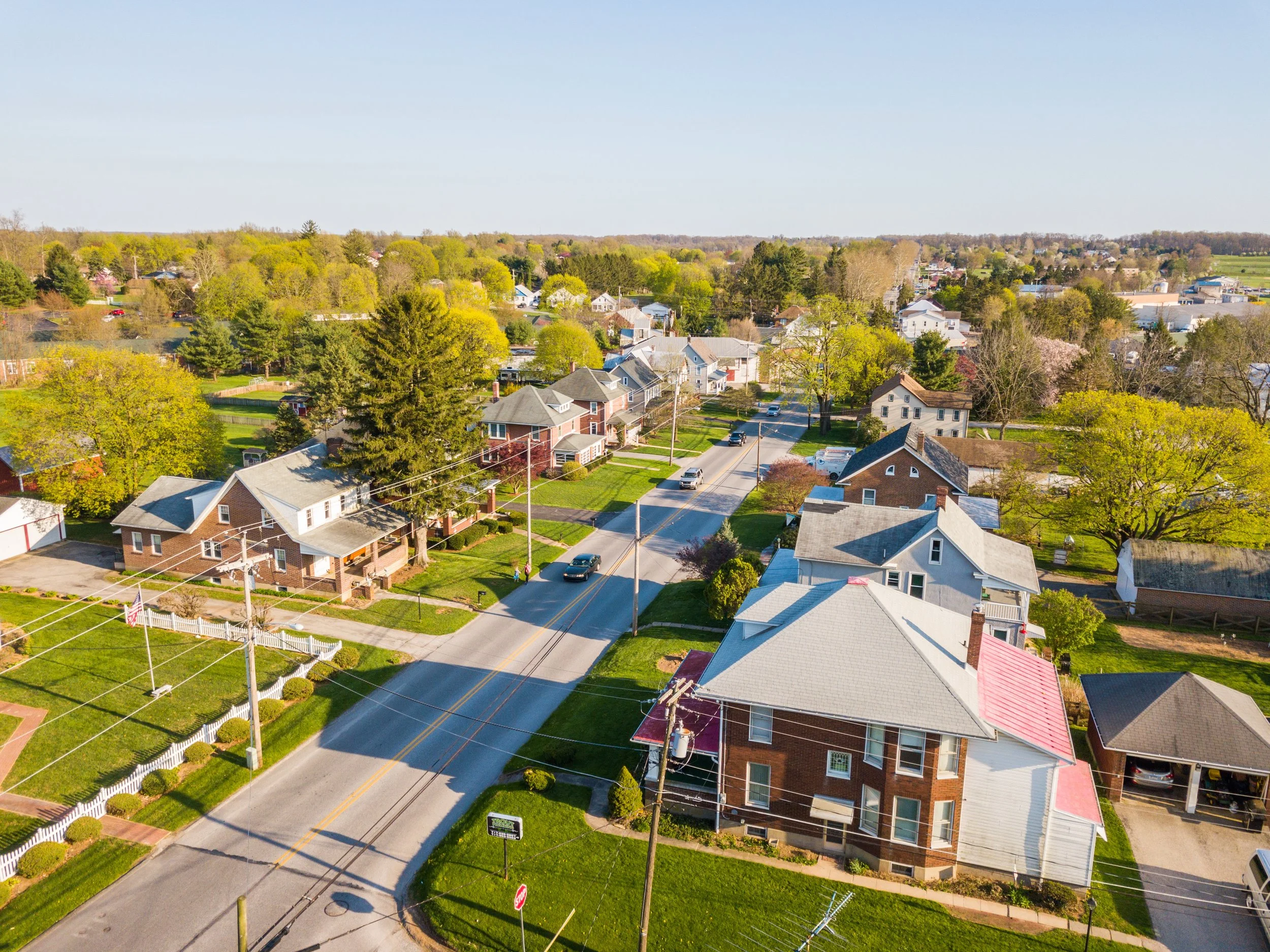
This matters when residents start asking questions. The answer to "am I getting fiber" is location-specific rather than township-specific, and the fastest way to lose credibility with constituents is to promise a technology the plan did not assign to their address.
Public reporting on the state overview also puts average deployment cost at roughly $5,501 per location, with provider match at roughly $5,175. The providers building here have real money of their own in these projects. That is worth remembering when scheduling gets tense, because a delay costs them directly.
The clock is roughly four years, not four months
Contracts are expected to be signed and service delivered over a period of about four years. Nobody is building 129,356 locations this construction season.
That has a specific consequence for local planning. Your municipality's turn in the sequence may be in year one or year three, and the difference determines when you need to be ready. The PBDA's BEAD program page is where next steps get posted, and it is worth checking rather than waiting to be contacted.
We wrote previously about what has to happen after an award before construction starts. Applied here, that sequence runs across all 69 projects at once, competing for the same permitting capacity and the same crews.
Permitting is where local scheduling actually gets decided
The Commonwealth has been unusually direct about this. Rather than treating permitting as an afterthought, PBDA has laid out coordination at three levels.
At the federal level, the Authority is working with federal partners to streamline permitting requirements and reviews. At the state level, state agencies will coordinate permit reviews, with complex issues elevated through the Office of Transformation and Opportunity, and an online portal is being developed to support submission and tracking of state permit requests. At the local level, PBDA has committed to working with BEAD-funded providers and local governments on permitting challenges, including regional roundtables focused on coordination.

The state has also set an expectation that permit applications will be reviewed within 90 days in order to keep construction on schedule.
Read that structure carefully and the message is clear. The state has built escalation paths for federal and state permitting bottlenecks. The local layer is coordination and support rather than escalation, which means a municipality that slows a project down is a problem the state intends to solve through conversation. It also means a municipality that moves quickly is genuinely helping its own residents get connected sooner.
What a municipality should have ready
Find out which of the 69 projects touch your boundaries, and which provider holds them. That single fact answers most of what your residents will ask you.
Know who owns the poles in your municipality. If your borough owns an electric system, you are not a bystander in this process. You are a pole owner with an application queue of your own, and your response time is directly on the critical path.
Review your own ordinance timelines before an application arrives rather than after. A right of way permit process built for a single utility cut is going to feel different when a provider submits a route spanning several miles of your streets.
Name a point of contact. Providers coordinating 69 projects statewide will move fastest with the municipalities that are easiest to reach, and that is not favoritism. It is arithmetic.
What a provider should be doing right now
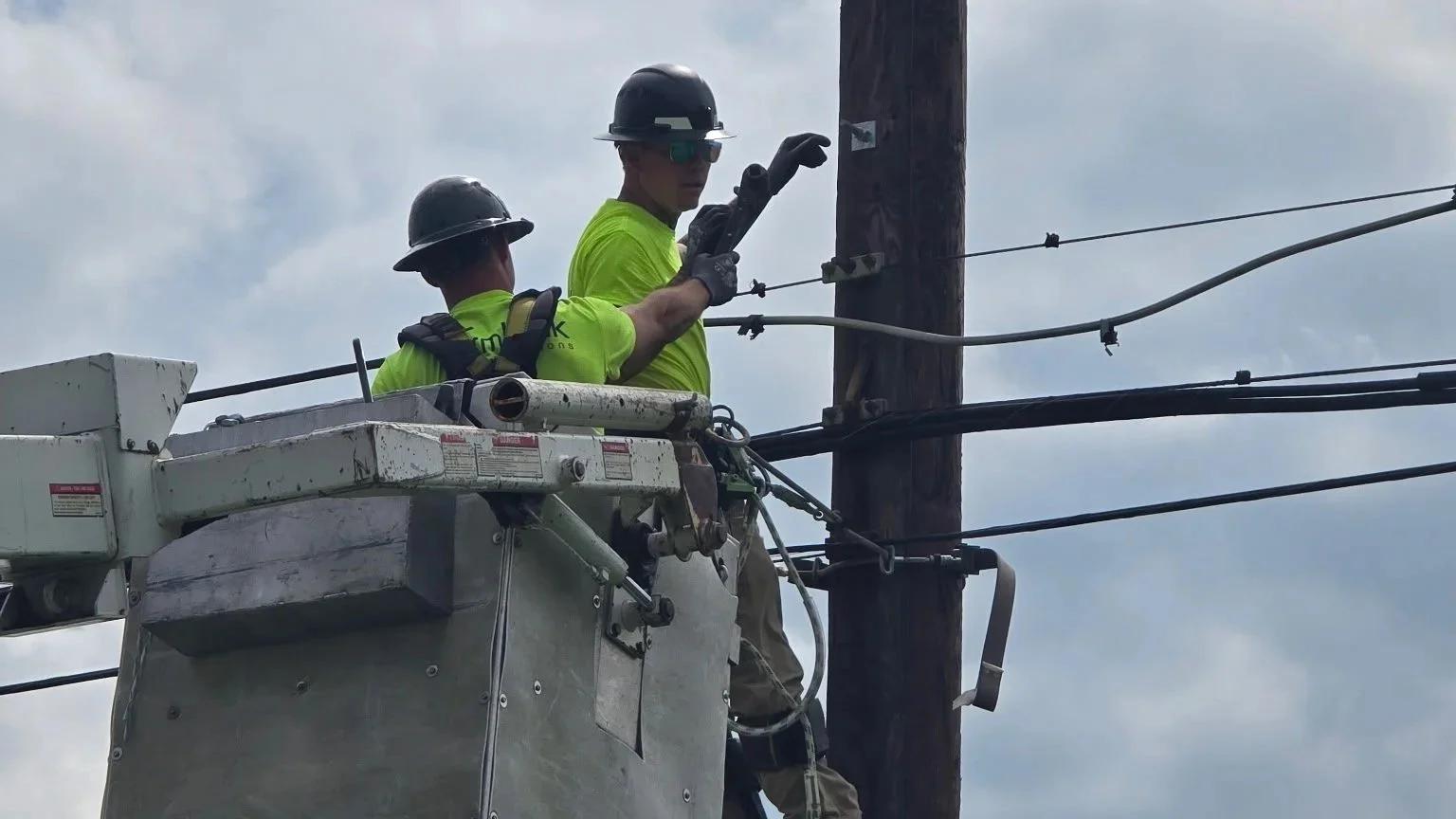
Field the route early and accurately, because the design determines every permit and pole application that follows. Get pole attachment applications filed ahead of the crowd, since 69 projects are about to compete for review capacity at the same pole owners. Our guide to pole attachment agreements covers what those applications typically require.
And line up construction capacity before it is scarce. Pennsylvania has mountainous terrain, a lot of existing pole line, and a fixed number of qualified aerial crews. Four years of statewide construction across all 67 counties is going to test that supply well before it tests anything else.
The money is approved. The locations are counted. What happens next is a scheduling problem, and scheduling problems get solved locally or not at all.
Have a BEAD project coming to your community or your footprint? TermLink Solutions provides turn-key aerial fiber construction, splicing, and testing for ISPs, municipalities, and broadband authorities nationwide, with crews based in Central Pennsylvania. If you want to talk through what a build in your area actually looks like on the ground, reach out to our team.
