

The bucket truck is the most important piece of equipment on an aerial fiber build. It puts linemen at the height of the strand, carries them across span after span, and keeps them working within reach of energized power lines for hours at a time. It is also where the biggest risks on the job live.
Aerial lift safety is not a single rule or a single piece of gear. It is a set of habits that starts before the truck leaves the yard and continues until the boom is stowed at the end of the day. Here is what those habits look like on a well-run aerial fiber crew, and what project owners should expect from any contractor working on their poles.
Why Aerial Lift Safety Matters
Line work is physically demanding, and it happens at height near electrical hazards. According to the Bureau of Labor Statistics, telecommunications line installers and repairers have one of the highest rates of injuries and illnesses of all occupations. Falls, electrical contact, and equipment failures are the risks that matter most when a crew member is working from a bucket.
The good news is that most of those risks are controlled through inspection, setup, and discipline. The standards that govern aerial lifts are clear, and crews that follow them every day rarely have to learn the hard way why they exist.
Before the Truck Moves: The Daily Inspection
Every shift starts with an inspection. Under OSHA's aerial lift standard, lift controls must be tested each day before use to confirm they are in safe working condition. Only authorized operators are allowed to run the lift.
The industry standard for vehicle-mounted aerial devices, ANSI A92.2, spells out what that daily check should cover. A practical review of the standard lists a walkaround visual inspection, a check of the controls in operation, fiberglass condition, hydraulic hoses and leaks, warning labels, emergency stops, outriggers, and interlocks. The operator runs the boom from the lower controls before anyone gets in the bucket.
A good crew treats this as a real inspection rather than a formality. A cracked fiberglass section, a weeping hydraulic fitting, or a sticky control is a reason to take the truck out of service, not a note for later.
Setting Up on Site
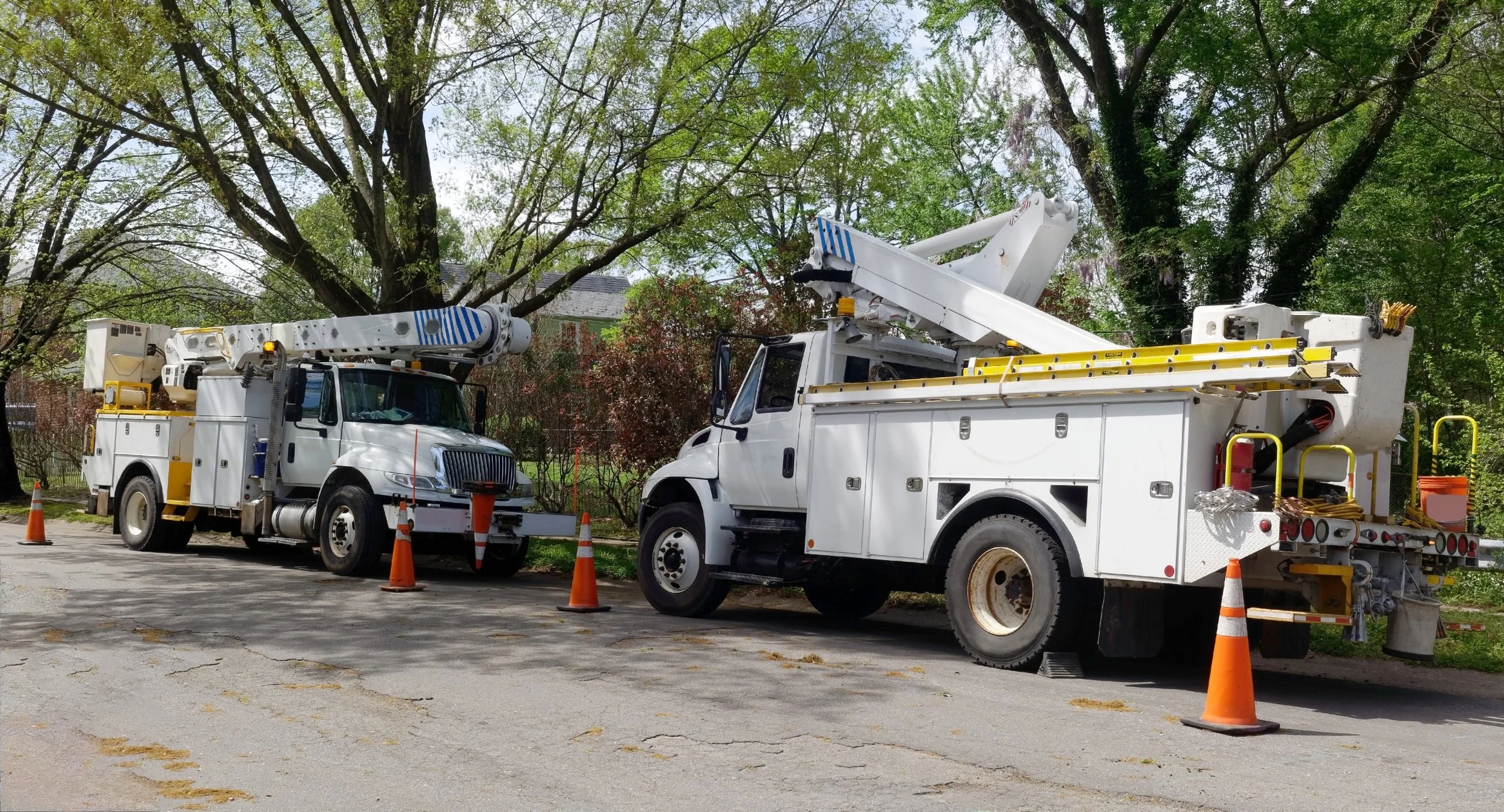
A safe lift starts with a stable truck. The brakes must be set, and when outriggers are used, OSHA requires them to be positioned on pads or a solid surface. Wheel chocks add another layer of protection, especially on the sloped shoulders and uneven ground that are common on rural pole lines.
Ground conditions deserve a close look before the boom goes up. Soft shoulders after rain, culverts hidden under grass, and loose gravel can all shift under an outrigger. The operator also checks overhead before raising the boom, since power lines, tree limbs, and other attachments on the pole all affect how the bucket can be positioned.
Setup also includes the work zone around the truck. Cones, signs, and traffic control keep passing vehicles away from the crew and the equipment, which is just as important as anything happening in the air.
Fall Protection in the Bucket
Anyone working from a bucket wears fall protection connected to the boom or the basket. In practice, that means a full body harness with a lanyard sized for the equipment and attached at the anchor point the manufacturer provides.
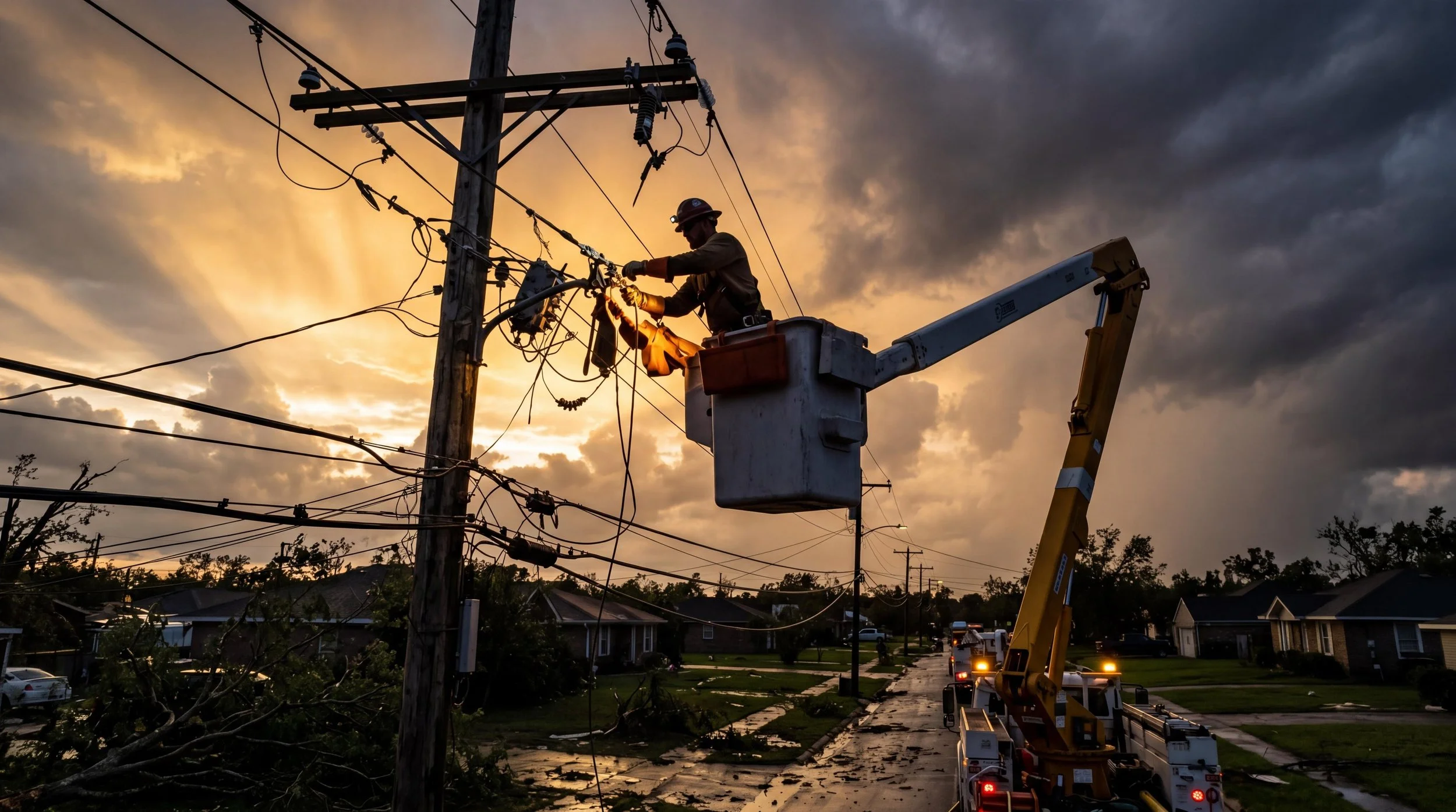
OSHA also spells out what not to do. Workers may not belt off to an adjacent pole, structure, or piece of equipment while working from the lift. They may not sit or climb on the edge of the basket or use planks and ladders to gain extra height. If the work is out of reach, the answer is to reposition the truck, not to stretch.
Working Around Energized Lines
Aerial fiber is usually attached in the communication space on the pole, below the power conductors. That space still sits within reach of energized equipment, so the bucket and boom have to be positioned to keep crew members at a safe distance at all times.
Maintaining the required clearance from power lines starts with planning the setup and continues through every movement of the boom. Crews treat every conductor as energized unless it has been confirmed otherwise. On trucks with insulated booms, OSHA prohibits any alteration that could reduce the insulating value, and the insulated sections need periodic dielectric testing to confirm they still perform as designed.
Periodic Inspections and Training
Daily checks catch obvious problems, but they do not replace a full inspection by a qualified mechanic. ANSI A92.2 calls for periodic inspections at intervals set by the manufacturer and the employer, with records kept for five years. Any truck that has been overloaded, struck, or exposed to electrical contact comes out of service until it has been tested.
Training ties all of this together. ANSI A92.2 lays out what operators need to know, including the manufacturer's manual, stability factors, daily inspection procedures, fall protection, and electrical safety rules. A new crew member does not run the lift until they have been trained and authorized, and experienced operators refresh that training as equipment and standards change.
What Project Owners Should Ask a Contractor
Internet providers, municipalities, and landowners have a stake in how their contractor works, since an incident on a job site affects the schedule, the relationship with the pole owner, and the project's reputation. A few questions reveal a lot about a crew's safety culture.
Ask how daily inspections are done and documented, and how often trucks receive periodic inspections and dielectric testing. Ask how operators are trained and authorized, and what fall protection the crew uses in the bucket. A contractor with strong answers to these questions is usually just as disciplined about strand and lashing quality, testing, and documentation.
Work With a Crew That Takes Safety Seriously
TermLink Solutions provides turn-key aerial fiber construction, splicing, and testing for internet providers, municipalities, businesses, and private landowners nationwide. Our crews work from bucket trucks every day, and safe setup and inspection are part of every shift on every job.
If you are planning an aerial fiber build and want a crew that gets the work done safely and on schedule, contact our team.
