

Federal broadband money comes with federal oversight, and that oversight is getting sharper. On August 31, the Government Accountability Office released a review of nine federal broadband deployment programs run by the FCC, NTIA, Treasury, and USDA. Together, those programs account for more than $50 billion in funding, including the $42 billion BEAD program.
The report does not single out contractors, but its findings point to a clear message for anyone building with grant dollars. The questions about whether a network was built as promised, whether it serves the locations it was funded to serve, and whether it will last are not going away. The answers to those questions live in the build records. Here is what the GAO found and why documentation has become one of the most valuable parts of a grant-funded fiber project.
What the GAO Found
The GAO's report looked at how well federal programs are reaching unserved and underserved areas and whether the networks they fund will be sustainable. Several findings stand out for anyone involved in construction.
Progress is uneven across programs. According to the Benton Institute's summary of the report, NTIA's Broadband Infrastructure Program had reached about 20 percent of its planned buildout, while the Tribal Broadband Connectivity Program was at about 3 percent. The GAO also found data problems that made it hard to compare results across programs, including misclassified projects and irregular location counts.
Mapping accuracy remains a concern. The GAO found that the FCC's process for challenging broadband map data is burdensome for smaller communities and providers, which can leave real service gaps unrecorded.
Sustainability was the biggest theme. BEAD providers must certify that they will not accept additional federal funding for the same locations for 10 years. The GAO found that NTIA's guidance to states does not yet say clearly when they should request provider financial data during that period, and it pointed to the Rural Digital Opportunity Fund, where defaults have affected about 2 million of the program's 5.2 million locations. Coverage from StateScoop noted that both the FCC and NTIA agreed with the GAO's recommendations.
What This Means for Grant-Funded Builds
Put those findings together and the direction is clear. Agencies and states are under pressure to show that funded locations were actually served, that the data behind each project is accurate, and that networks will hold up for years after construction ends. That pressure flows downhill to the providers, municipalities, and cooperatives that received the money.
When a state broadband office, an auditor, or a future buyer asks whether a network was built as funded, nobody will accept a verbal answer. They will ask for records. The strength of those records decides whether the answer is quick and clean or slow and expensive.
The Records That Prove a Build
Every fiber build produces records, but not every build produces records that hold up under review. A grant-funded project should come out of construction with a complete as-built package that shows where the fiber actually went, including every change from the original design.
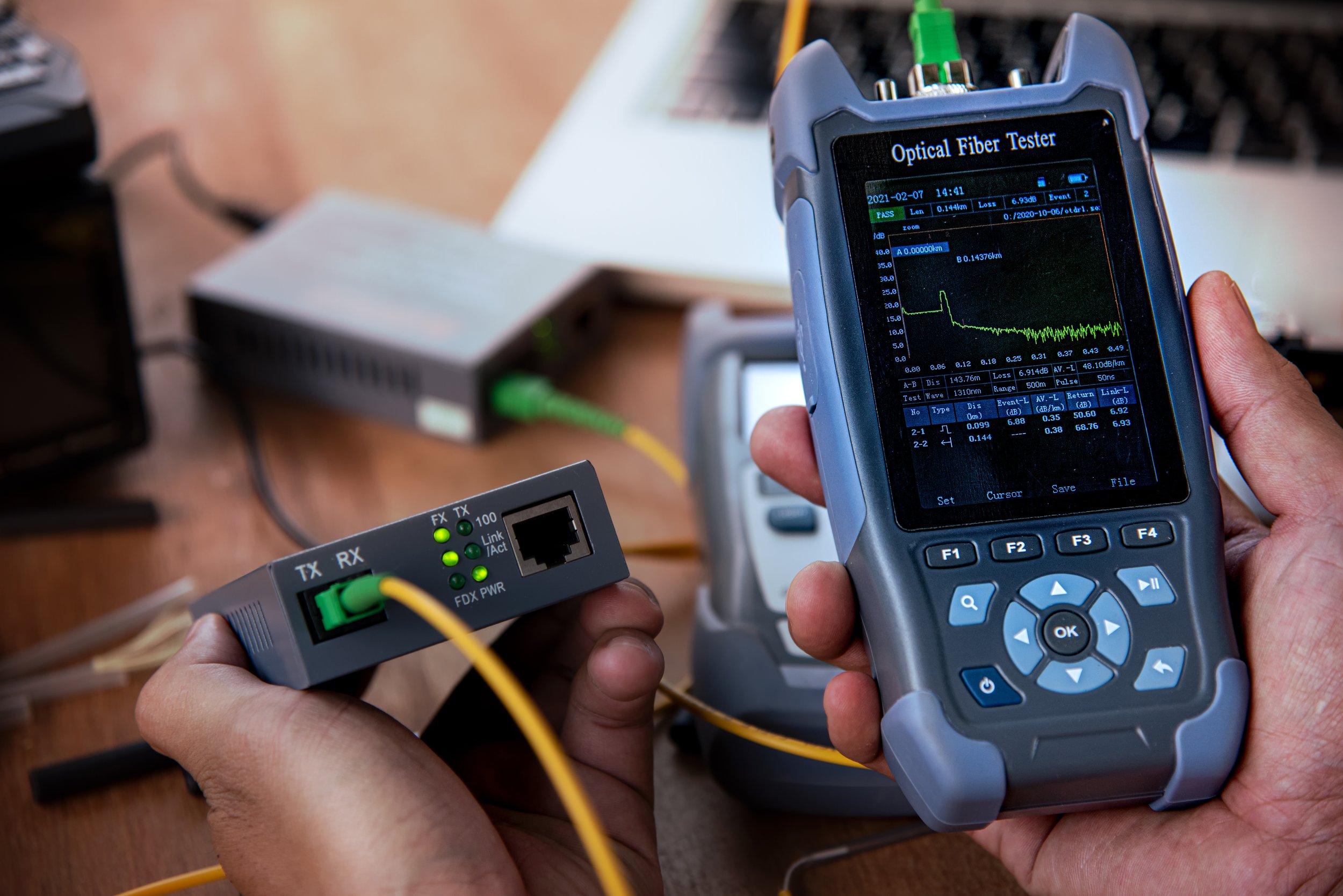
Test results are just as important. Every fiber on every span should have documented results that prove it performed to specification at acceptance, stored in a format the owner can open years later. Location-level records tie it all together by showing which addresses were passed and made serviceable, which is exactly what funding agencies measure.
Those records are most useful when they feed the owner's GIS mapping, so the network map matches what is actually on the poles. A map built from design files instead of as-built records will drift from reality, and that drift is what turns an audit or a map challenge into a problem.
Why the 10-Year Window Changes the Stakes
Construction records used to be treated as closeout paperwork. The long federal interest period on BEAD and similar programs changes that. A network built in 2026 may still be answering questions about its funded locations in 2035.
Over that stretch, a lot can change. Staff turn over, providers get acquired, contractors move on to other projects, and the people who remember how a route was built may no longer be around. The records have to stand on their own. Documentation that is organized, complete, and delivered to the owner at closeout will still be useful a decade later. Documentation that lives in a contractor's truck or a former employee's laptop will not.
What to Require From Your Construction Contractor
Project owners have the most leverage over documentation before construction starts. The contract should spell out what the contractor delivers at closeout, including as-builts, redlines, test results for every fiber, and photos where the owner needs them. It should also specify the format so the records fit the owner's systems without rework.
During construction, owners should ask to see documentation as the work progresses, not only at the end. A contractor that keeps redlines current and uploads test results span by span will deliver a much cleaner package than one that tries to reconstruct everything after the last crew leaves.
Build It Right and Prove It With TermLink
TermLink Solutions provides turn-key aerial fiber construction, splicing, and testing for internet providers, municipalities, cooperatives, and private landowners nationwide. Every project we build comes with thorough testing and complete documentation, because we know our clients may need to prove their networks long after our crews are gone.
If you are planning a grant-funded build and want records that stand up to review, contact our team.
