

Back in June, we wrote about preventing heat illness on fiber crews. Winter brings the opposite problem, and on an aerial job it can be just as dangerous.
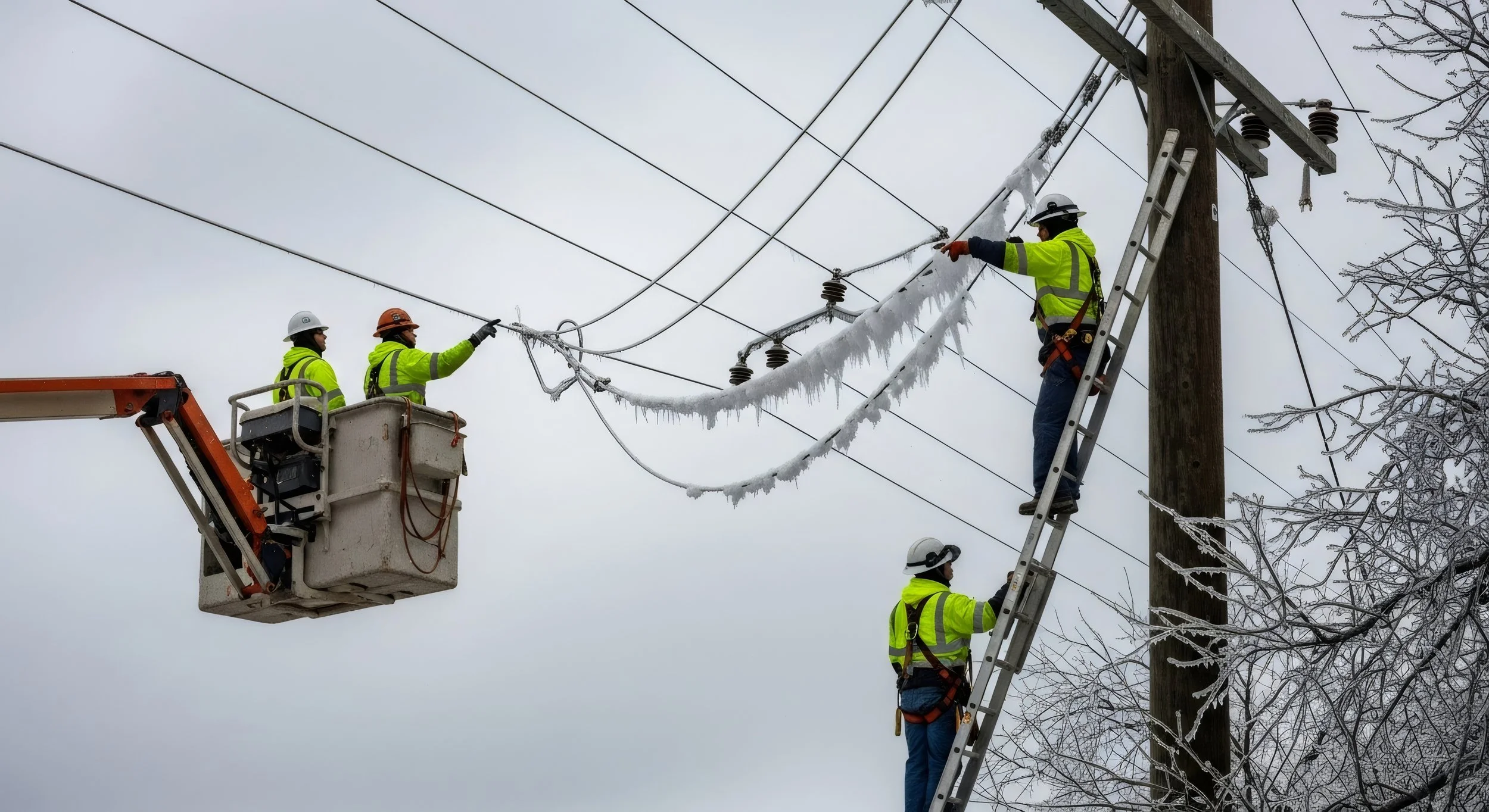
Aerial work does not stop when the temperature drops. Storm restoration picks up and grant-funded projects push to hold their schedules, so crews spend long hours in a bucket with nothing between them and the wind. Cold stress happens when the body loses heat faster than it can make it, and the conditions on a pole line in December are close to ideal for that.
Here is why the bucket makes cold stress worse and how a well-run crew works safely until spring.
Why the Bucket Is Colder Than the Ground
The temperature on the forecast does not tell the whole story. Wind pulls heat away from the body much faster than still air, which is why the National Weather Service tracks wind chill alongside the temperature. Using the NWS wind chill formula, a 20 degree day with a 20 mph wind feels like about 4 degrees on exposed skin. The NWS notes that when wind chill values get near 25 below, frostbite is possible within 15 minutes.
A lineman in a bucket is often more exposed to that wind than anyone on the ground. They are also standing still for long stretches while lashing or splicing, which means less body heat from movement. Add metal tools and a steel bucket floor, and it is easy to see how hands and feet get cold fast.
Wet conditions make all of it worse. Sweat from a hard climb or snow melting into a jacket pulls heat away even faster than wind does.
What Cold Stress Looks Like
OSHA's cold stress guide covers the conditions that matter most for outdoor crews. Three of them come up on aerial jobs.
Hypothermia happens when body temperature drops too low. Early signs include heavy shivering and loss of coordination. As it gets worse, a person may stop shivering and become confused, which is dangerous in a bucket because the person affected is often the last one to notice.
Frostbite freezes skin and the tissue under it, usually on the fingers and toes or the face. Watch for numbness and tingling, or skin that looks pale and waxy.
Trench foot comes from feet staying cold and wet for long periods, even when it is above freezing. Boots that soak through on a muddy right-of-way can cause it over a long day.
The NIOSH fact sheet on protecting yourself from cold stress lays out the warning signs and first aid for each one. For hypothermia, the first step is getting medical help on the way and moving the person somewhere warm.
How a Good Crew Works Through the Cold
Dress in layers that work together
Several loose layers hold heat better than one heavy coat, and they let a worker adjust as the day warms up or the wind picks up. A moisture-wicking base layer keeps sweat off the skin. An insulating middle layer holds warmth, and a windproof outer layer blocks the wind in the bucket.
For crews who wear flame-resistant clothing, winter layers have to follow the same rules as the rest of the gear. Base layers and insulation should not be made from synthetics that can melt onto skin, so it is worth checking every layer and not just the outer shell.
Protect hands without losing dexterity
Hands are the hardest part of winter aerial work. Lashing and handling hardware call for good grip, and splicing calls for fine finger control. Many crews carry more than one pair of gloves so they can swap into a dry pair during the day. Liner gloves under work gloves can help, and a warm truck cab between splices gives fingers a chance to recover.
NIOSH also recommends avoiding bare-skin contact with cold metal, which is easy to forget when grabbing a tool or a bolt.
Build warm-up breaks into the day
Short breaks in a heated cab are part of working safely in the cold, not a sign of a slow crew. On cold, windy days, rotating the person in the bucket keeps any one worker from staying up too long. Warm drinks help too, and so does a lunch that actually gets eaten.
Watch each other
Cold affects judgment before a person realizes it. The groundman watching the bucket is the best early warning system a crew has. If someone starts fumbling hardware or seems confused, that is the moment to bring them down and warm them up.
Keep footing safe
Ice on bucket floors and truck steps causes slips that have nothing to do with body temperature but everything to do with winter. Clearing snow and ice before climbing in, and wearing insulated waterproof boots with good tread, prevents a lot of injuries. Our post on bucket truck and aerial lift safety covers the daily checks that matter in any season.
Plan around short days
Daylight is limited in December and January. Planning the day so the hardest bucket work happens in the warmest hours, and so crews are not finishing a span in the dark, reduces both cold exposure and the risk of mistakes.
What Project Owners Should Ask
If you are hiring a contractor for winter work, ask how they handle cold weather. A crew with a clear plan for layers and warm-up breaks is usually a crew with the same discipline on splice quality and schedule. A crew that shrugs off the question is telling you something too.
The Bottom Line
Cold stress is predictable, and that makes it preventable. The right layers and regular warm-up breaks, along with a crew that looks out for each other, let aerial work continue safely through the coldest months of the year.
TermLink Solutions builds and restores aerial fiber nationwide, in every season, with crews who take winter safety as seriously as the quality of the build. If you have a project that cannot wait for spring, contact our team to talk through your schedule.
